





























































Egyptian Gods – The Fascinating World of Ancient Egypt
The ancient Egyptian civilization is one of the most significant and long-lasting cultures in the world. Over more than 3,000 years, it developed a complex religious system that was deeply intertwined with daily life, state ideology, and natural phenomena. The Egyptians believed that gods governed every aspect of existence – from the movement of the sun to crop harvests and even the journey through the afterlife. The Egyptian pantheon was diverse, with gods taking on both human and animal forms, often merging into different shapes and aspects.
Egyptian Gods: The Fascinating World of the Ancient Egyptian Pantheon
These deities were not just symbolic figures – they were part of the real and practical lives of the Egyptians. People honored them daily through prayers, offerings, festivals, and temple rituals. Let’s take a closer look at the most important Egyptian gods and goddesses and some fascinating facts we know about them.
In this article, you'll learn about the gods of Ancient Egypt:
- Ra – the sun god and creator of all life
- Osiris – god of death, the afterlife, and fertility
- Isis – goddess of magic and protection
- Horus – god of the sky and royal power
- Anubis – god of funerary rites
- Thoth – god of wisdom, science, and writing
- Maat – goddess of balance and moral order
- Bastet – goddess of the home and protection
- Amun – god of the unseen and later ruler of all gods
Egypt in Brief
Ancient Egypt is a fascinating land of pyramids, monumental temples, and richly decorated tombs that still impress with their architectural precision. Egyptians also developed their own script – hieroglyphs – used to record history, rituals, and everyday life. Their world wasn’t just about buildings – symbols carried immense significance. They appeared on amulets, jewelry, and tombs to offer protection, luck, and health. When Egypt is mentioned, most of us immediately think of the legendary Cleopatra – the last ruler, who embodied both political wisdom and charisma. Ancient Egypt was not just a land of pyramids, but a civilization that perfectly blended art, science, and symbolism – a world that continues to inspire us thousands of years after its rise.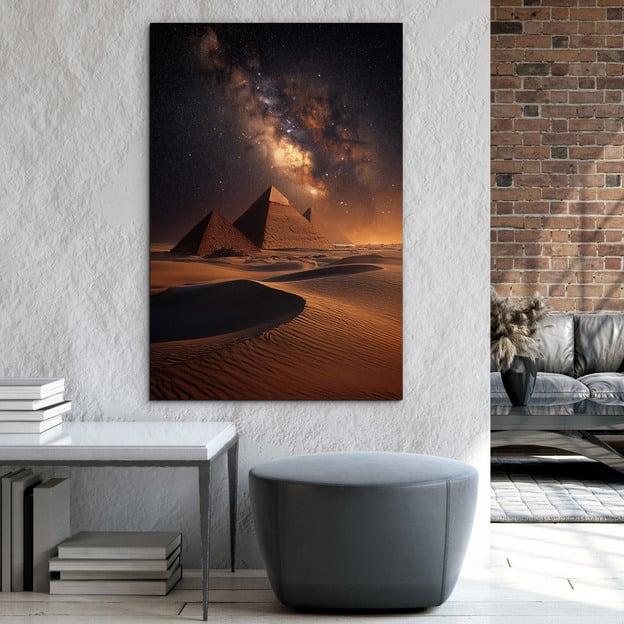
Source: DUBLEZ, Wooden Wall Art – Egyptian Pyramids
Ra – the Sun God and Creator of All Life
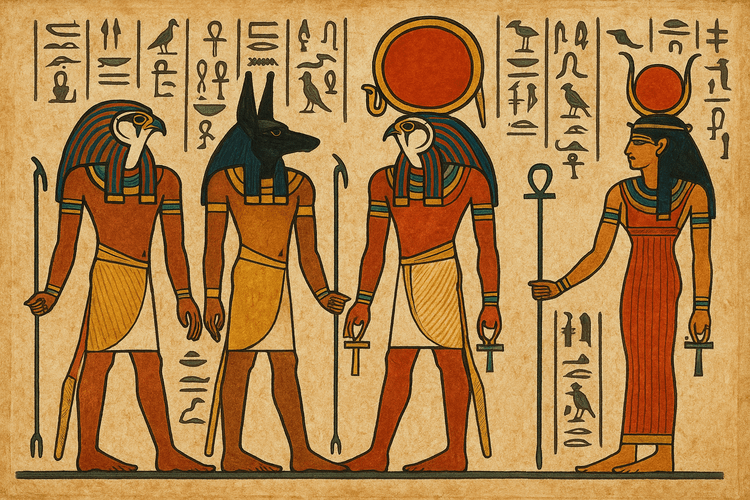
Ra is one of the oldest and most important gods in Egyptian mythology. Egyptians believed that each morning he rose in the east and traveled across the sky in his solar barque, bringing light and life to the Earth. In the evening, he descended and passed through the dangerous underworld, where he fought nightly with the serpent demon Apophis, who embodied chaos and destruction. This eternal battle symbolized the constant renewal of order and life. Ra was the symbol of light, life, and the endless cycle of rebirth. He was often depicted as a man with a falcon head and a solar disk above it, highlighting his divine connection with the sun. During the New Kingdom, Ra merged with the older god Amun to form Amun-Ra, the supreme deity of the realm. Ra wasn’t just a solar symbol – his cult emphasized order, life-giving power, and continual renewal, values that shaped daily life in ancient Egypt.
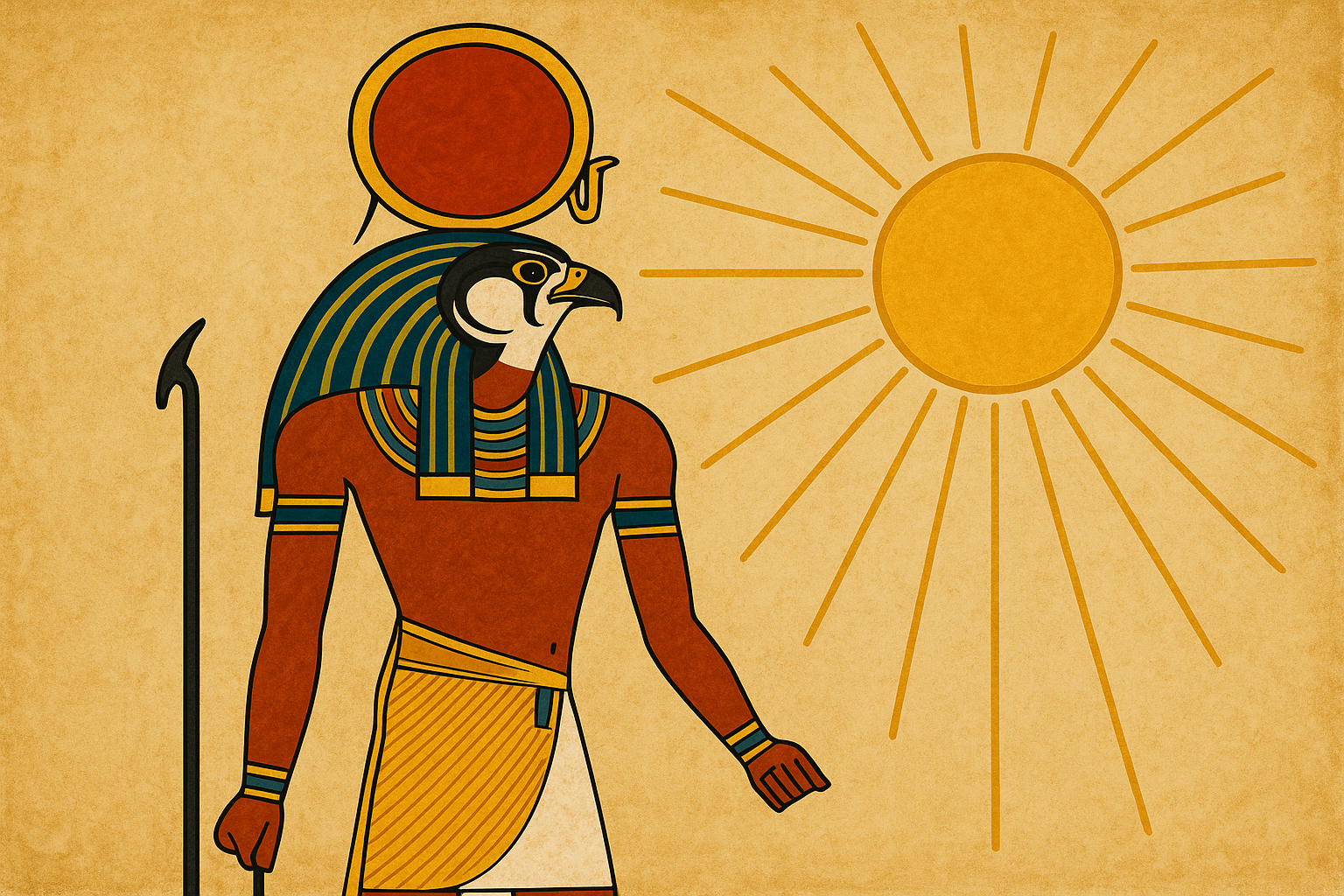 Source: DUBLEZ
Osiris – God of Death, the Afterlife, and Fertility
Osiris was one of the central figures of Egyptian religion, influencing all aspects of life and death. He was the god of death, but also of renewal and fertility. His myth of death and resurrection symbolized the cycle of life, the dry and flood seasons of the Nile, which determined harvest and survival in Egypt. After death, Osiris became the ruler of the underworld, known as Duat, and the judge of souls. Egyptians believed that every person must undergo judgment after death, where Anubis weighed their heart against the feather of the goddess Maat, the symbol of truth, justice, and order. If the heart was heavy with sin, it was devoured by the demoness Ammit – ending the soul’s existence. But if the heart was pure, the deceased could unite with Osiris and gain eternal life in the realm of the dead. His myth expressed faith in the afterlife and emphasized virtue, justice, and spiritual conduct during earthly life. Osiris was more than the lord of the underworld – his story reflected the cycle of life, death, and rebirth and inspired Egyptians to live in harmony with nature and the cosmos.
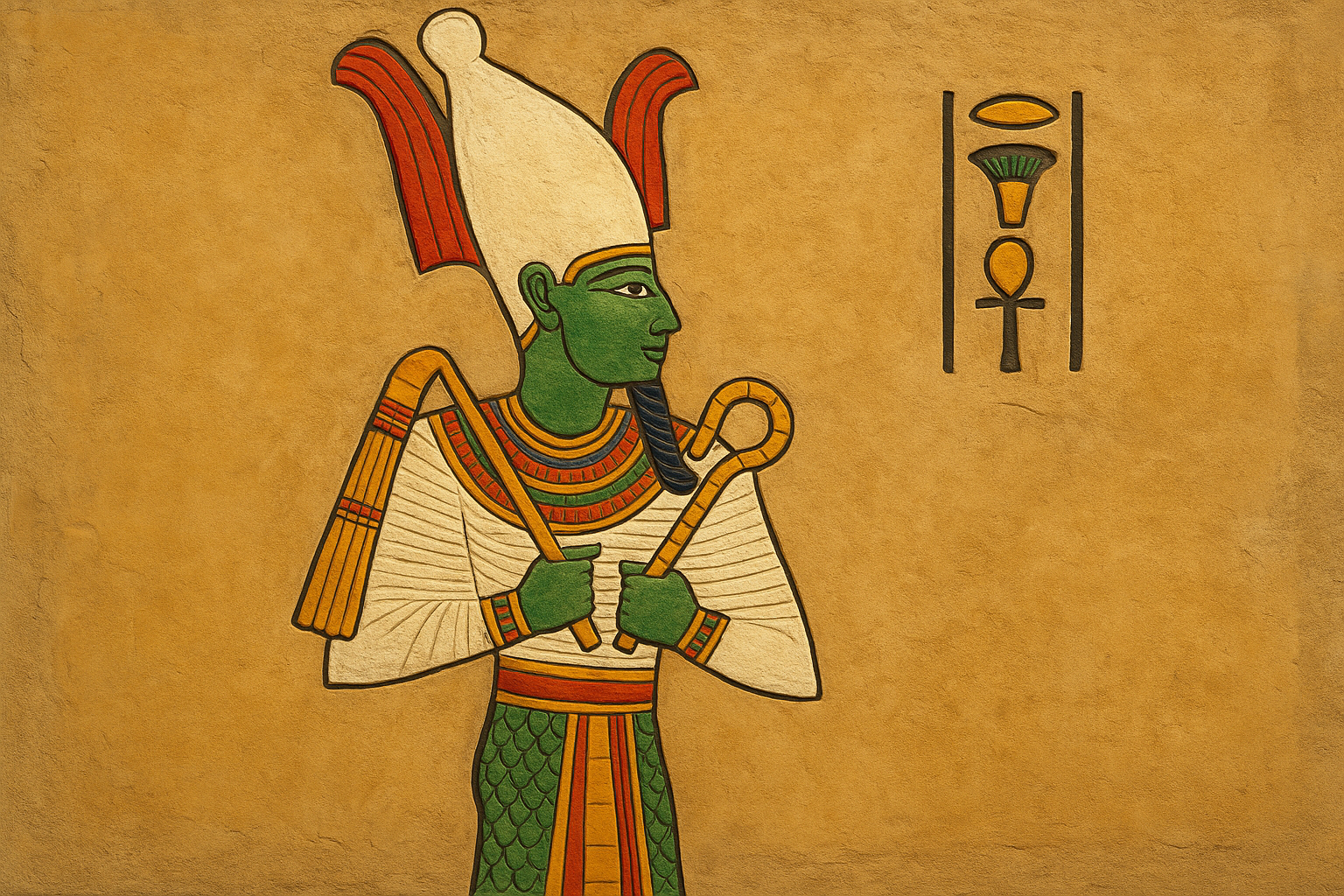 Source: DUBLEZ
Isis – Goddess of Magic and Protection
Isis was one of the most revered goddesses of ancient Egypt. She was not only Osiris's wife but also a strong, independent figure who embodied wisdom, care, and protection. With her magic, she revived Osiris after his death and conceived their son Horus, becoming a symbol of rebirth and eternal love. Her powers went beyond the ordinary – she could heal, protect children and families, and even reverse death. That made her one of the most powerful divine beings, to whom people turned in times of trouble, illness, or danger. Her cult spread across Egypt and later to the Mediterranean. Her temple in Philae remained active until the 6th century AD, long after the fall of the ancient empire. Her iconography – a woman with a throne on her head, holding or nursing Horus – deeply influenced later Christian depictions of the Virgin Mary, proving her timeless symbolism of motherhood, protection, and life. Isis was not only the goddess of magic and protection but also a symbol of strength, love, and eternal care that inspired believers for millennia.
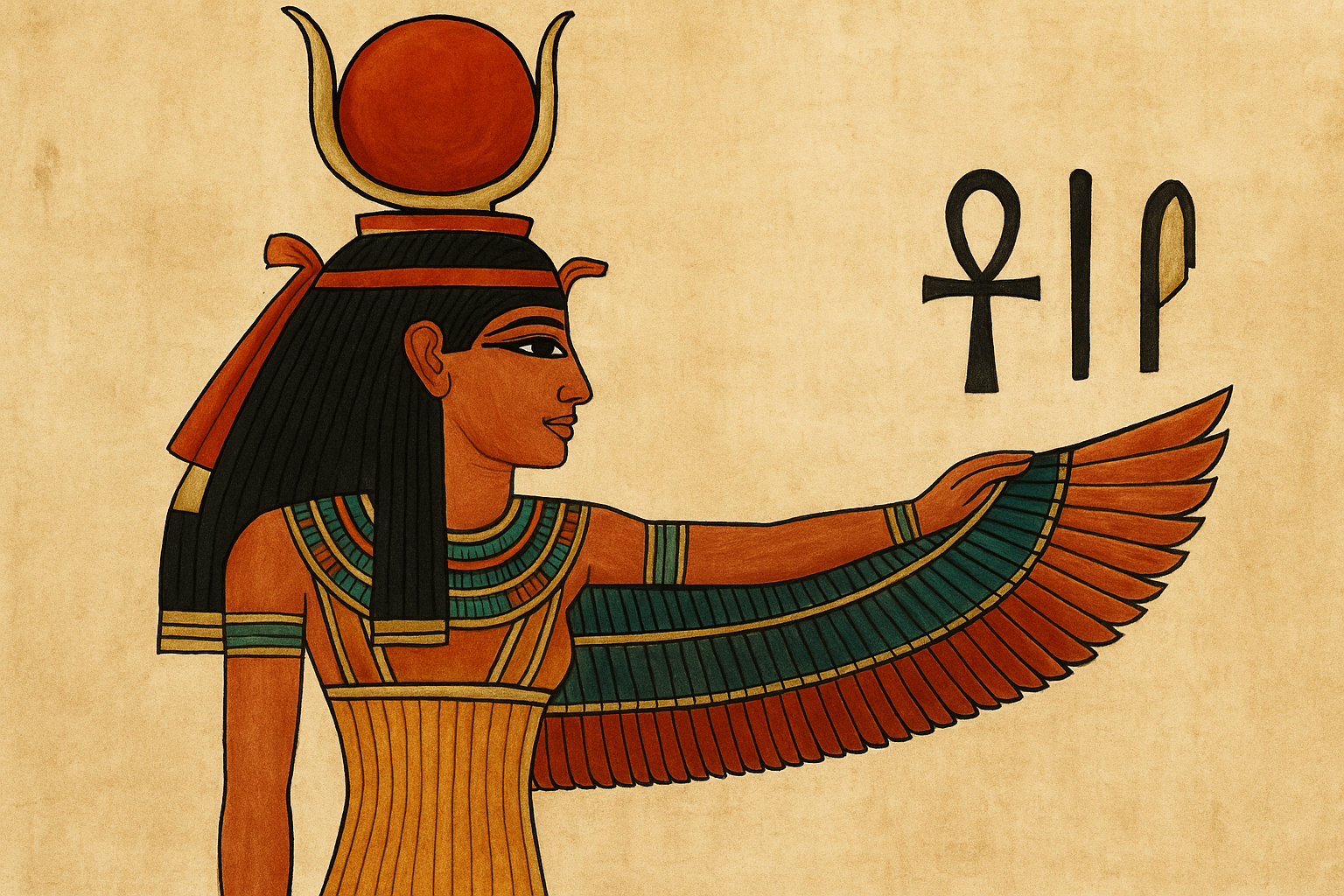 Source: DUBLEZ
Horus – God of the Sky and Royal Power
Horus, the son of Osiris and Isis, is one of the most important gods in ancient Egypt. He was the god of the sky, light, and protector of the pharaoh. After his father's death, he embarked on a long and difficult battle against Set, the god of chaos and disorder, for the throne of Egypt. This conflict symbolized the struggle between good and evil, order versus chaos, and Horus ultimately triumphed. From then on, pharaohs were considered his earthly incarnations, reinforcing their divine authority and right to rule.
Horus was often depicted as a falcon or a man with a falcon head, emphasizing his connection with the sky and his watch over Egypt. His most famous symbol – the Eye of Horus (Udjat) – became a powerful amulet for protection, healing, and wholeness. Egyptians believed it shielded them from evil, brought health, and maintained balance between the spiritual and earthly realms. Horus was not only a warrior for justice but also a guardian, whose presence and symbolism accompanied people in everyday life, offering protection, strength, and reassurance.
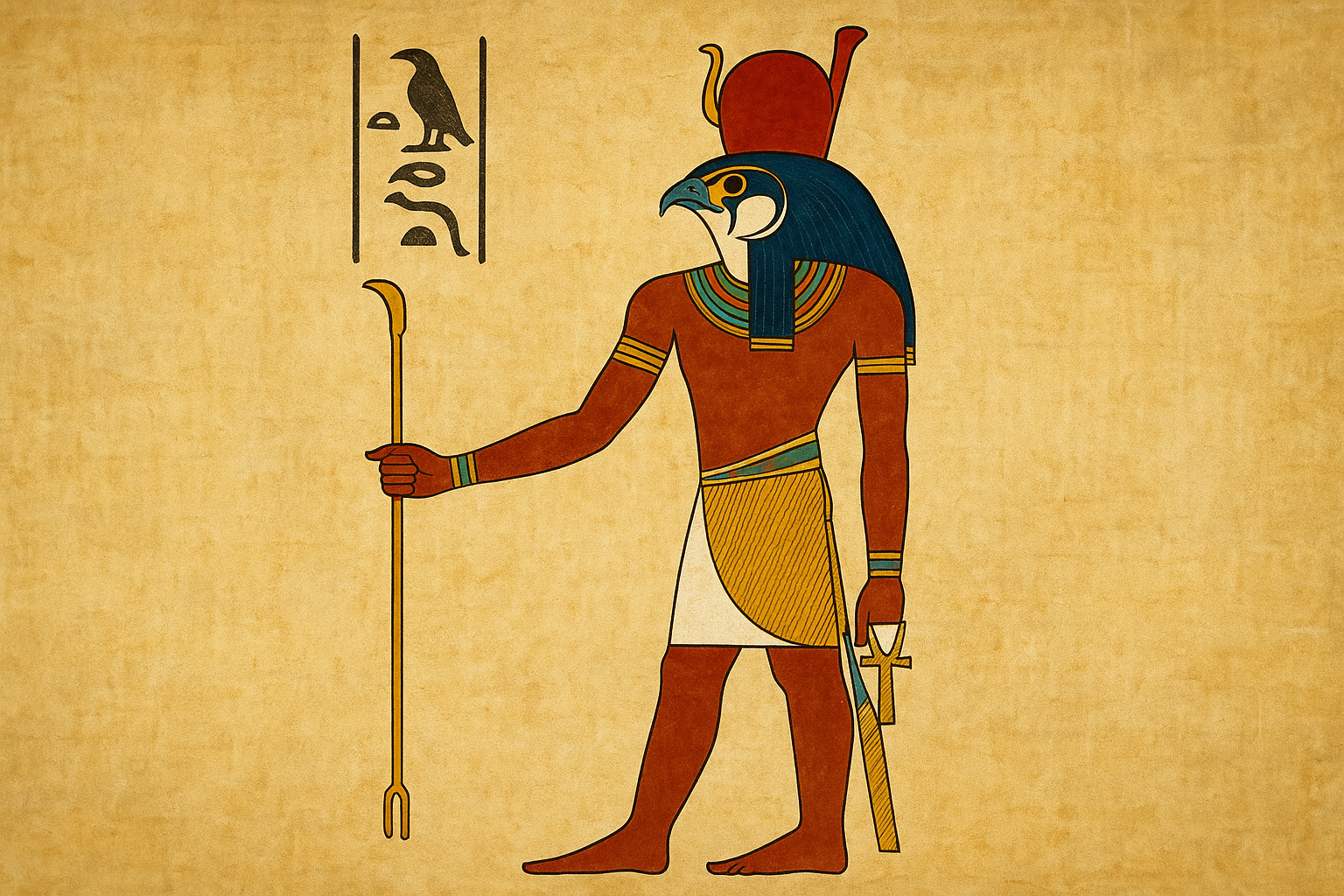 Source: DUBLEZ
Anubis – God of Funerary Rites
Anubis was the ancient Egyptian god of mummification and protector of the dead. He was depicted as a man with the head of a black jackal – an animal often seen near tombs and deserts. His presence symbolized protection and vigilance over the deceased, ensuring the soul's safe passage to the afterlife.
One of his main roles was preparing the deceased's body for mummification, ensuring its eternal preservation in the afterlife. After this ritual, Anubis guided the soul to judgment before Osiris, where their deeds and moral conduct were evaluated. Interestingly, Anubis’s black head wasn’t meant to represent death or evil. On the contrary, it symbolized fertility, renewal, and rebirth – much like the black soil along the Nile that brought life after floods. In this sense, Anubis was not just a guide for the dead but a guardian of the eternal cycle of life and death, where every end marked a new beginning.
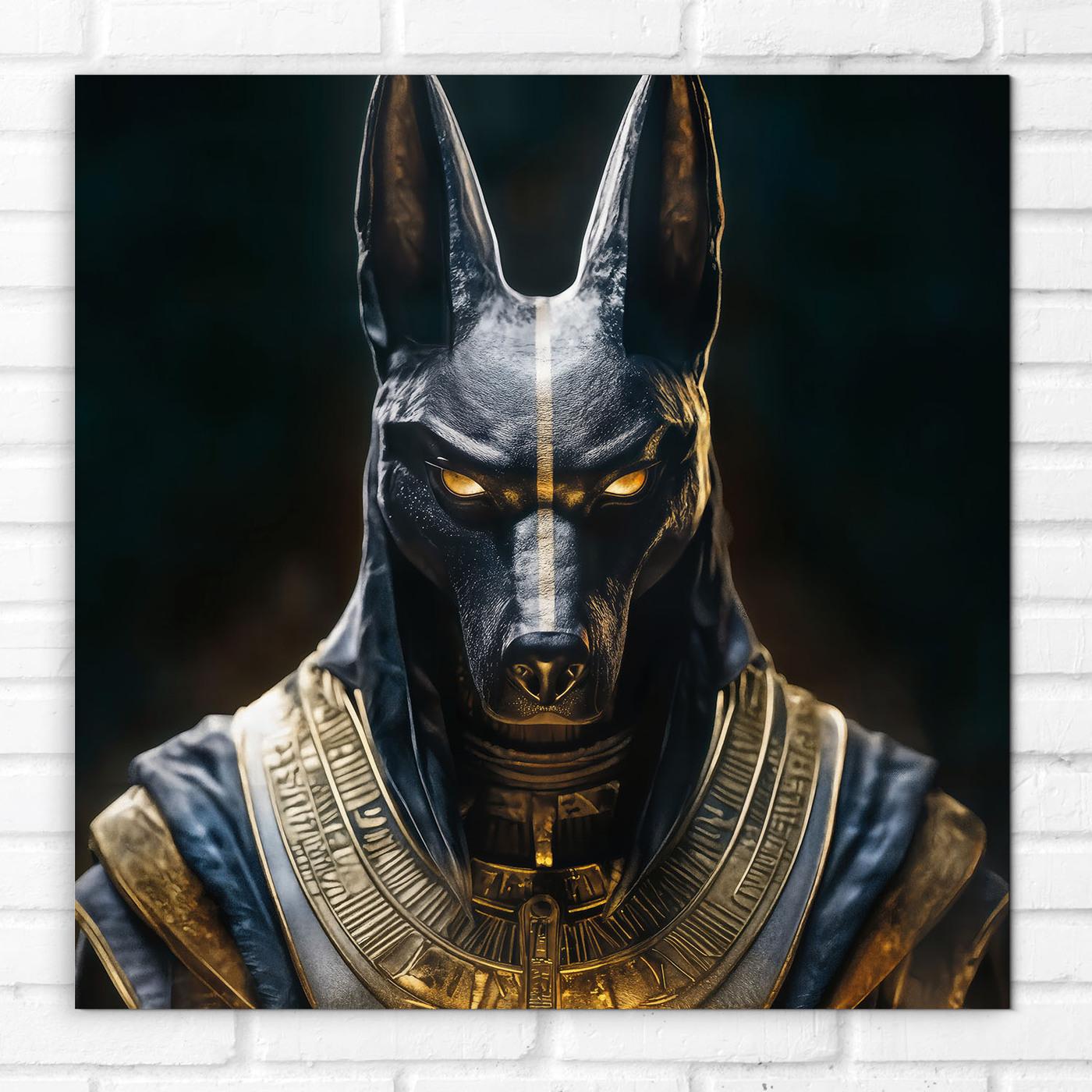 Source: DUBLEZ, Wooden Wall Art – Egyptian God Anubis
Thoth – God of Wisdom, Science, and Writing
Thoth, also known as Djehuty, was the ancient Egyptian god of intellect, wisdom, mathematics, astronomy, and hieroglyphic writing. He was depicted as a man with the head of an ibis – a bird symbolizing wisdom and observation – often holding a writing instrument and palette, representing his ability to record and preserve knowledge. He was regarded as the divine scribe who documented the outcomes of the afterlife judgment before Osiris and ensured justice and order in the underworld. His presence symbolized order, accuracy, and logic – qualities Egyptians considered essential for a properly functioning world and society.
Thoth was also the creator of the calendar and a master of the stars, enabling Egyptians to track seasonal cycles and plan agricultural activities. Thanks to him, a structured administration and systematic recordkeeping developed, significantly influencing the state's organization and religious life. His contribution was crucial to the creation of literary and religious texts. Without Thoth, sacred texts like the “Book of the Dead” – complex guides to the afterlife – might never have existed. Through this, Thoth became a symbol of wisdom, learning, and the eternal preservation of knowledge that ensures order in both life and the afterlife.
One of his most symbolic features was the ibis. The ibis, with its beak touching water and mud, was seen by Egyptians as a link between the heavens, the earth, and the afterlife. Thoth thus represented not only writing and scientific knowledge, but also the ability to uncover the hidden laws of the universe.
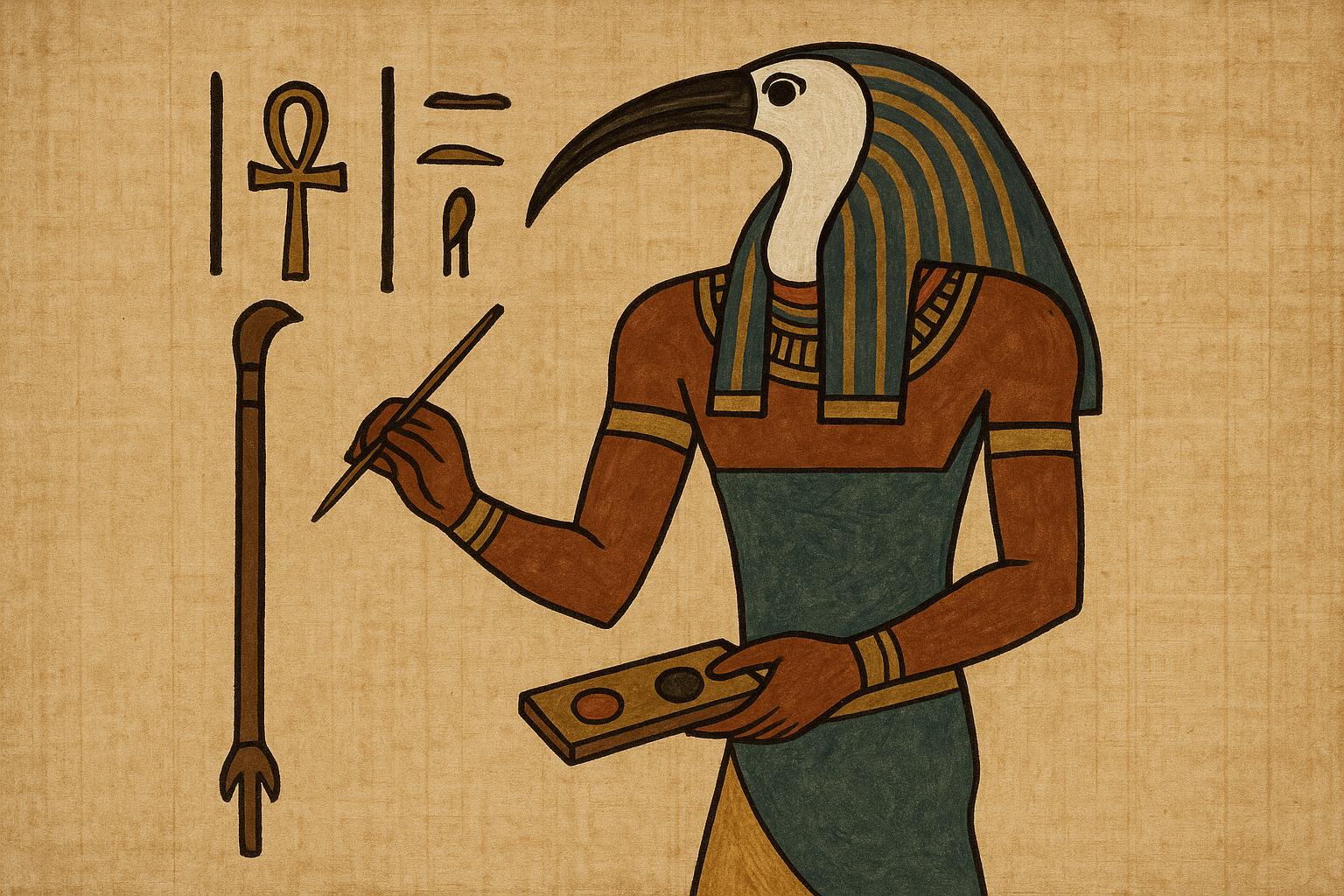 Source: DUBLEZ
Maat – Goddess of Balance and Moral Order
Maat was not just a goddess – she was the personification of the fundamental principle upon which the entire ancient Egyptian world was built. She embodied order, truth, justice, and the harmonious flow of events – without which the universe and society would fall into chaos. In Egypt, maintaining maat was the responsibility of every person, especially the pharaoh, who was seen as her primary bearer and protector. His role was to ensure that laws, rituals, and daily life reflected balance and proper order, preserving the kingdom’s stability.
Maat’s symbol – her feather – played a central role in the afterlife judgment. When a soul entered the underworld, its heart was weighed against the feather of Maat. If the heart outweighed the feather, it meant the person had not lived according to the principles of truth and justice, and the soul was condemned. If the heart was equal or lighter, the soul could pass into the afterlife and attain eternal harmony. This act symbolized the final judgment of one’s moral life and reflected the Egyptian belief that justice was not just an abstract concept, but a living force that governed the universe.
Maat was not merely a religious figure – she was an inseparable part of Egyptian thinking, behavior, and culture. Every action, from ruling the state to daily personal decisions, was expected to follow her principles. In her presence, morality, the universe, and social order merged into one harmonious whole that shaped both life and the afterlife of every Egyptian.
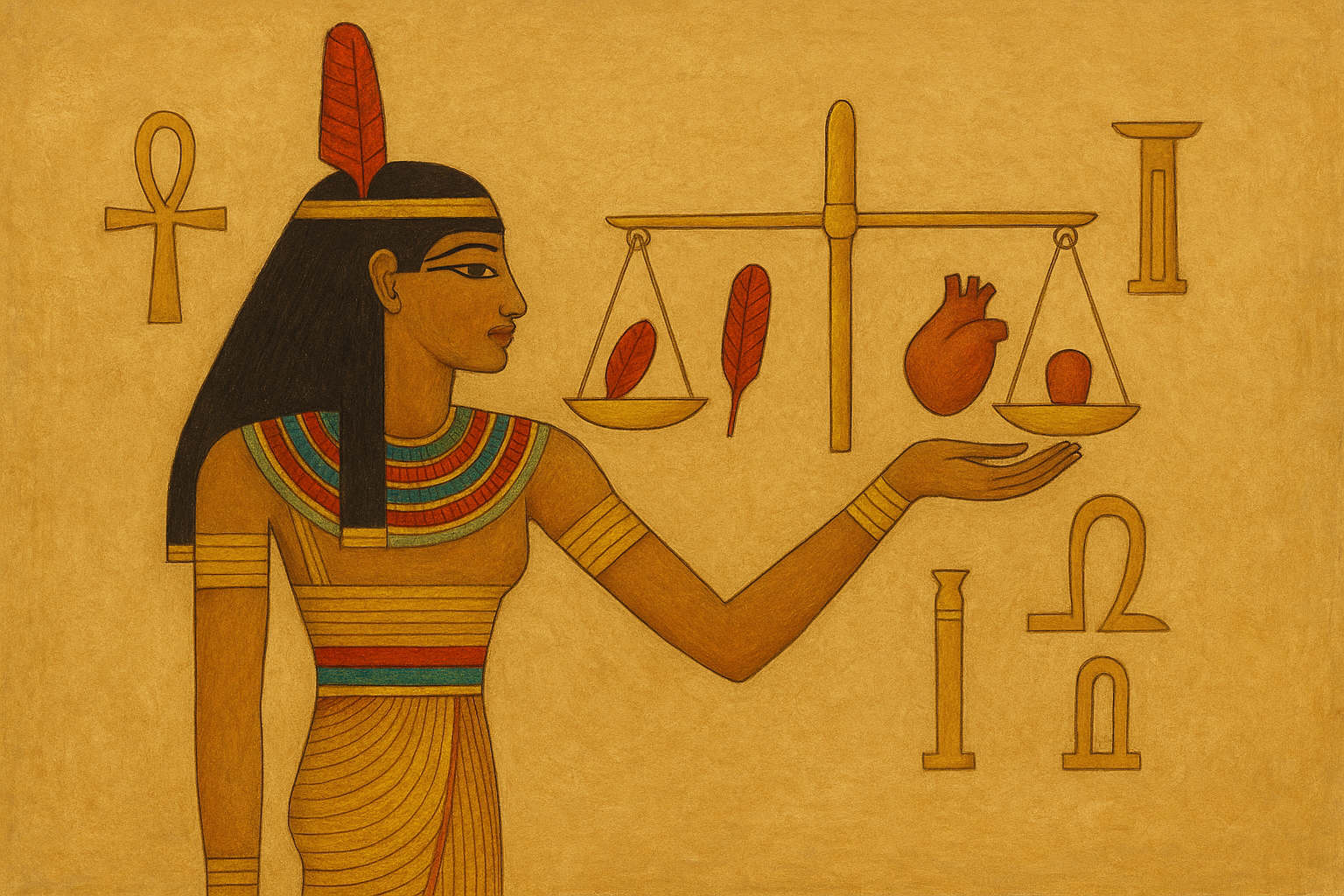 Source: DUBLEZ
Bastet – Goddess of the Home and Protection
Bastet was the ancient Egyptian goddess of protection, the home, female fertility, and joy. She was depicted as a woman with a cat’s head, emphasizing her sharp instincts, grace, and ability to detect threats. In addition to guarding the home and family, she was associated with music, dance, and festive rituals that brought joy and celebration to life. She was also believed to protect people from illness, evil spirits, and dangerous forces, much like a cat guards its home from intruders.
Cats themselves were considered sacred animals in Egypt, symbols of Bastet, and were often given offerings or even mummified so they could accompany and protect people in the afterlife. Their presence in homes was associated with protection and prosperity, and they often played a role in religious ceremonies and family rituals. Her cult was especially strong in the city of Bubastis, where her main temple was located. Every year, grand celebrations were held there, attracting thousands of pilgrims from all over Egypt. During these festivals, music was played, dancing took place, and offerings were made – all as expressions of joy, life, and reverence for the goddess who was both a loving protector and a fierce guardian. Bastet represented the perfect balance between tenderness and strength, between joy and seriousness, accompanying Egyptians in everyday life and spiritual practice.
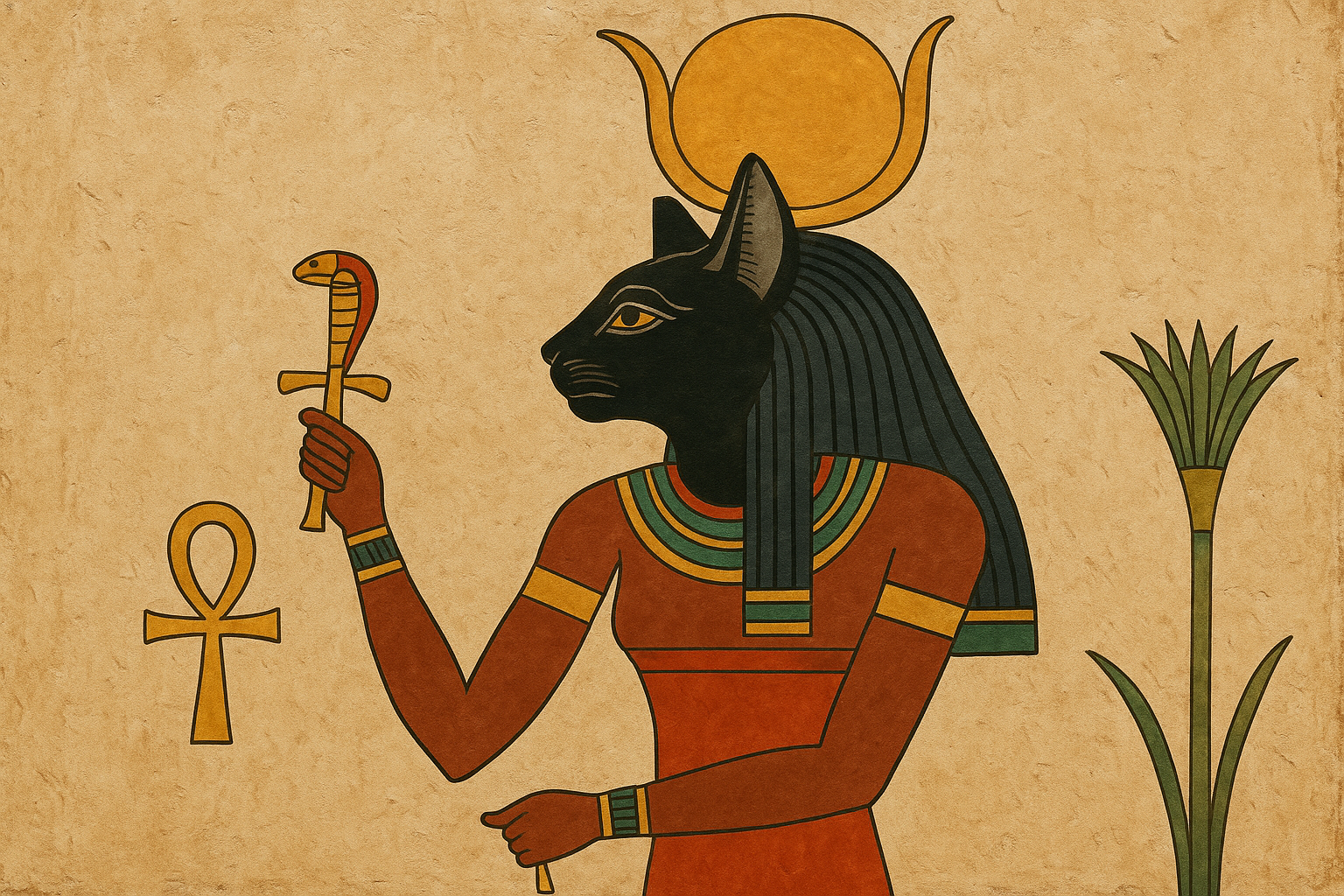 Source: DUBLEZ
Amun – God of the Unseen and Later Ruler of All Gods
Amun was originally the local god of Thebes, associated with wind, invisible forces, and the mysterious world beyond human perception. His presence symbolized power that couldn’t be seen or touched but influenced everything. With the rise of the New Kingdom, Amun became the central god of Egypt and merged with the sun god Ra, creating the universal deity Amun-Ra. In this form, he was worshipped as the supreme and creator god, whose will governed everything from the motion of stars to the lives of individuals.
His temple complex at Karnak – the largest religious site ever built – became the center of worship, political power, and spiritual life. The enormous halls, sanctuaries, and courtyards reflected the majestic and transcendent nature of this god, whose worship united pharaohs, priests, and commoners into one religious and political system. Amun’s priests wielded great influence – often making political decisions, amassing wealth, and managing not only religious rites but also economic and social affairs. Through them, Amun-Ra became a symbol of both spiritual and political power that extended beyond Thebes and ruled all of Egypt. Amun’s role went far beyond religion – he represented divine power that connected the visible and invisible worlds, maintained cosmic order, and upheld the balance between divine will, human society, and natural law.
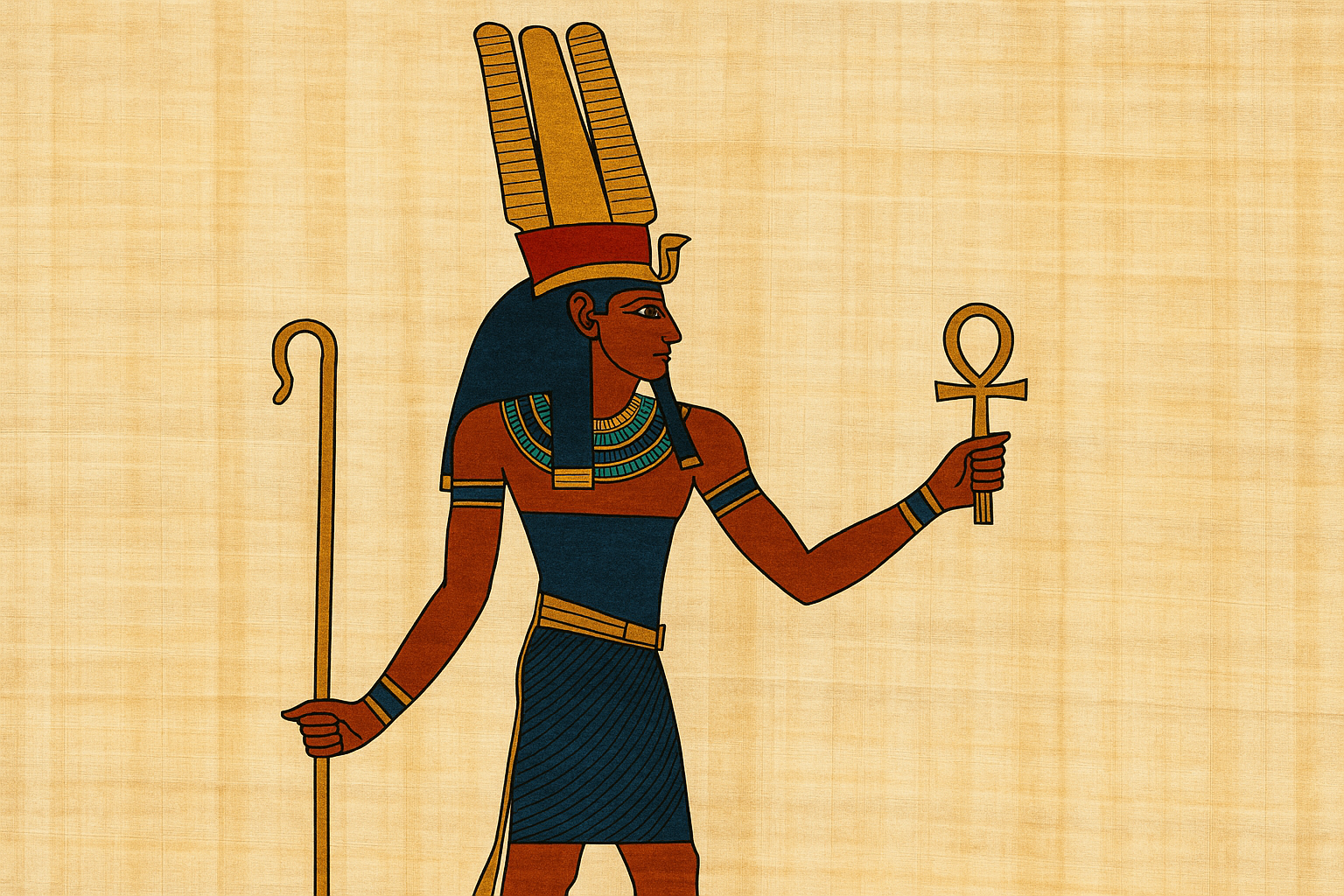 Source: DUBLEZ
Conclusion
The religious world of ancient Egypt was incredibly rich, sophisticated, and closely tied to people’s everyday lives. The gods were not just mythical beings or objects of worship – they were ever-present, influencing decisions, maintaining social order, and guiding individuals even after death. Every temple, ritual, statue, and hieroglyphic text reflected a deep belief in divine order, cosmic harmony, and eternity – values the Egyptians carefully preserved.
To this day, Egyptian mythology fascinates us with its visual power, symbolic depth, and philosophical richness. Learning about the gods and their stories reveals the values, beliefs, and mindset of ancient Egyptian society – a world that was different, yet remarkably complex, systematic, and thoughtful. As such, ancient Egyptian religious culture offers not only historical insight but also inspiration for how humans perceive order, justice, life, and eternity.
Featured Egyptian Wooden Wall Art by DUBLEZ:
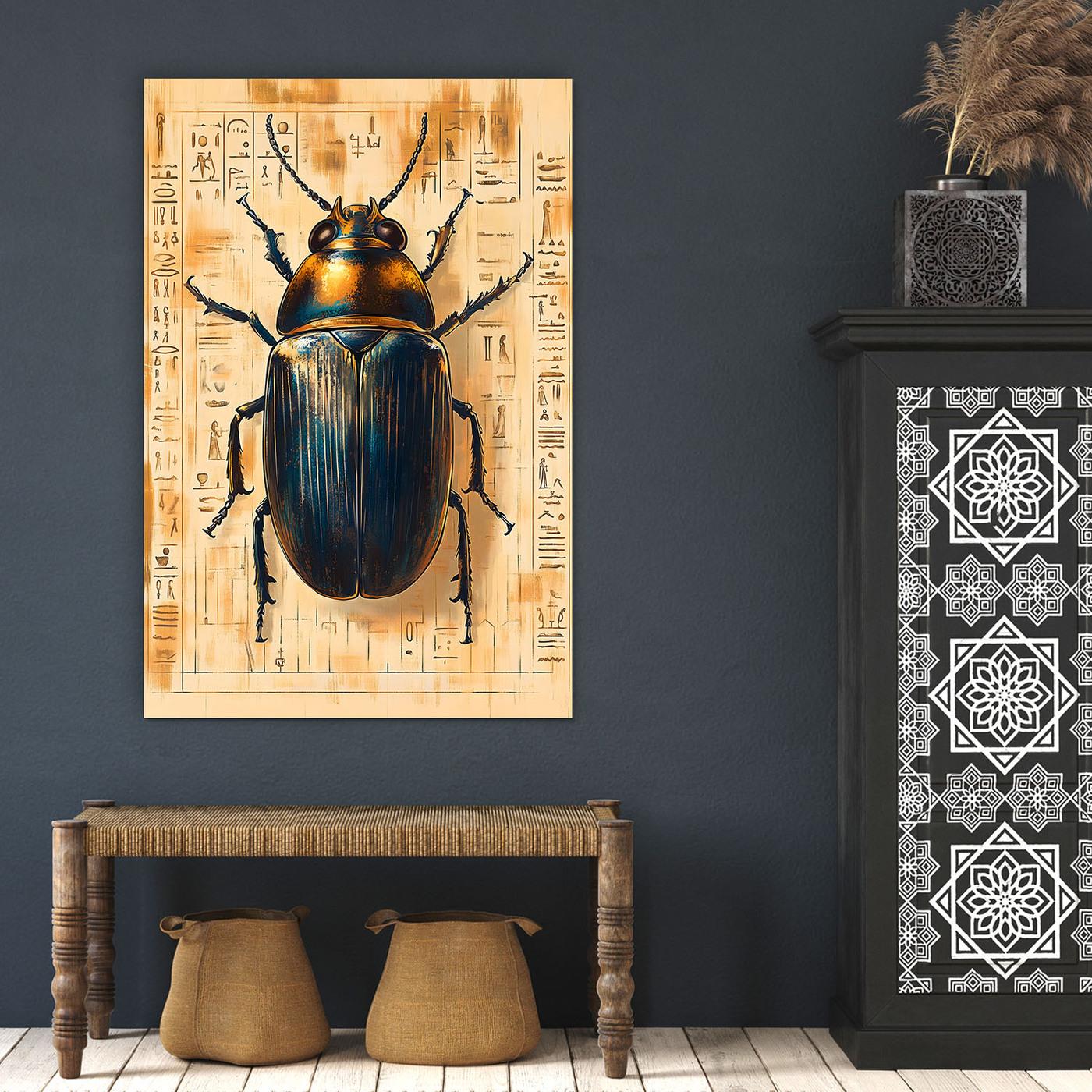 Source: DUBLEZ, Egyptian Wall Art – Scarab