


































































Greek Gods: A Complete Guide to the Most Powerful Beings of Olympus
Greek mythology isn’t just a collection of old tales. It’s a vivid world filled with gods, heroes, tragedies, and passion one that continues to captivate us to this day. At its peak stands Olympus, the home of the most powerful Greek gods. Who were these immortal rulers, what did they represent, and how did they influence the lives of ancient Greeks?
You know names like Zeus, Athena or Aphrodite, but you're not sure who was who? This article offers you a comprehensive overview of the most important Greek gods of Olympus, their powers, stories, and how they influenced people's lives. A quick, fun and enriching journey into a world where gods flew across the sky and dealt with problems just like we do.
In this article, you'll read about the Greek gods:
- Who are the Olympian gods?
- The 12 main Greek gods of Olympus
- Hades, lord of the underworld and shadows
- Greek gods in everyday life
- Why are we still fascinated by Greek gods?
- Olympus never disappeared
Who are the Olympian gods?
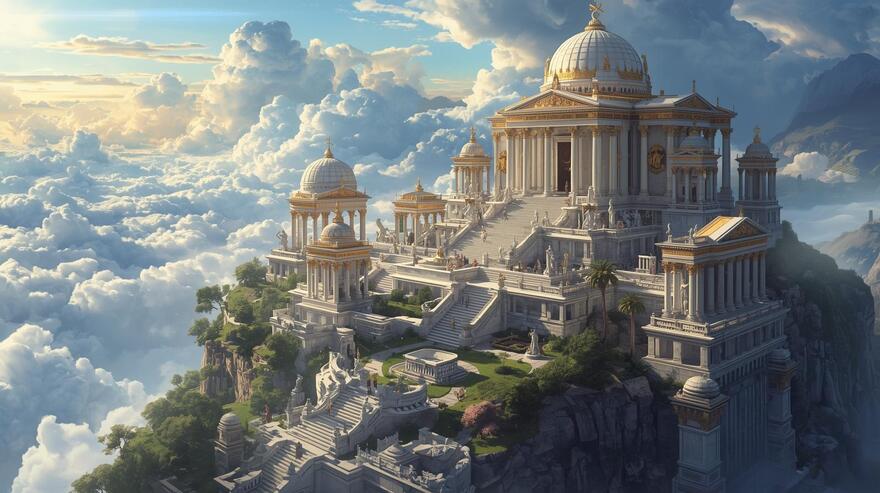
The Olympian gods are the 12 main deities who lived on Mount Olympus, considered the divine residence in mythology. Each of them had their own character, powers, and influence over a specific area of life, from love and war to agriculture.
And even though they were immortal, they often behaved very human. They were jealous, loving, angry, and unfaithful. And that’s exactly what makes them so fascinating.
The 12 main Greek gods of Olympus
- Zeus – ruler of the skies and king of all gods
Zeus, the most powerful of the Olympian gods, rules the skies, lightning, and thunder. He is the symbol of authority, justice, and law, which he uses to maintain order in the world of gods and humans alike. The power of nature and fate is concentrated in his hands, and his decisions can change the course of both human and divine history. But despite his grandeur, he also has a human side. He is impulsive, passionate, and often succumbs to temptation. He is known for his infidelity, which drove his wife Hera into rage, but it is precisely these flaws that make him such a complex character—a strong yet imperfect ruler. Zeus is the embodiment of power and authority, but also a reminder that even the mightiest are not without flaws.
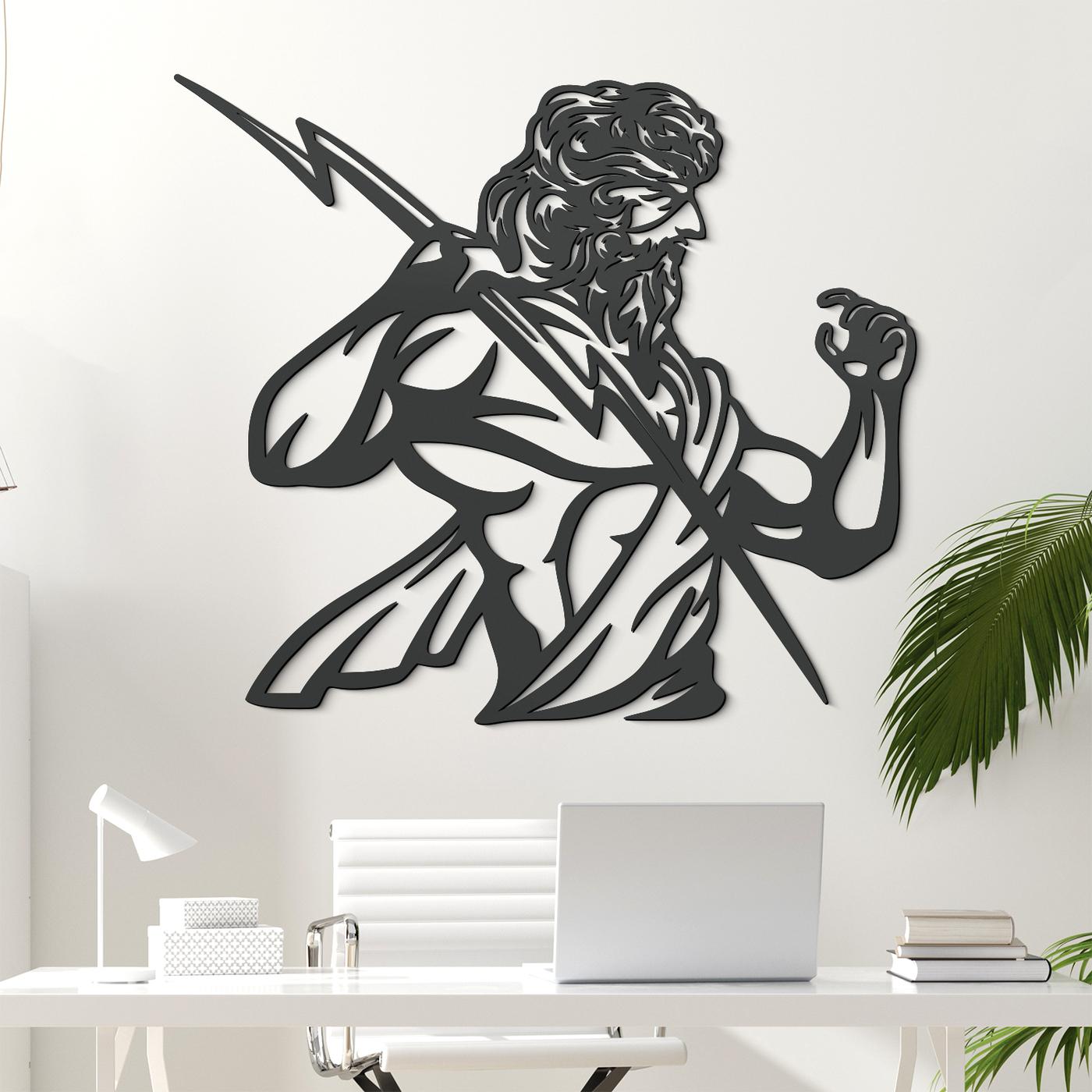 Source: DUBLEZ, Cut-out wooden wall art – Zeus
- Hera – goddess of marriage and family
Hera, queen of the gods and wife of Zeus, is the embodiment of marriage, fidelity, and family values. She rules over unions between people and protects the sacred bond of marriage. As the sister and wife of the ruler of the skies, she stands by his side on Olympus, surrounded by the dignity and majesty that belong to her. But Hera is not just a symbol of peace. She is also a passionate and proud goddess, known for her jealousy of Zeus’s many lovers and illegitimate children. Her revenge was often swift and relentless, but it stemmed from a deep desire for justice and balance. Hera reminds us that a woman’s strength lies not only in kindness, but also in the courage to confront anything that threatens her world.
- Poseidon – god of seas and oceans
Poseidon, mighty god of the seas, oceans, and all waters, is the brother of Zeus and ruler of the endless depths. His symbol is the trident, which he uses to stir the waves, summon storms, or cause earthquakes. His power reaches far beyond the sea. Poseidon also rules horses, which symbolize strength, speed, and wild energy. His nature is as unpredictable as the sea itself—calm and silent one moment, wild and uncontrollable the next. Poseidon is the embodiment of the elemental force of nature that can give and take, protect and destroy. In his presence, one realizes that true power comes from balance, between strength and calm, between the deep and the surface.
- Demeter – goddess of harvest and fertility
Demeter is a kind and powerful goddess who gives life to everything that grows. She is the patron of harvest, fertility, and the earth, from which comes food for people and animals alike. Thanks to her, seeds sprout, fields bloom, and the world becomes abundant. But her story also holds deep sorrow. When her beloved daughter Persephone was taken by Hades into the underworld, Demeter sank into grief, and the land stopped producing crops. It is said that her pain gave birth to winter, a time when nature rests and waits for the return of light. Demeter reminds us of the deep connection between people and the earth, that every seed we plant carries within it the miracle of life.
- Athena – goddess of wisdom, war, and crafts
Athena, daughter of mighty Zeus, is the goddess of wisdom, strategy, and just war. According to myth, she was born directly from his head, already fully grown, wearing armor and ready to take up her shield. This extraordinary origin symbolizes pure intellect, courage, and spirit. Unlike other gods of war, she does not incite bloodshed. Her power lies in strategy, composure, and wisdom. She protects cities, heroes, and all who rely more on intellect than brute force. Athena is also the patron of crafts, arts, and knowledge. She represents the balance between strength and intelligence and reminds us that true victory comes from wisdom and inner strength, not from chaos and anger.
- Apollo – god of the sun, music, prophecy, and arts
Apollo, son of Zeus and Leto, is the god of light, music, prophecy, and all things beautiful that uplift the soul. He is the twin of the huntress Artemis, but while she rules the night and the forest, he brings day and brightness. His presence symbolizes harmony, order, and creative power that connects humans with the divine through light, music, and knowledge. Apollo is a master of the lyre and the patron of poets, artists, and prophets. In his temples, prophecies were born that influenced the fate of people and kings alike. He was known for his beauty, wisdom, and ability to bring light both literally and figuratively into the darkness of the world. He was like an ancient “multitasker”—an artist, healer, prophet, and bearer of truth. Apollo reminds us that knowledge and the beauty of creation go hand in hand.
- Artemis – goddess of the hunt, the moon, and virginity
Artemis, daughter of Zeus and Leto, is the goddess of the hunt, the moon, and eternal freedom. The twin of Apollo, but unlike him, she rules the silence of the night, the forests, and the wild. She is the protector of animals, forests, and all living things born under the stars. She symbolizes independence, strength, and purity. A virgin goddess, she chose to belong only to herself. Her bow and arrows protect the vulnerable, especially young girls and women. Artemis represents a connection to the wild, untamed side of nature and the inner peace brought by solitude and balance. Artemis is the embodiment of womanly freedom and strength, unafraid to walk her own path with her head held high and her heart armored with courage.
- Ares – god of war
Ares, son of Zeus and Hera, is the god of war in its most brutal form. He represents raw strength, aggression, and the uncontrollable passion of battle. While Athena brings wisdom and strategy, Ares is her opposite—he embodies chaos, bloodshed, and relentless fighting. The Greeks didn’t favor him, as his presence brought suffering and destruction. He symbolized the wild emotions that come with war—rage, the desire for victory, but also pain. Despite this, he had a place among the gods, because war is also part of the world’s balance. Ares reminds us that strength alone is neither good nor bad—it depends on how one chooses to use it.
- Aphrodite – goddess of love, beauty, and desire
Aphrodite, goddess of love, beauty, and desire, was born from sea foam when the sky touched the ocean's depths. Her arrival brought such dazzling beauty that even the gods were speechless. She embodies passion, sensuality, and the power that love holds—the ability to enchant, unite, and even destroy. She is seductive and irresistible, but also dangerous, because those who fall in love without reason may become slaves to their own emotions. Aphrodite reminds us that love is not only gentle and tender, but also powerful and unpredictable, a force that can transform the world. In her eyes reflects the eternal desire for union between body and soul, heaven and earth, human and divine.
- Hermes – divine messenger, god of merchants, thieves, and travelers
Hermes, son of Zeus and Maia, is the divine messenger, the patron of merchants, travelers, but also thieves and tricksters. He is the fastest of all gods, with winged sandals that allow him to fly between heaven, earth, and the underworld. Thanks to his agility and witty speech, he acts as an intermediary between realms and among people. He is clever, humorous, and always one step ahead. Even as a newborn, he managed to trick Apollo and steal his cattle, but quickly regained his favor with charm and wit. Hermes is the master of communication, commerce, and quick thinking, turning chaos into order. He symbolizes freedom of movement, adaptability, and the ability to see the world from different perspectives. Hermes reminds us that sometimes wisdom lies in lightness, playfulness, and the courage to cross boundaries.
- Hephaestus – god of fire, blacksmithing, and technology
Hephaestus, god of fire, blacksmithing, and craftsmanship, is the creator of everything that bears the mark of strength and beauty. Although born lame and not gifted with physical perfection, his hands could create wonders. In the glow of his underground forges, he melted metal and crafted weapons for the gods and works that went beyond the limits of craft and art. He was the one who made Zeus’s thunderbolt, Apollo’s bow, and Achilles’s legendary shield. The fire he controlled combined destruction with creativity. It was a force that could both destroy and give life to new forms. His wife was none other than Aphrodite, the goddess of beauty. They formed a unique union of opposites—raw iron and delicate passion. Hephaestus reminds us that true beauty does not arise from perfection, but from the courage to create despite wounds and imperfections.
- Hestia – goddess of the home and the hearth
Hestia, goddess of the home, the family hearth, and the sacred flame, is the quiet force among the gods. She does not rule with thunder or a sword. Her power lies in peace, order, and warmth, which keep the world in balance. While other gods seek glory and power, Hestia remains devoted to the simplicity and calm that bring harmony. Her fire never goes out and symbolizes the warmth of home, family bonds, and the certainty that no matter how much the outside world changes, there is always a place where we belong. Hestia is the patron of hospitality and peace, the quiet heart of every home and of Olympus itself. In her presence, we learn that true strength doesn’t have to be loud. Sometimes it hides in calmness, devotion, and the light that never stops burning.
Hades, lord of the underworld and shadows
Hades, brother of Zeus and Poseidon, rules the realm of the dead, the silent and dark underworld where souls go after death. Unlike his brothers, he did not live on Olympus, but in the kingdom of shadows, where he rules justly, though without compassion. His power is quiet, yet unshakable. Every life eventually returns to him.
Hades was not evil, as people often imagined. He was the guardian of balance between life and death. His role was to ensure that the order of the world remained undisturbed, and that death held as much weight as life. His wife became Persephone, whom he brought to his kingdom. Their story speaks of the cycle of death and rebirth, and of how even in darkness, light can be found. Hades reminds us that darkness is not the enemy of light, but its necessary part.
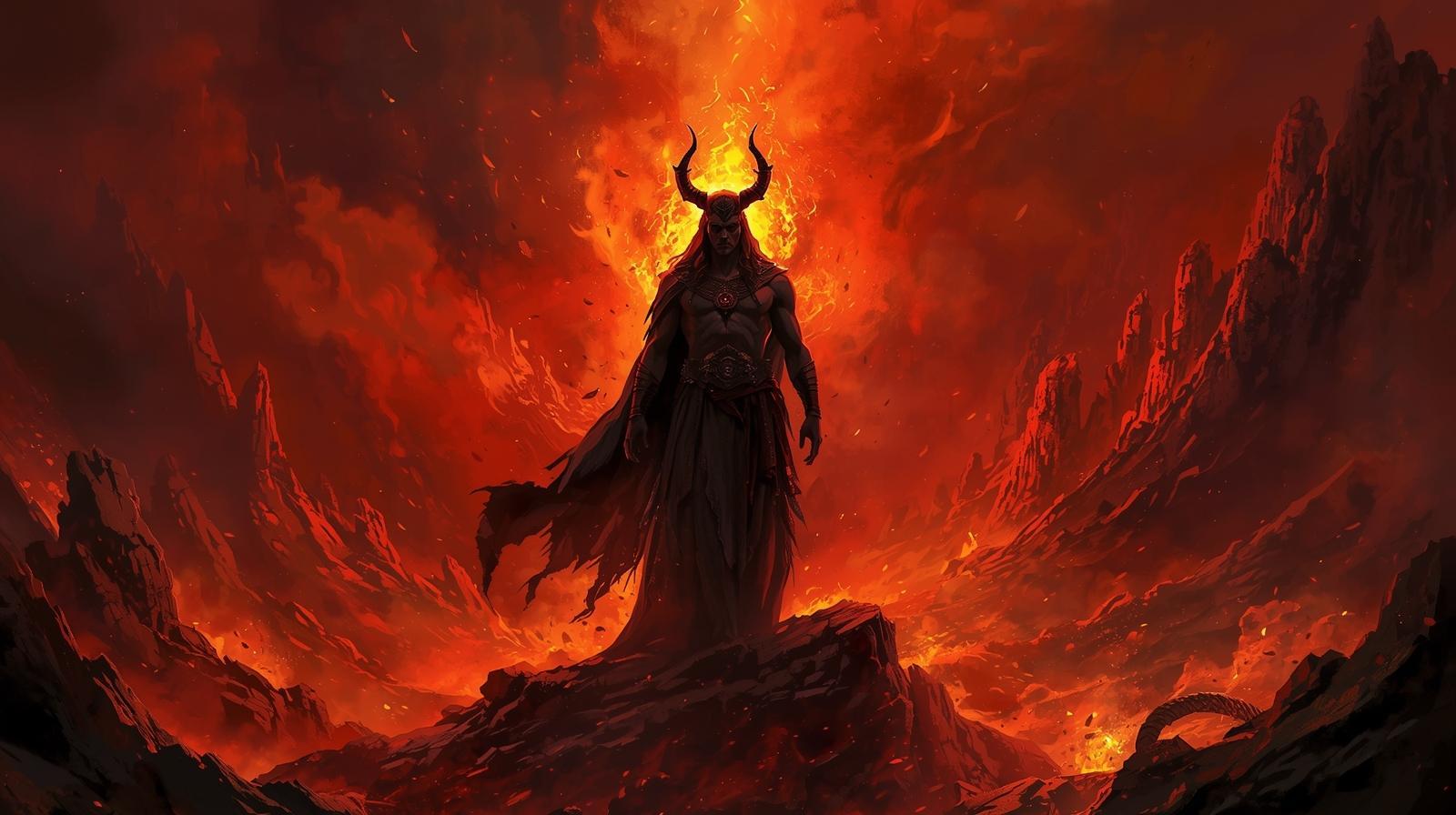 Source: DUBLEZ
Greek gods in everyday life
To the ancient Greeks, the gods were not just characters from legends, but a living part of everyday life. They had temples, received offerings, and were honored with grand celebrations, such as the Olympic Games held in honor of Zeus. Every city had its own guardian or patron deity—for example, Athens worshipped the wise goddess Athena.
The gods still accompany humanity today, though in different forms. They appear in movies, books, brands (like Nike, named after the goddess of victory), and even in science, where Hermes, for instance, symbolizes medicine and the connection between worlds. Greek mythology is still alive—it has simply found new ways to tell the same timeless stories.
Why are we still fascinated by Greek gods?
Perhaps because, even though they are immortal, they are surprisingly similar to us. They feel emotions, make mistakes, seek love, power, and recognition. They are like us, just with greater abilities and more dramatic entrances, often accompanied by lightning, music, or miracles.
Greek gods carry within them the archetypes of the human soul. Each one represents a part of ourselves—strength, passion, wisdom, desire, justice, or anger. And perhaps that is exactly why we are still drawn to them. They remind us that even though we are not gods, there is a part of their stories within each of us.
Olympus never disappeared
The Greek gods were never locked away in old myths or dusty books. Their stories, symbols, and meanings live on in our decisions, desires, weaknesses, and courage. Each one holds a piece of human nature, and that is why they never truly vanished. Maybe today they don’t reside on Mount Olympus, but in our minds and hearts. And the next time the sky lights up with thunder, you might smile and think, “Looks like Zeus is in the mood again.”