

































































Roman Gods: A Pantheon of Power, Order, and Roman Discipline
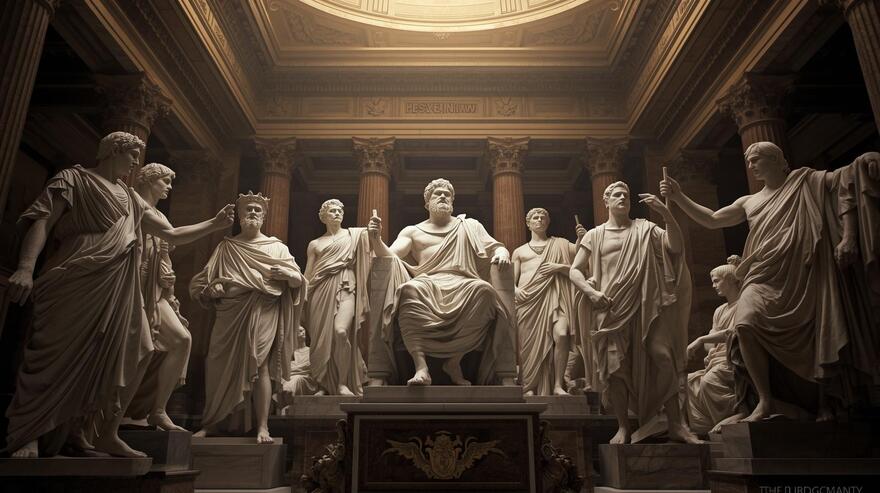
Who were the Roman gods? Why did they have such a profound influence on the politics, daily life, and culture of the Roman Empire? In this article, we’ll explore the Roman pantheon, the significance of the most important gods, their roles and powers, and how their legacy still lives on today. Get ready for a fascinating journey into a world where order, discipline, and eternity were sacred.
When someone says “Roman gods,” many people think of them as just “Greek gods in disguise.” But Roman mythology is so much more than just a Latin version of the Greek one. It is a belief system that shaped the greatest empire of the ancient world and had a major influence on politics, warfare, society, and everyday life.
Rome was not just armies and emperors. It was also temples, rituals, and deities that guided Romans toward order, discipline, and loyalty to the state. Roman gods weren’t just symbols — they were a living force behind Roman identity.
In this article, you’ll learn about:
- Roman Mythology: More Than Just a Greek Copy
- The Most Important Roman Gods
- The Pantheon as a System
- Roman Gods in Everyday Life
- The Imperial Cult
- The Influence of Roman Gods on Christianity
- Roman Gods and the Power of Order
Roman Mythology: More Than Just a Greek Copy
Yes, many Roman gods have their “Greek counterparts.” Zeus became Jupiter, Aphrodite turned into Venus, and Ares into Mars. At first glance, it may seem like a simple name change, but the differences run much deeper.
The Greeks saw their gods as emotional, beautiful, and full of dramatic stories. Their gods were unique, human-like, and often contradictory. The Romans, however, had a different approach. They emphasized order, authority, and responsibility. For them, gods were not just symbols, but guarantors of a functioning state and society.
That’s why the Roman pantheon feels more like a well-organized office of divine officials, while the Greek one resembles a lively gallery of personalities — passionate, creative, and at times chaotic.
The Most Important Roman Gods and Their Domains
Roman gods had very specific roles — often focused on the protection of the state, family, and social order. Here are the most important ones:
- Jupiter – supreme god, ruler of the skies
Jupiter is the highest of the Roman gods, ruler of the skies and protector of order. His power is symbolized by the lightning bolts he holds, representing justice and authority. He stands above the law, ensures it is upheld, and protects the Roman state itself. In Roman belief, he embodied divine power that kept the world in balance.
- Juno – goddess of marriage, childbirth, and the state
Juno, wife of Jupiter, is one of the most powerful goddesses in the Roman pantheon. She protects marriage, childbirth, and the family — but also the Roman state itself. Roman women saw her as their guardian and guide during life’s most important moments. Juno embodies feminine strength, dignity, and maternal wisdom with the authority to maintain order in both family and society. - Minerva – goddess of wisdom, crafts, and military strategy
Minerva is the goddess of wisdom, craftsmanship, and military strategy. She represents calm judgment, intellect, and the ability to think through every step before acting. Often depicted with a helmet and an owl — symbols of vigilance and knowledge — she was revered as the patroness of scholars, artists, and all who blend logic with creativity. - Mars – god of war, strength, and protection of the empire
Mars is the god of war, strength, and courage — and the protector of the Roman Empire. Unlike the Greek Ares, he didn’t stand only for brute force and a passion for battle, but also for discipline, bravery, and a noble desire to preserve peace and order. Romans respected him as the father of the founders of Rome and the embodiment of the courage that builds and defends. - Venus – goddess of love, beauty, and fertility
Venus is the goddess of love, beauty, and fertility. She embodies attraction, tenderness, and the creative power of life. Romans honored her not only for her charm but also as the mother of their people — according to legend, her son Aeneas founded the lineage that led to Rome. Venus combined beauty with destiny and love with eternity. - Mercurius – god of commerce, speech, travel, and profit
Mercury is the god of trade, communication, travel, and profit. In Roman mythology, he is known as the swift messenger of the gods, moving between worlds with ease and cleverness. He protects merchants, travelers, and those who rely on their wit and eloquence. The wings on his sandals symbolize agility, inventiveness, and the ability to find a path where others see none — a true entrepreneur among the gods. - Neptunus – god of the seas and waters
Neptune is the god of the seas, oceans, and all waters. He rules the depths with a power and majesty that inspire awe and respect. In addition to the sea, he was also linked to horses — symbols of speed and wild energy. For Romans, Neptune was an important protector of sailors and patron of naval expansion, which allowed their empire to grow beyond the mainland. - Vulcanus – god of fire, blacksmithing, and craftsmanship
Vulcan is the god of fire, blacksmithing, and all things crafted by hand. He is the patron of those who work with metal, fire, and technology — a symbol of the creative power hidden in the glow of flames. Romans honored him as the master craftsman of the gods, creator of weapons, tools, and works of art. His fire could destroy, but also create — just like human passion and ingenuity. - Diana – goddess of the hunt, the moon, and nature
Diana is the goddess of the hunt, the moon, and nature. She embodies freedom, purity, and humanity’s connection to the wild world. As a virgin goddess, she protects animals, children, and all living beings in need of protection from the strong. Romans revered her as a symbol of independence and the balance between humans and nature — between the moonlight and the forest’s darkness. - Ceres – goddess of harvest and agriculture
Ceres is the goddess of harvest, agriculture, and the fertility of the land. Her power lies in the force that awakens the earth to life and provides food for the people. Romans worshipped her as the protector of farmers and the guarantor of abundance — without her, survival was impossible. For rural communities, Ceres represented the connection between humans and nature, the rhythm of the seasons, and the eternal cycle of life. - Vesta – goddess of the home and eternal flame
Vesta is the goddess of the home, family warmth, and the sacred flame that was never meant to go out. Her temple stood in the heart of Rome, and the ever-burning fire symbolized the life and endurance of the Roman people. If the flame went out, it was seen as a bad omen and a warning for the entire state. Vesta embodied peace, unity, and the light that holds both household and society together.
This is just the core pantheon, because the Roman world included dozens of other deities. In addition to the great gods, there were minor, domestic, and local spirits who accompanied people in everyday life. Romans believed divine power resided everywhere — in the home, the field, the forest, even a spring. They had a god of doors (Janus), a god of the harvest, and even spirits of the well or the hearth. Their religion was a network of respect, rituals, and a deep belief that the world is alive and everything in it has its guardian.
The Pantheon as a System – Divine Order in Roman Society
The Roman gods formed a well-structured system that resembled the organization of the state. Each had their role, festivals, and cult. Their relationships were arranged as carefully as those between people and state offices.
Romans did not worship gods out of fear, but out of a deep sense of responsibility for the common good. Religion was not a private matter, but a public expression of citizenship and respect for order. The gods were part of an invisible contract between the people and the state. If sacrifices were made and rituals followed, Rome thrived, and the world remained in balance.
Roman Gods in Everyday Life
Roman mythology wasn’t separate from everyday life — on the contrary, it was a natural part of it. Every household, family, and soldier had their own gods. In every home, a flame burned for the goddess Vesta, and a small altar for the household spirits — Lares and Penates — had a special place at the table. Before any major decision, Romans consulted oracles and looked for signs to show the gods’ will.
Every trade, profession, and city district had its own protector. Merchants called on Mercury, farmers on Ceres, and soldiers on Mars. Gods weren’t just “up above” — they were in the streets, homes, fields, and people’s hearts. They were present — and demanded respect.
Decoration tip from DUBLEZ:












The Imperial Cult: When Man Became God
The Roman Empire went even further — its rulers became gods after death, and sometimes even during their lifetime. The first was Augustus, who was declared “divus” (divine) by the Senate. From then on, the emperor was more than just a man — he was a demigod, and worshiping him expressed loyalty to the empire and its order.
Temples were built for the imperial family, festivals held, and coins were minted with their likeness. The imperial cult was not just a religious practice — it was also a political tool. Worshiping the emperor united the vast empire’s population and strengthened the idea of shared power and unity.
Not all emperors were loved, though. Some deified themselves — like Caligula — while others were condemned after death and erased from history. Still, the idea that power could have a divine source lived on for centuries and influenced later forms of government and ideology.
The Influence of Roman Gods on Christianity and Western Culture
Even though Rome later became the cradle of Christianity, many ideas and symbols from its old religion survived and subtly transformed into the new faith and culture.
The eternal flame once burning in Vesta’s temple became a symbol of living faith. The blessing of days, celebrations, processions, and rituals all have roots in pagan traditions. Even symbols of power — such as the victory wreath, eagle, or scepter — made their way from Roman iconography into Christian and imperial symbolism.
We can still see traces of Roman gods in everyday life. Planet names like Mars, Jupiter, and Saturn recall ancient deities. January is named after the two-faced Janus. Many legal principles come from Roman thinking. The Roman gods may have lost their temples, but their spirit remains — in culture, language, and in how we understand the world.
Roman Gods and the Power of Order
Because they teach us something essential: every society needs symbols, order, and belief. Not blind belief, but a sense that we are part of something greater than ourselves. The Romans cultivated this feeling through their gods; today, we seek it in values, stories, and history.
Roman gods show how power, faith, and everyday life can come together in a system that lasted for centuries. And while it wasn’t always just, it laid the foundations of civilization that we still stand on today.
Conclusion: Order, Discipline, Eternity
Roman gods weren’t chaotic like the Greek ones. They functioned as an army of deities, each with their task, their place, and responsibility. Together, they created a system that became the foundation of Rome and its lasting legacy.
Today, when the world often feels chaotic, it’s worth remembering that strength can also lie in order, respect, and balance. Maybe the old gods never truly disappeared — maybe they’re just waiting for us to remember them again.