


































































The Most Famous Paintings in the World and Their Hidden Meaning
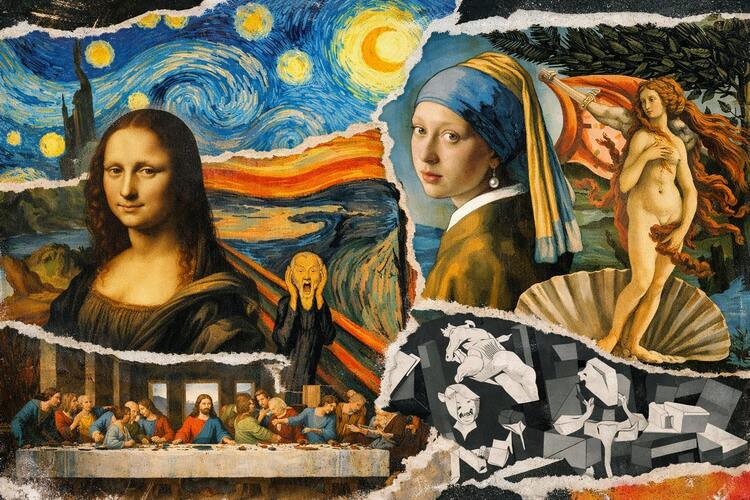
From the Mona Lisa to The Scream – we all know them. But what do these paintings really tell us? In this article, we take a look at the most iconic works of world art and reveal hidden emotions, symbols, and messages that have resonated within us for centuries. Not facts, but stories – the ones you feel when you look.
The Most Famous Paintings in the World and Their Hidden Meaning
Some paintings are more than just masterpieces—they have become part of our collective soul. They have woven themselves into psychology, memes, interiors, dreams, and everyday emotions.
In this article, we explore seven iconic works that have stood the test of time. You’ll discover what makes them exceptional, the stories they hold, and why they can still captivate us so deeply today.
In this article, you will read about the most famous paintings:
- Mona Lisa - a mystery that doesn’t move, yet moves you
- The Scream - the loudest silence hanging on the wall
- The Last Supper - more than just a biblical scene
- Girl with a Pearl Earring - silence that touches you
- The Birth of Venus - beauty that needs no explanation
- Guernica - when art screams for everyone
- Starry Night - when the soul looks at the sky
- Why do we love these paintings?
- Conclusion: A painting that speaks to you
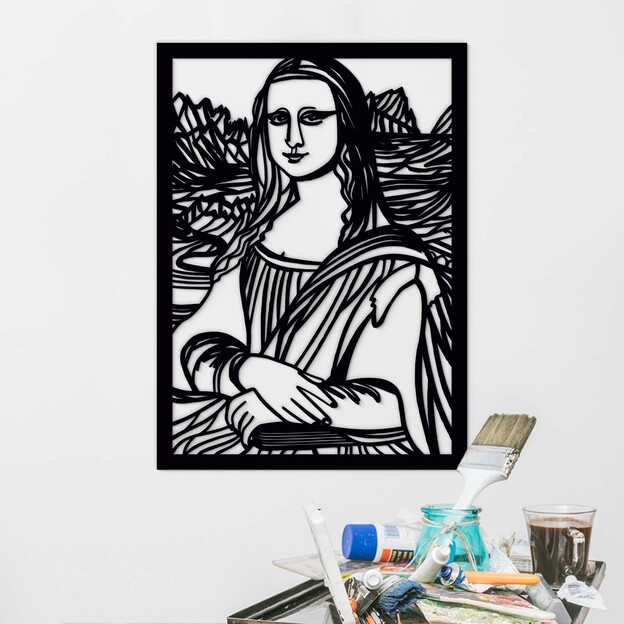
Mona Lisa – a mystery that doesn’t move, yet moves you
Her gaze is more famous than entire museums. She sits, she smiles. Maybe. Or maybe not? Everyone who sees her pauses for a moment. Not because of the technique, not because of the fame, but because of that unexplainable “something”. As if it’s not Lisa on the canvas, but the silence of our own inner world. Calm, yet full of questions.
The portrait was created between 1503 and 1519, and its aura has lasted for centuries. In 1911, it was stolen directly from the Louvre, and that’s when its legend was born. Fifty years later, in 1962, it was insured for 100 million dollars, which today would be more than a billion. The Mona Lisa belongs to the French state and can never be sold. But its true value does not lie in money, but in what it awakens in people—the feeling that someone is quietly asking us who we really are.
Interestingly, her smile changes depending on where you look. Scientists have confirmed that Leonardo deliberately used the “sfumato” technique, where edges and shadows blend into soft transitions. That’s why it seems that Lisa smiles only when you don’t look at her directly. It’s a smile that lives its own life.
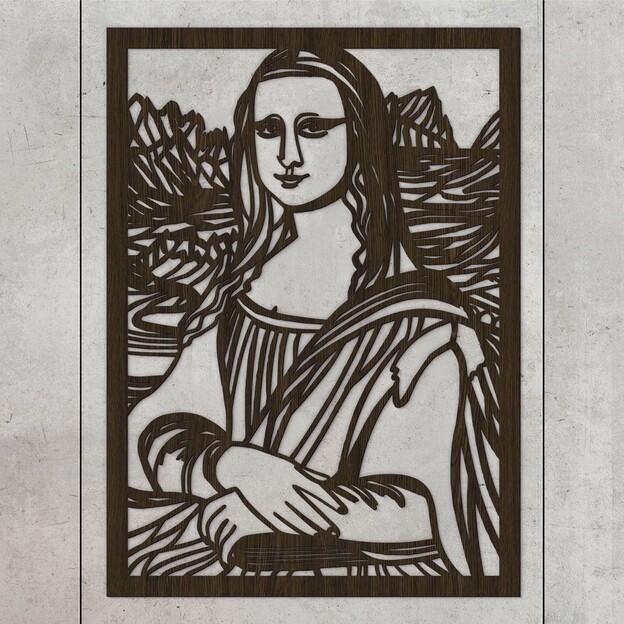
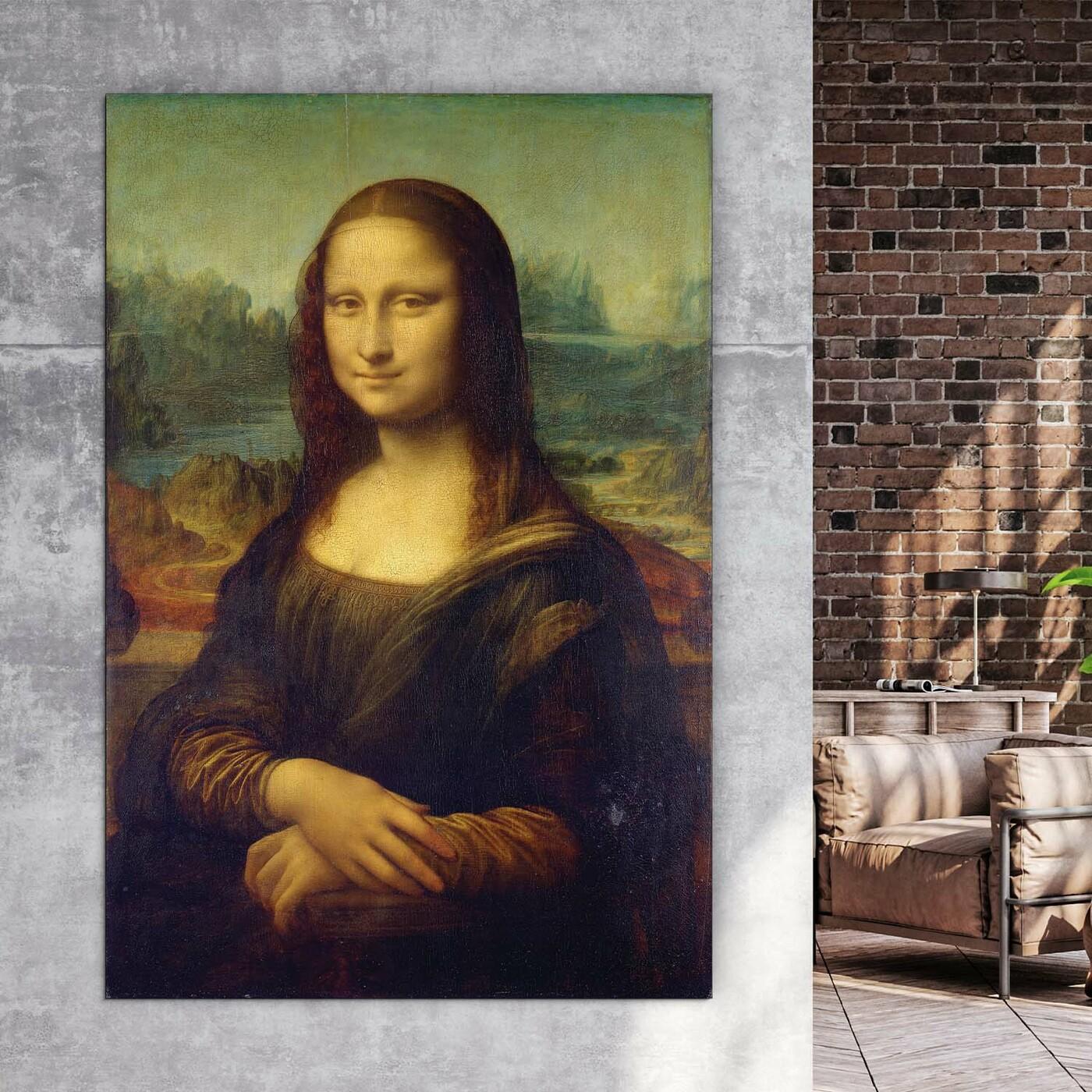 Tip from DUBLEZ: Wooden reproduction of the painting - Mona Lisa
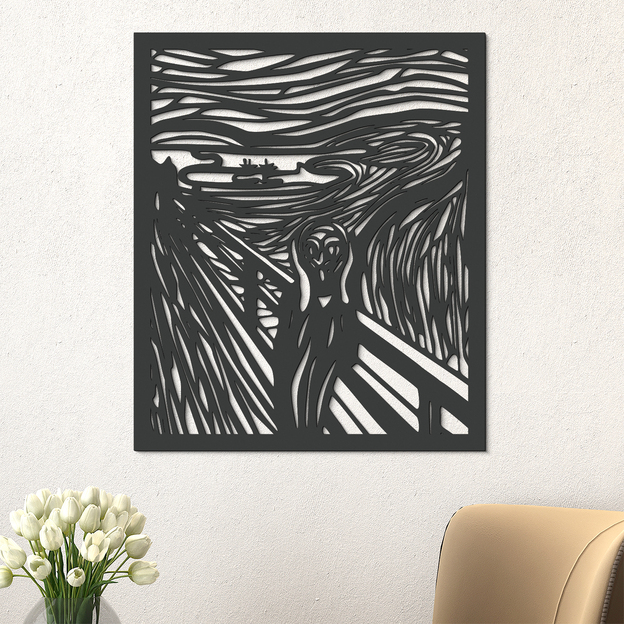
The Scream – the loudest silence hanging on the wall
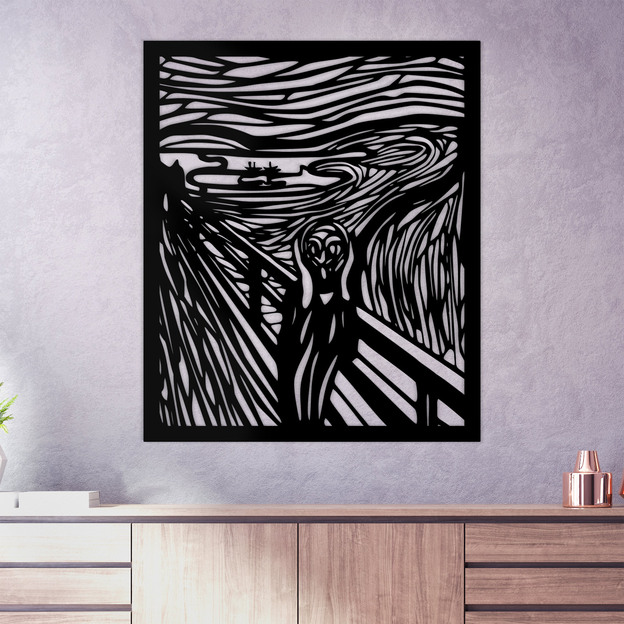
You remember this painting. A genderless figure, a glassy expression, an open mouth, a wavy landscape, and that tension. The Scream is a painting of anxiety. It captures the moment when your soul screams and your body stays silent. That’s why it has become a universal symbol of inner chaos.
The first version was created in 1893. The author, Edvard Munch, experienced a panic attack during a walk and transformed that state into a painting. Today, several versions of The Scream exist, and the painting has become part of humanity’s cultural DNA. People wear it on T-shirts, share it as an emoji, and hang it at home as a poster. Because we all know that scream.
Interestingly, The Scream itself has a dramatic history. It was stolen several times—first in 1994 directly from the National Gallery in Oslo, and again in 2004, when armed thieves broke into the Munch Museum. Fortunately, both versions were later recovered and returned. It’s as if the painting itself lives what it depicts. It was taken, lost, saved—and that’s why it feels even more like a living symbol of human anxiety that always finds its way back to the light.
 Tip from DUBLEZ: Wooden Wall Art - The Scream, Munch
The Last Supper – more than just a biblical scene
A familiar scene. Jesus and the twelve apostles. Leonardo da Vinci didn’t just create a “painting from the Bible.” He captured the tension just before betrayal. Gestures, glances, expressions—everything centers around the calm figure of Jesus in the middle of the composition. He is still, while chaos brews around him.
The painting was created between 1495 and 1498 in Milan. Interestingly, just fifty years after its completion, it was already significantly damaged due to an experimental painting technique. It has survived to this day only thanks to numerous restorations. During World War II, the monastery where the painting is located was hit by a bomb. Yet the wall with Leonardo’s work miraculously remained standing among the ruins. As if the painting itself was protected by the power of the moment it captures.
Leonardo’s mastery lies in capturing not just a biblical moment, but the psychology of a turning point, when the world begins to shift. Each apostle carries a different emotion—surprise, fear, anger, sadness, confusion. In the middle of it all sits Jesus, quiet and composed, a balance between opposites. Perhaps that’s why the painting has endured all its wounds. Because at its core is not tragedy, but peace.
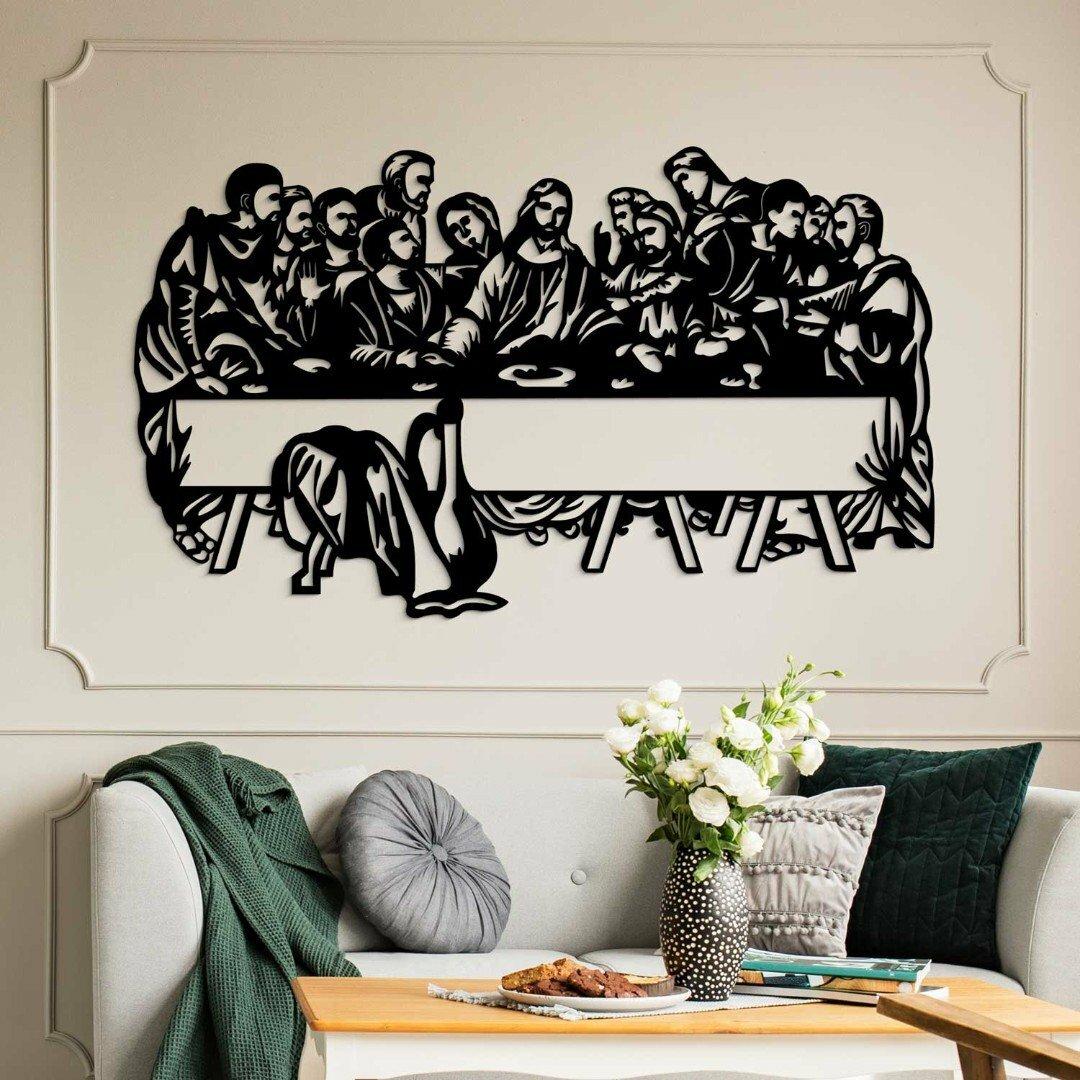
Tip for a modern piece:Wooden Wall Art - The Last Supper
Girl with a Pearl Earring – silence that touches you
A delicate face, a clear gaze, light, and a pearl. The painting feels like a whisper. It doesn’t speak loudly, yet leaves a lasting impression. Perhaps that’s why it’s called the “Mona Lisa of the North.”
It was created around 1665. The author is Johannes Vermeer, a painter who produced only about thirty-six works. The turban uses pigment from lapis lazuli, one of the most expensive stones in the world at the time. The color blue was once more valuable than gold. The painting was once sold for just a few guilders and was “rediscovered” only in the 19th century.
Today, it is one of the most intimate and beloved portraits in history.
Vermeer captured more than just a face. He captured a moment between breath and word, a fleeting glimpse of presence that disappears the moment you try to grasp it. The pearl in her ear is not just decoration. It is a mirror of light, a point where the outer and inner worlds meet. That’s why the girl doesn’t just look at you. She looks into you.
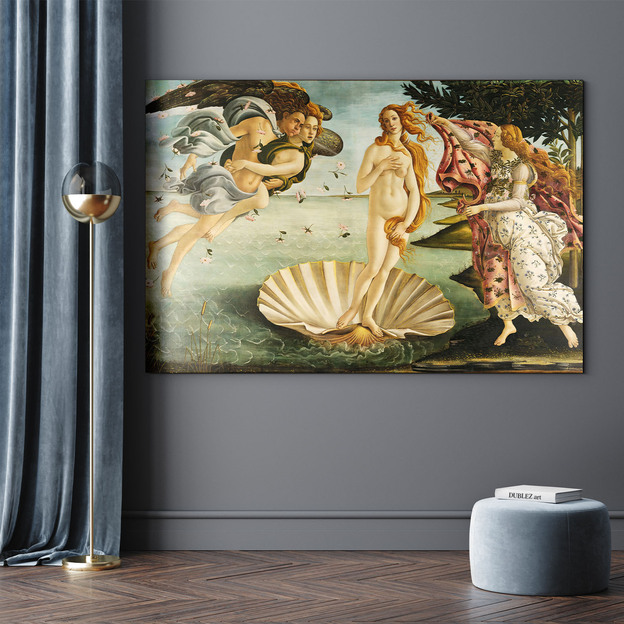
The Birth of Venus – beauty that needs no explanation
A naked goddess stands on a shell. Her hair flows in the wind, surrounded by roses, soft shapes, and a dreamlike atmosphere. It is not just a painting of beauty. It is the very birth of the feminine principle.
Sandro Botticelli painted it around 1486. Venus does not have realistic proportions, yet she feels otherworldly. Her body is not physical, but spiritual—as if she were born from an idea, not from matter. The painting was groundbreaking because at a time when Christian art dominated, Botticelli boldly revived a pagan goddess. Venus became a symbol of the Renaissance—a return to humanity, the body, nature, and beauty as an expression of divine order.
Interestingly, some historians see in her an ideal of pure love, not physical but spiritual. Others say Botticelli placed a quiet sadness in her gaze, an awareness that perfection cannot remain on earth. Perhaps that’s why this painting fascinates us. Because it tells us that beauty needs no reason. It simply is.
Wall art from other artists you might like. Selected for you by DUBLEZ.
-25%Sale 🔥

Wooden Reproductions of Famous Paintings
from 25,00 € 33,40 €
-25%Sale 🔥
5
Wooden Reproductions of Famous Paintings
from 25,00 € 33,40 €
-25%Sale 🔥
2
Wooden Reproductions of Famous Paintings
from 25,00 € 33,40 €
-25%Sale 🔥
8
Wooden Reproductions of Famous Paintings
from 25,00 € 33,40 €
-25%Sale 🔥
2
Wooden Reproductions of Famous Paintings
from 25,00 € 33,40 €
-25%Sale 🔥
+ 7

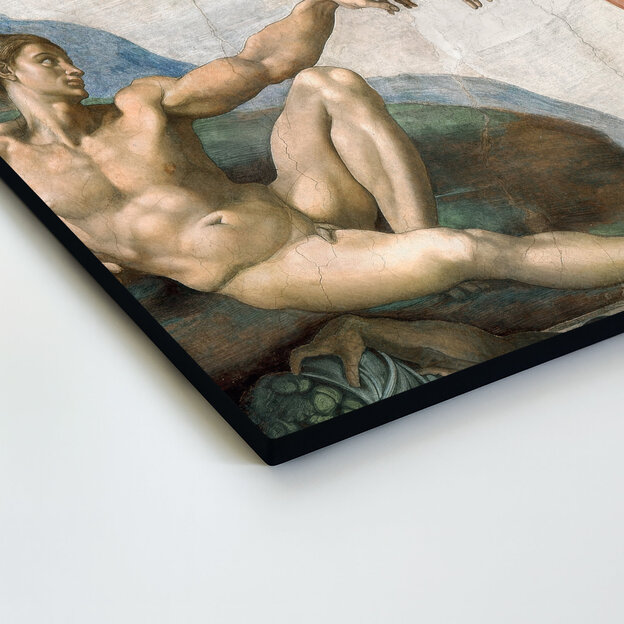




Guernica – when art screams for everyone
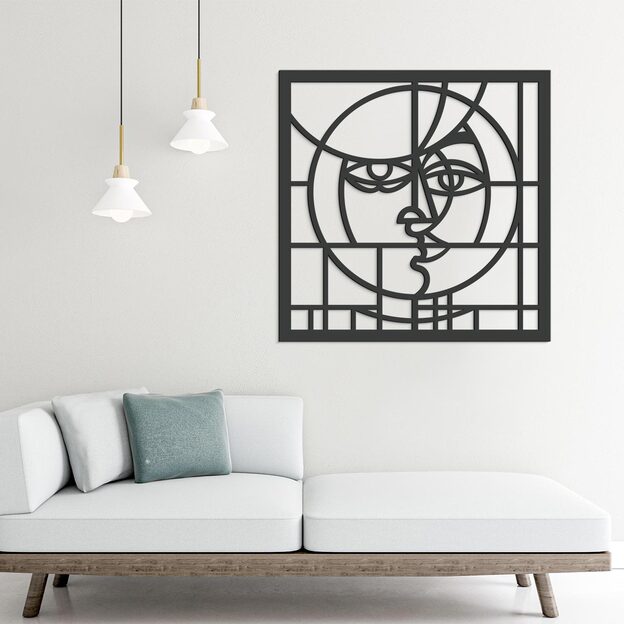
Pablo Picasso depicted the horror caused by an aerial attack by the German Legion during the Spanish Civil War. No colors—only black, white, and gray. Broken faces, screams, terror. The painting has no continuous narrative, yet its power hits you instantly.
Guernica was created in 1937 and is enormous—almost eight meters wide. Picasso painted it in response to the bombing of the Basque town of Guernica, which lasted only a few hours but destroyed the entire city. The work became an icon of resistance against violence, dictatorship, and war. During World War II, Picasso lived in occupied Paris. When a German officer visited him and saw a reproduction of the painting, he asked: “Did you do this?” Picasso replied: “No. You did.”
Guernica still hangs in the Museo Reina Sofía in Madrid. It is not just a painting of horror, but also a testimony to the power of art that can scream without words. It is a mirror of human pain, but also a reminder that even the silence after an explosion can carry a voice.
Starry Night – when the soul looks at the sky
Vincent van Gogh painted this work in 1889 during his stay in a psychiatric hospital in Saint-Rémy-de-Provence. The painting does not depict a real landscape. It is a visual record of his soul. Stars like bursts of light, a swirling sky, cypress trees like flames. Starry Night is not about the night. It is about the inner world. About a feeling of loneliness, a longing for peace, and an immortal hope that flickers even in the darkest darkness. Every swirl in the sky seems to breathe, as if the sky moves together with his heart.
Interestingly, Van Gogh wrote to his brother Theo that he felt “immense despair, but also an unbreakable love for life.” This mix of pain and light meets in the painting like two universes—one in the soul, the other in the sky. Today, Starry Night is one of the most famous paintings in the world and hangs in the Museum of Modern Art in New York. It is not just a view of the sky. It is the view of a soul trying not to fade.
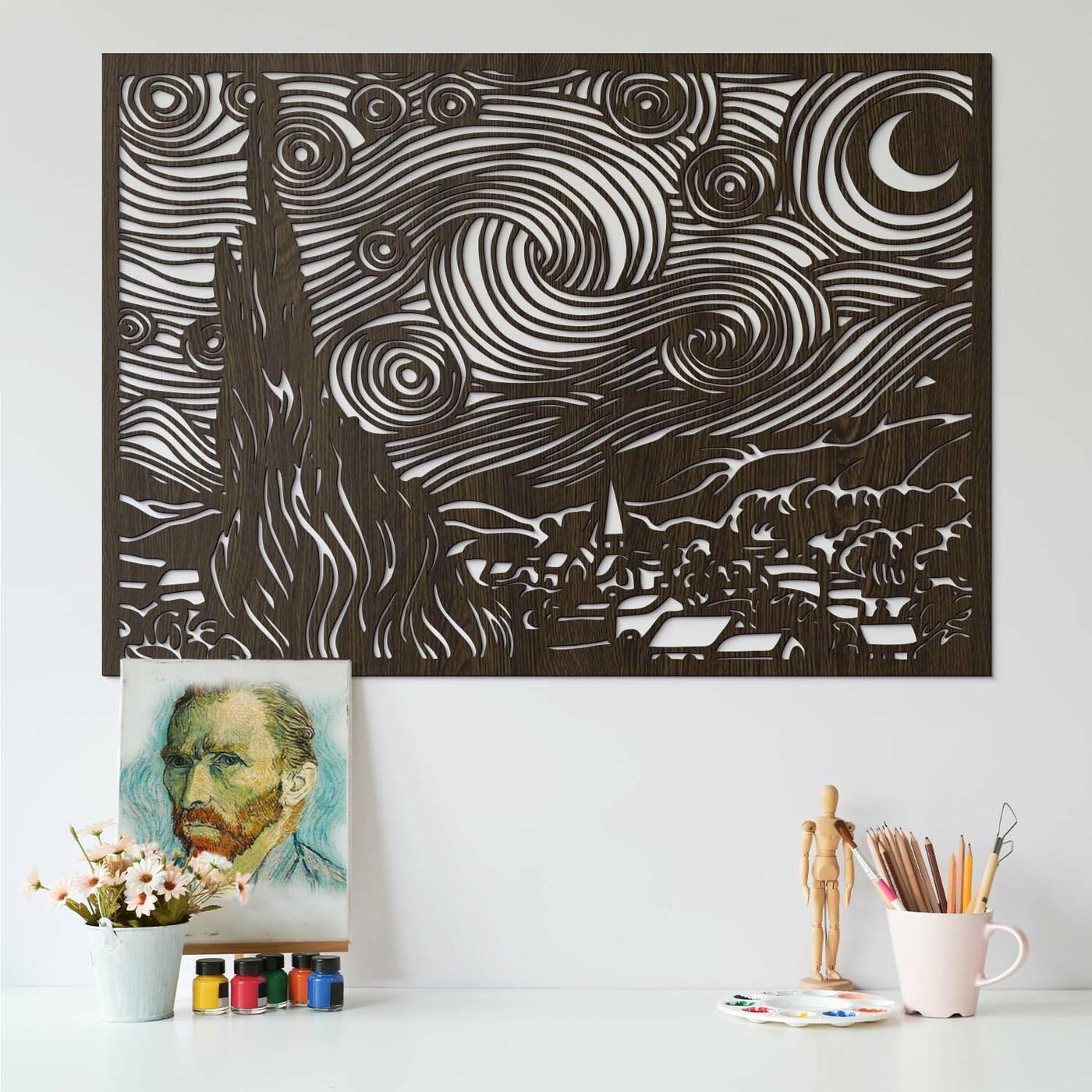 Tip for a modern piece: Wooden Wall Art Vincent van Gogh - Starry Night
Why do we love these paintings?
Not because they are technically perfect. We love them because they open something within us. They touch places words often cannot reach. They are mirrors of our emotions, memories, desires, and wounds. These are paintings you don’t just see with your eyes—you feel them with your heart.
The Mona Lisa is silent, yet feels as if she knows everything about you. The Scream screams for you too. Guernica hurts. Starry Night calms. These are not just artworks. They are messages that speak to us from within.
Wall art you might like from DUBLEZ.
-25%Sale 🔥
1
+ 7
Wooden Reproductions of Famous Paintings
from 20,90 € 27,80 €
-25%Sale 🔥
+ 7
Wooden Reproductions of Famous Paintings
from 20,20 € 27,00 €
-25%Sale 🔥
8
+ 7
Wooden Reproductions of Famous Paintings
from 22,30 € 29,70 €
-25%Sale 🔥
11
+ 7

Conclusion: A painting that speaks to you
Maybe you have a reproduction of it at home. Or perhaps you only catch a glimpse of it in a photograph. You don’t need to know all the facts to feel its power. Because the best painting is not the one admired by everyone. It is the one that speaks directly to you.
And maybe you already have it. You just need to look a little deeper.