








































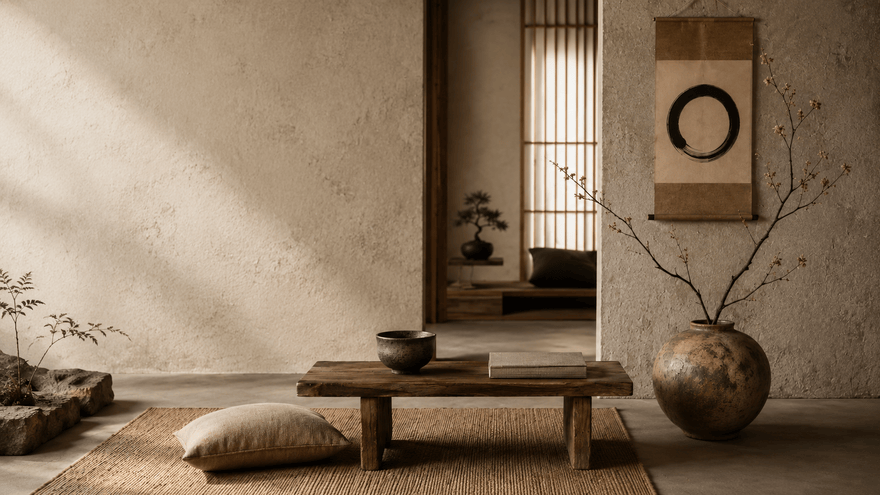
Zen & Wabi-Sabi Interiors: Create a Calm, Beautiful Home
Forget clutter, shine, and trends. ZEN and wabi-sabi will show you how to create an interior that breathes calm. In this article, we’ll introduce you to the philosophy of beauty in simplicity – and give you practical tips on how to create a harmonious living room, bedroom, kitchen, and meditation corner.
In the following article, you will read about:
- 1. What ZEN and wabi-sabi are: When philosophy meets design
- 2. Why do we need silence in our living spaces today?
- 3. The key pillars of a ZEN and wabi-sabi interior
- 4. A practical guide to turning your home into an oasis of calm
1. What ZEN and wabi-sabi are: When philosophy meets design
In the world of interior design, we often come across trends that dictate perfection, symmetry, and shine. In contrast to this constant pressure for flawlessness, however, an approach is coming to the forefront that looks for depth and meaning in something completely different. The Japanese style of living, deeply rooted in ancient philosophies, opens the door to a world where true beauty is quiet, simple, and often hidden in imperfection. By combining the philosophy of ZEN with the aesthetic principle of wabi-sabi, we do not create just another design style, but literally a remedy for our overloaded minds.
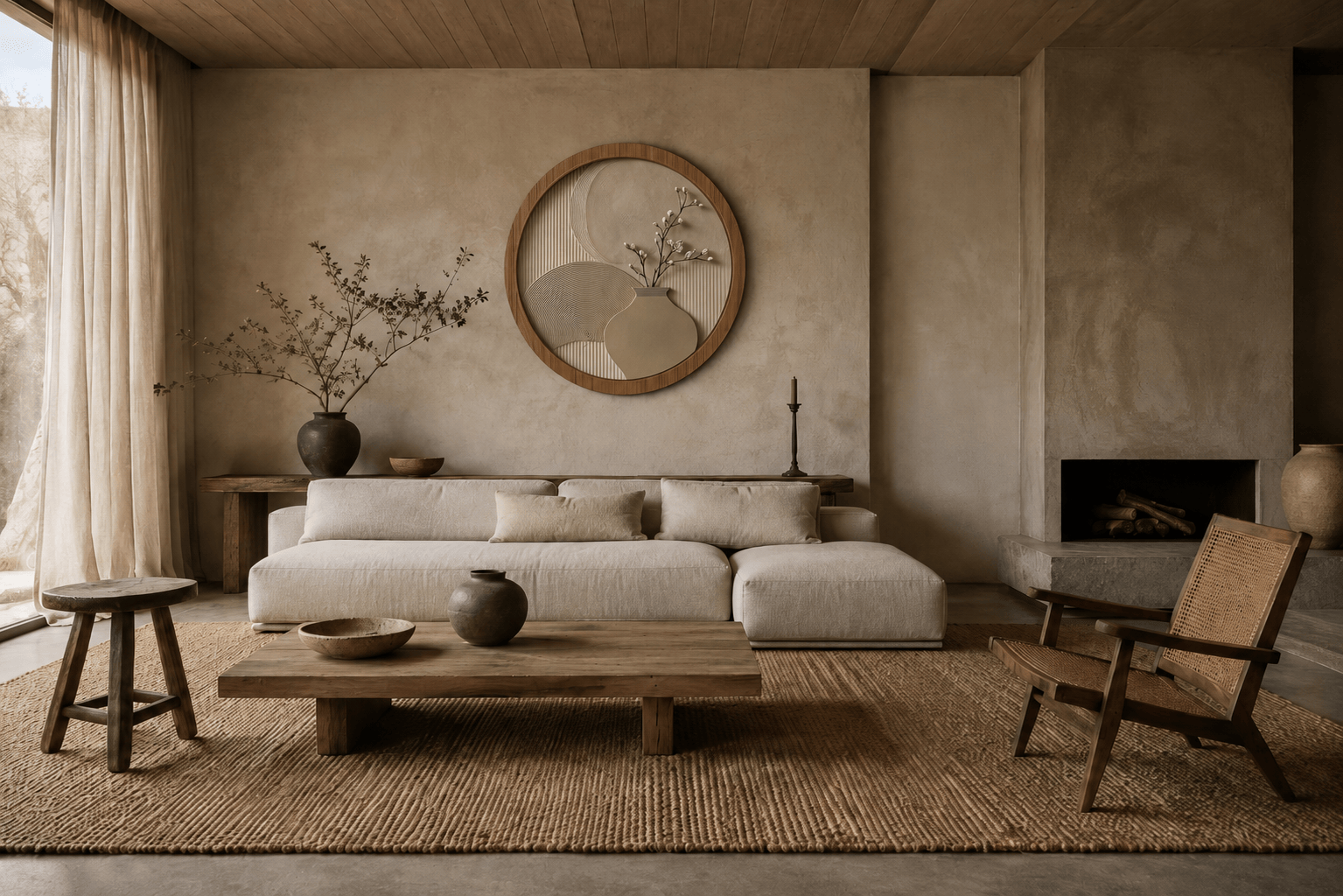
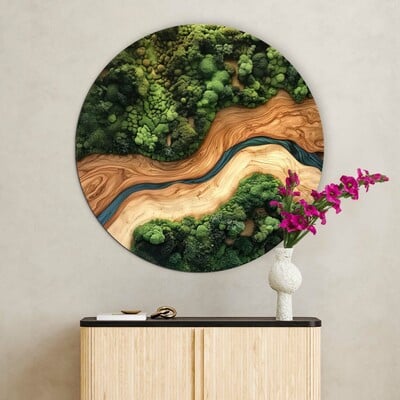
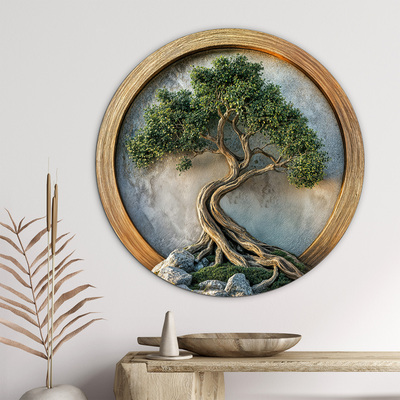
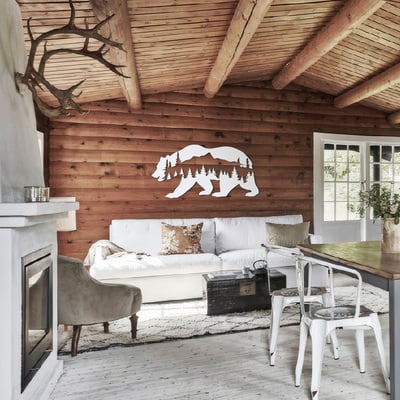
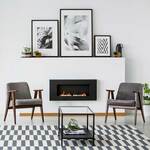
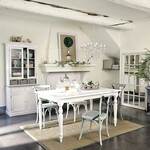
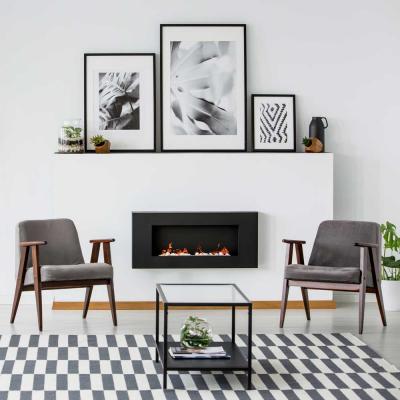
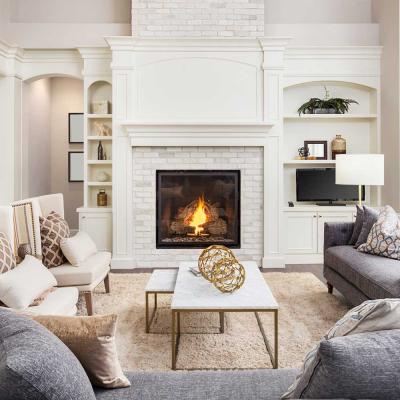
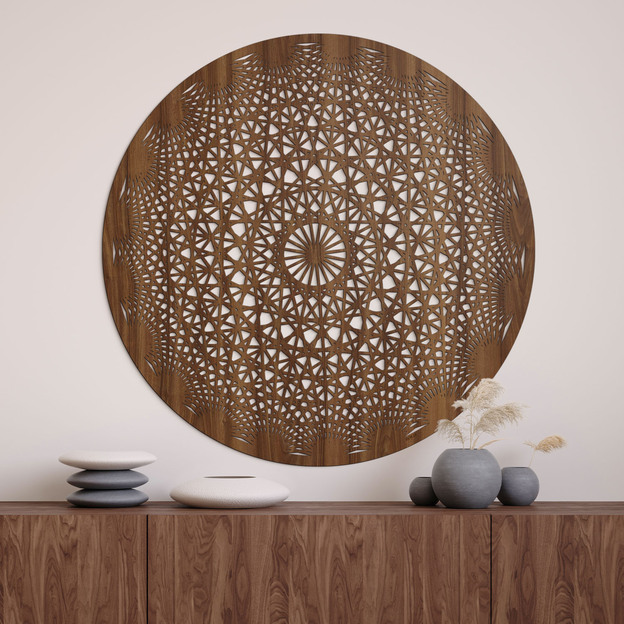
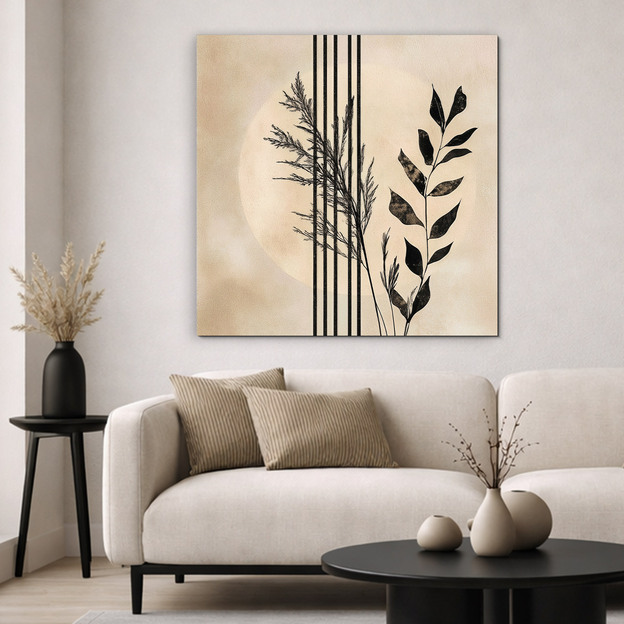
The harmony of natural materials and clean lines in the living room, complemented by round Zen wall art.
1.1 Pure presence of being through ZEN
The term ZEN has its origins in Japanese Buddhism and represents a path of silence, meditation, full presence, and deep self-awareness. When we bring this spiritual dimension into the interior, we are not talking about stark minimalism that feels cold and sterile. ZEN in living means creating a space that breathes, supports the flow of life energy, and releases tension. It is an interior free from visual noise, where every single item has its exact place and purpose.
1.2 Wabi-sabi: A celebration of inner beauty and impermanence
On the other side stands wabi-sabi – a traditional Japanese aesthetic concept that teaches us to see charm in what is imperfect, temporary, and incomplete.
- Wabi expresses simplicity, solitude, modesty, and life in harmony with nature.
- Sabi represents the beauty that comes with age, patina, and the visible passage of time.
Wabi-sabi celebrates old wood with deep scars, hand-shaped asymmetrical ceramics, or a wall with an irregular texture. This approach reminds us that nothing lasts forever, nothing is ever fully complete, and nothing is absolutely flawless – and that is exactly where the greatest magic of life lies.
2. Why do we need silence in our living spaces today?
Modern life exposes us every day to an enormous amount of information, visual chaos, and material excess. Under the influence of consumerism, our homes often, even unconsciously, turn into storage spaces for things we do not actually need. The result is a feeling of tightness and constant unrest. ZEN and wabi-sabi are not just about decorating – they are about clearing both the inner and outer space.
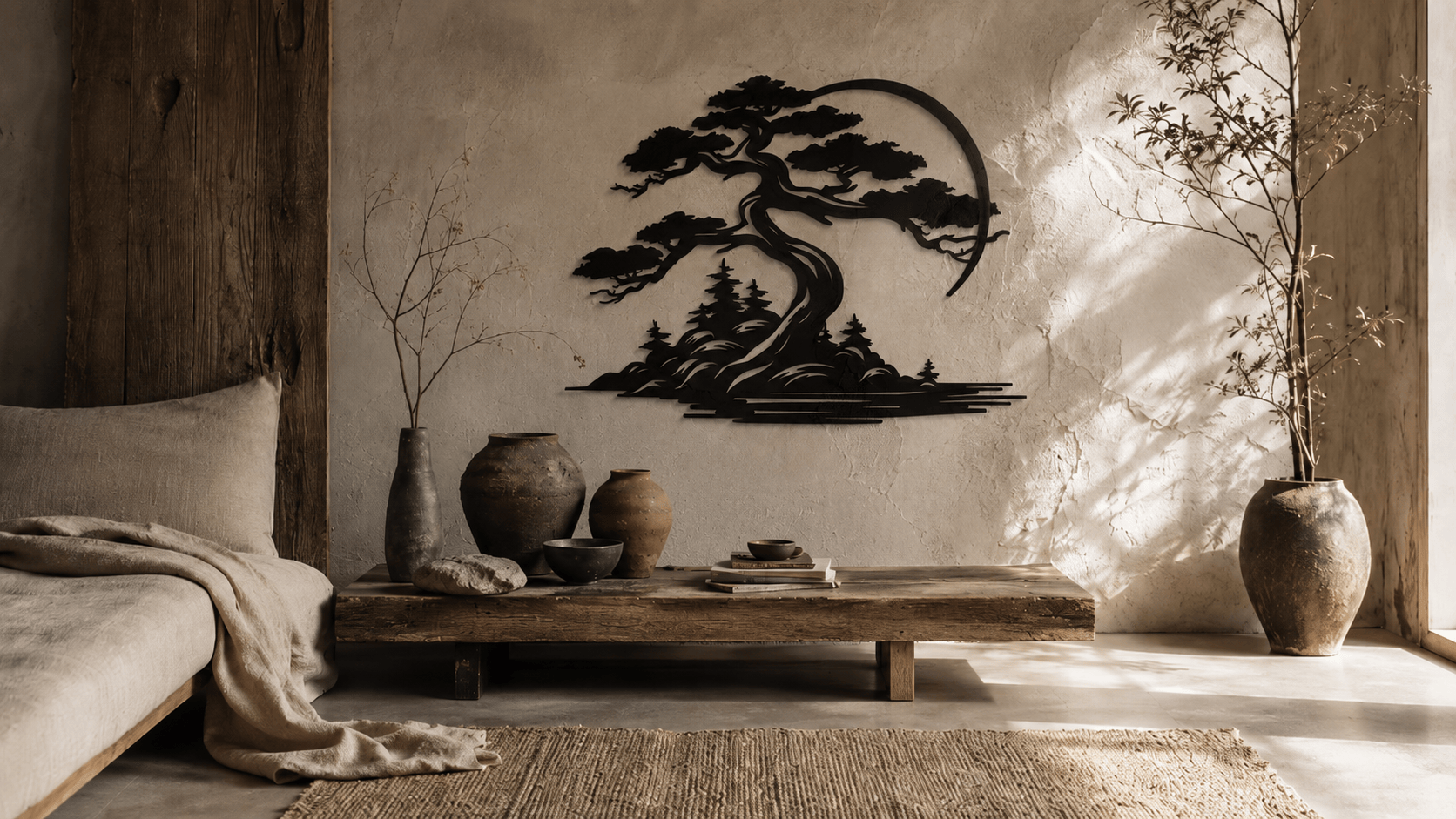
When you consciously allow your home to lower its intensity, you will discover that silence in a space directly creates silence in the soul. An empty place on the wall or a chest of drawers is not unused potential; it is space for you to breathe and calm down. A home designed in this spirit will ground you immediately after a long day, wrap you in a feeling of safety, and help you return to yourself. In this kind of environment, you do not feel like a visitor in a luxury showroom, but as if you are in your own sacred temple of peace.
3. The key pillars of a ZEN and wabi-sabi interior
If you want to transform your home according to these Eastern philosophies, you do not have to throw away all your furniture right away. Simply start looking at your space through a few key principles:
- Radical simplicity: Strictly follow the idea that less is more. Every piece of furniture you place in a room should either have a practical purpose or bring you deep aesthetic joy.
- Healing emptiness: Do not fill every corner or every shelf. Leaving open areas allows light and air to flow freely, visually and energetically cleansing the entire atmosphere.
- Raw natural materials: Surround yourself with materials that come directly from the earth. Solid untreated wood, cool stone, rough clay, textured plaster, linen textiles, or bamboo give the interior a touchable connection with nature.
- Authentic irregularity: Avoid mass-produced plastic objects without soul. Instead, look for handmade pieces with small imperfections, cracks, or patina that tell their own story.
- Soft light and the play of shadows: Forget harsh, aggressive ceiling lighting. Wabi-sabi loves diffused daylight, dim lamps with paper shades, and the warm glow of candles, which create an intimate and meditative mood in the room.
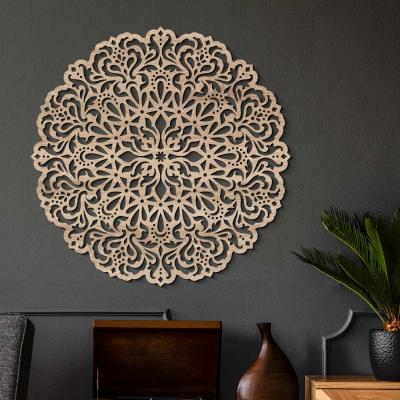
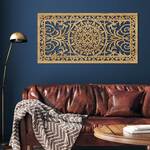
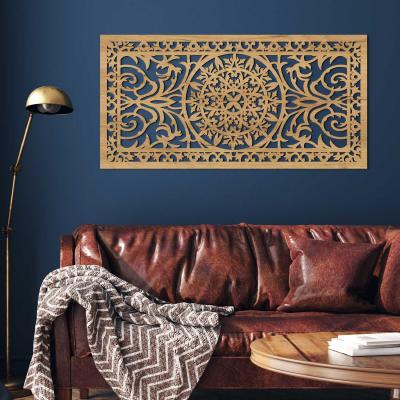
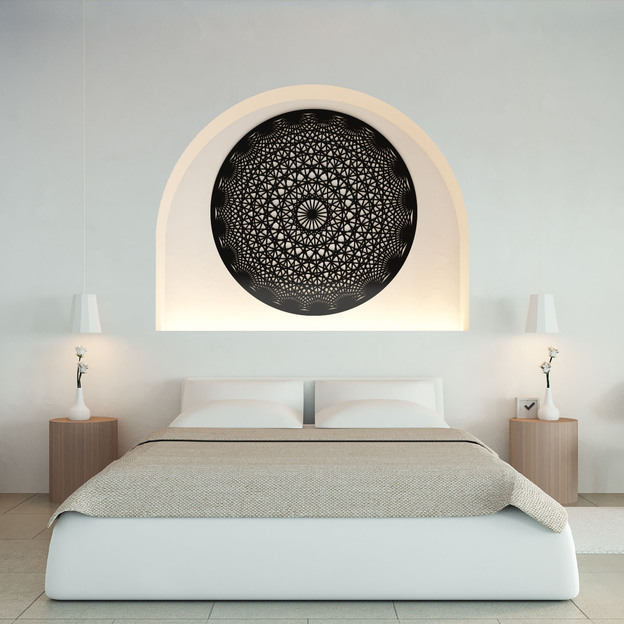
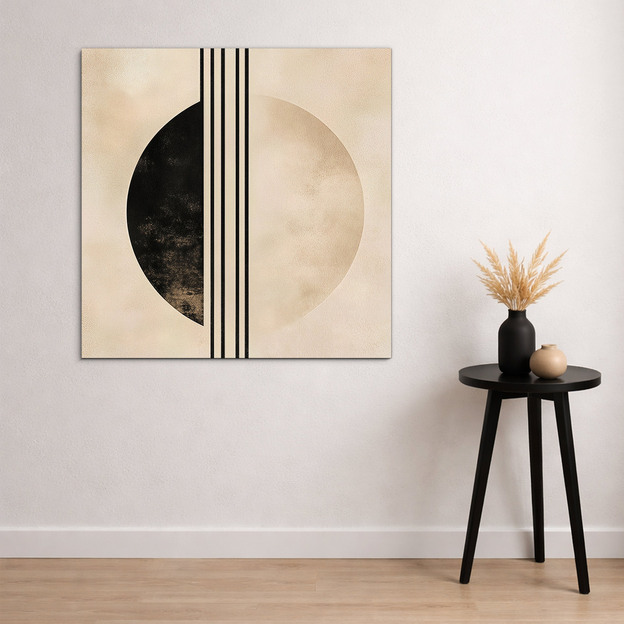
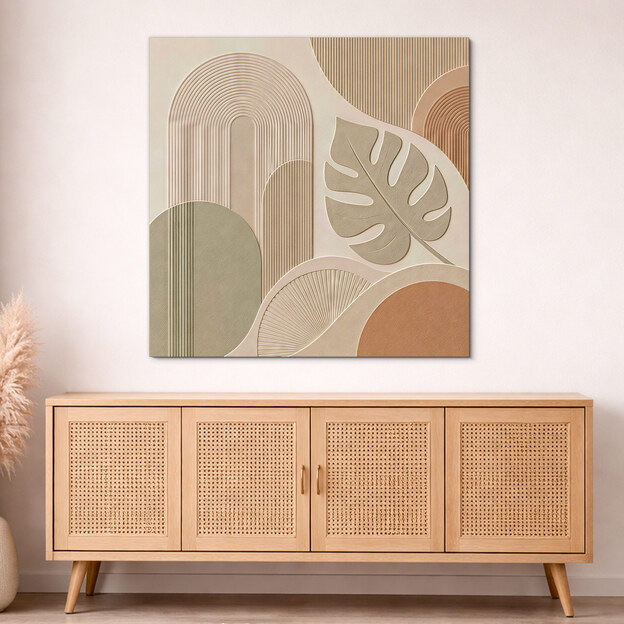
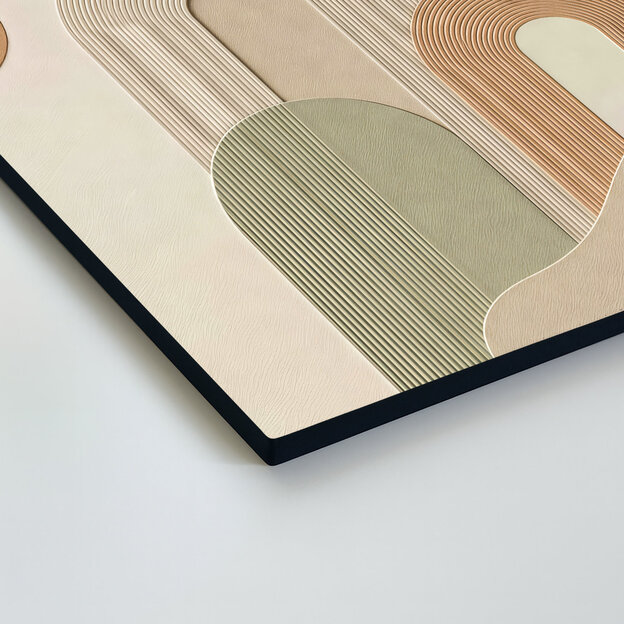
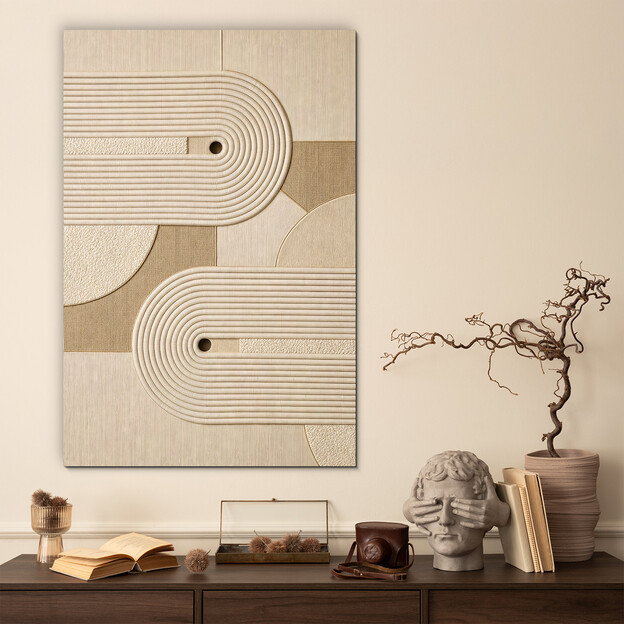
If you want to bring the right element of harmony to your walls, motifs that radiate deep symbolism and geometric order are an ideal choice. A great example is our wooden wall mandalas from the DUBLEZ workshop. Their precise yet calming lines bring the desired Zen balance into the room.





4. A practical guide to turning your home into an oasis of calm
Applying these noble ideas in real life is surprisingly simple and intuitive. Let’s take a look together at how you can transform individual rooms into zones of complete relaxation.
4.1 The living room as a place for mindful gatherings
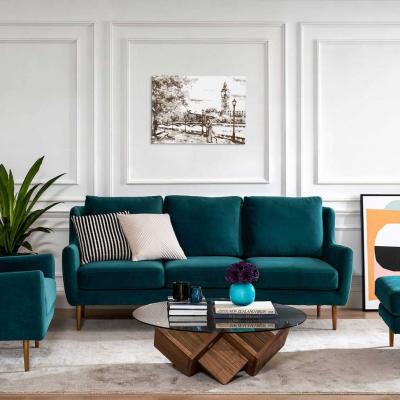
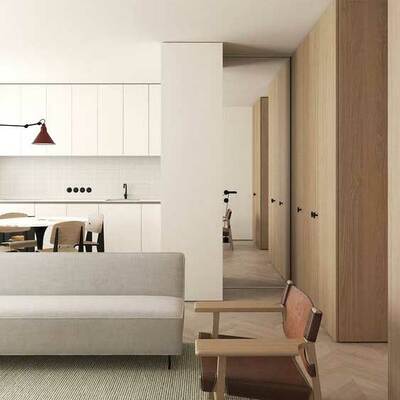
The living room should be the heart of the home, where life slows down instead of speeding up. The foundation of success is reducing unnecessary decorations and dust catchers. Choose lower furniture, which visually opens up the vertical space and brings you closer to traditional Japanese seating closer to the ground.
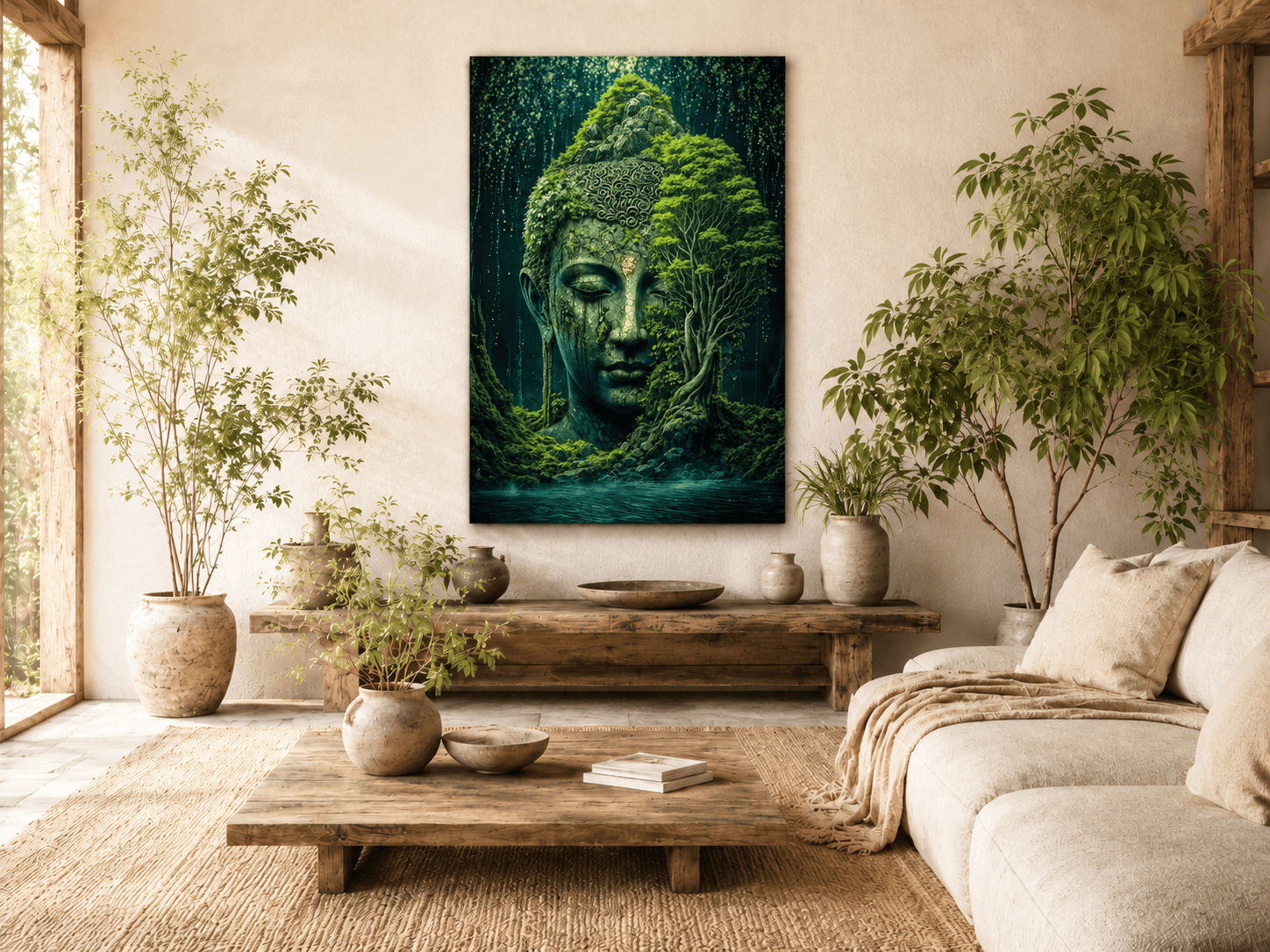
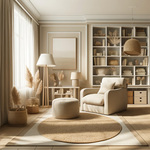
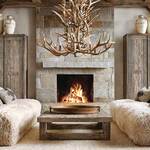
Earthy tones and low furniture enhance the feeling of stability and grounding.
Keep the color palette strictly earthy and neutral – sandy beige, muted gray, moss green, or warm terracotta work beautifully. And one important composition tip: try to leave the center of the room open. Do not place a robust coffee table there as a heavy obstacle; allow energy and light to flow freely through the center of the living room.
4.2 The bedroom as a sacred sanctuary for rest
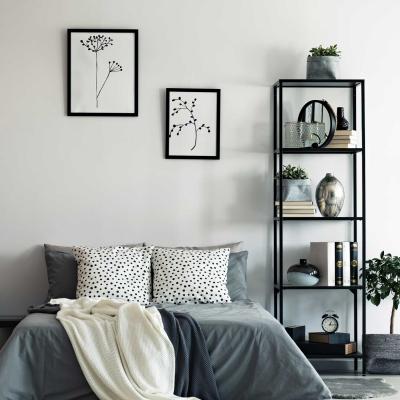
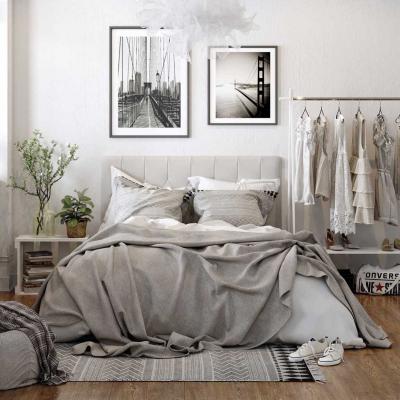
In the bedroom, there should be an absolute ban on electronics, blue light, and any distracting elements. Complement a solid wood bed with a low frame with pure linen or cotton bedding that does not need perfect ironing – its natural creases are the essence of wabi-sabi.
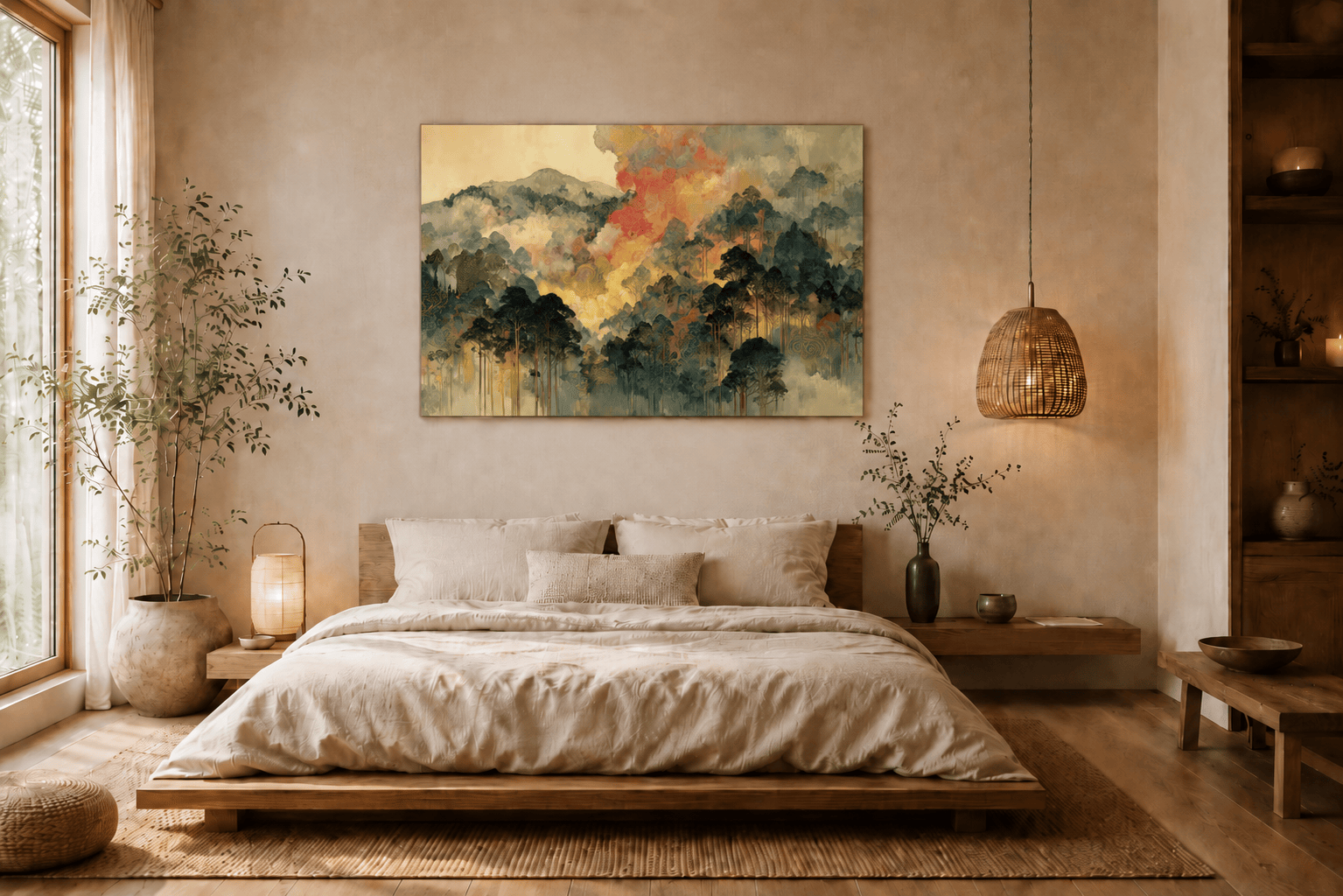
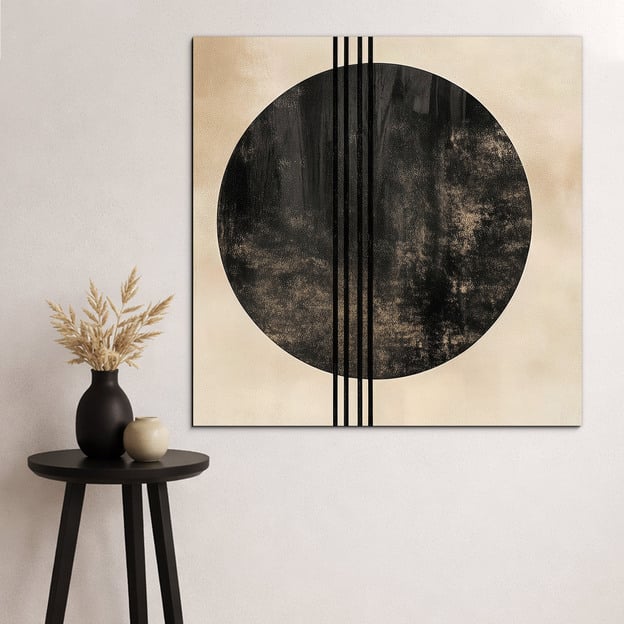
For a harmonious wake-up, choose minimalism instead of overcrowded walls. If you still want a decoration, choose just one central motif – abstract wall art is ideal. To create a sense of deep inner peace, we recommend choosing elegant wall quotes or meaningful life wisdom that gently grounds you in the present moment every morning. At DUBLEZ, we cut them out from wood for you with love.
4.3 A kitchen full of functionality and raw beauty
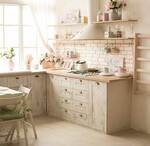
A clear mind can also be practiced in the kitchen. Hide mixers and appliances behind closed cabinet doors and leave only the essentials on the countertop. Instead of perfectly uniform dinnerware sets, do not be afraid to display handmade ceramics, stone bowls, or cast-iron teapots on open shelves.
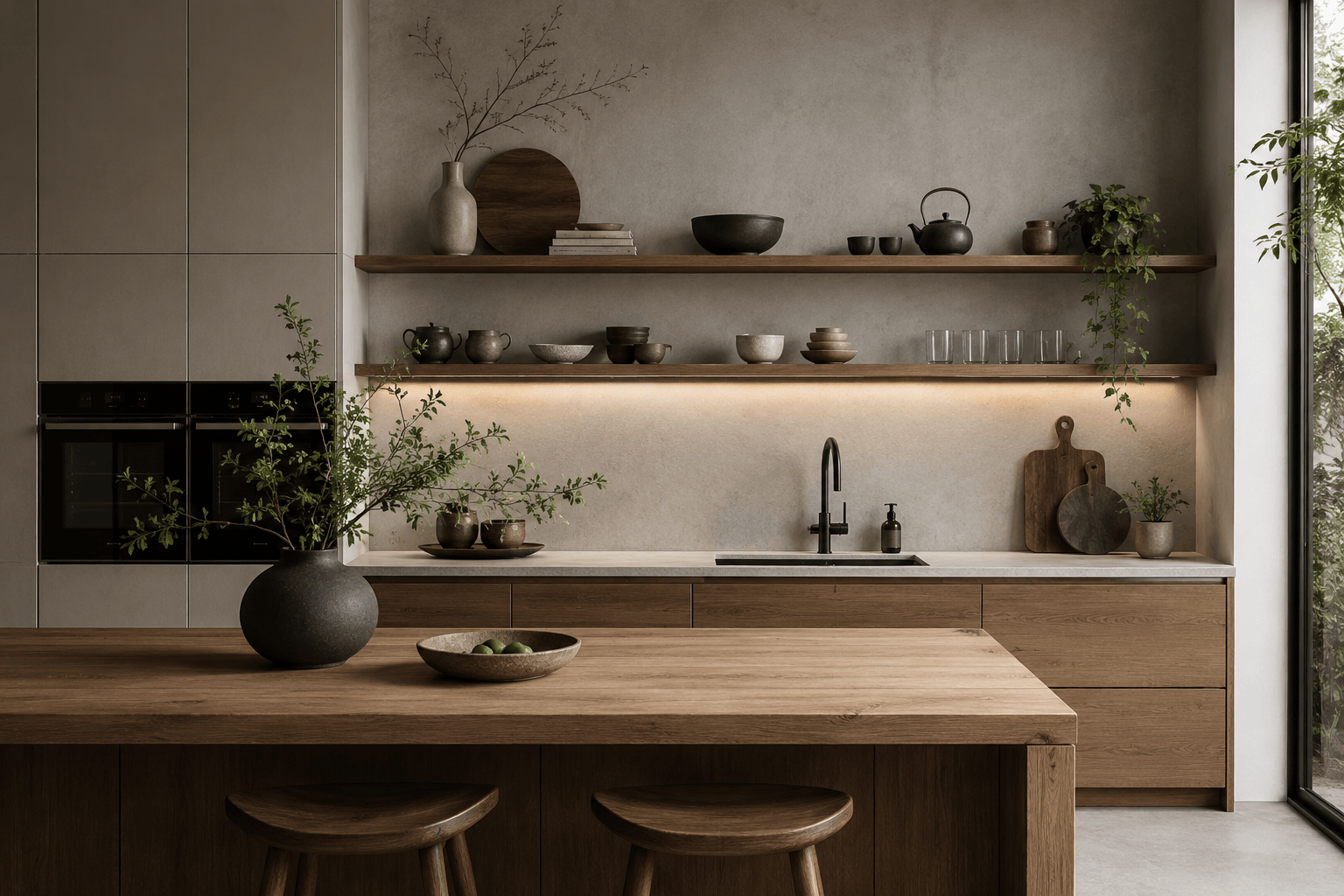
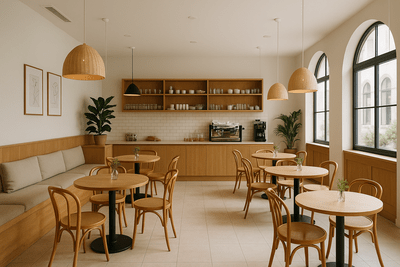
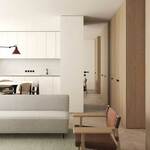
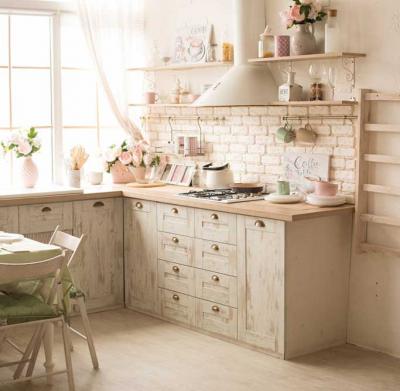
An authentic kitchen where the materials are honestly displayed.
If your favorite mug has a small crack, do not throw it away. In Japan, there is an art called Kintsugi, where cracks in ceramics are repaired with liquid gold, highlighting the flaw and turning it into the most precious part of the object. Accept the fact that everyday objects age with us and that their wear gives them soul.

4.4 The bathroom as a ritual cleansing of body and mind
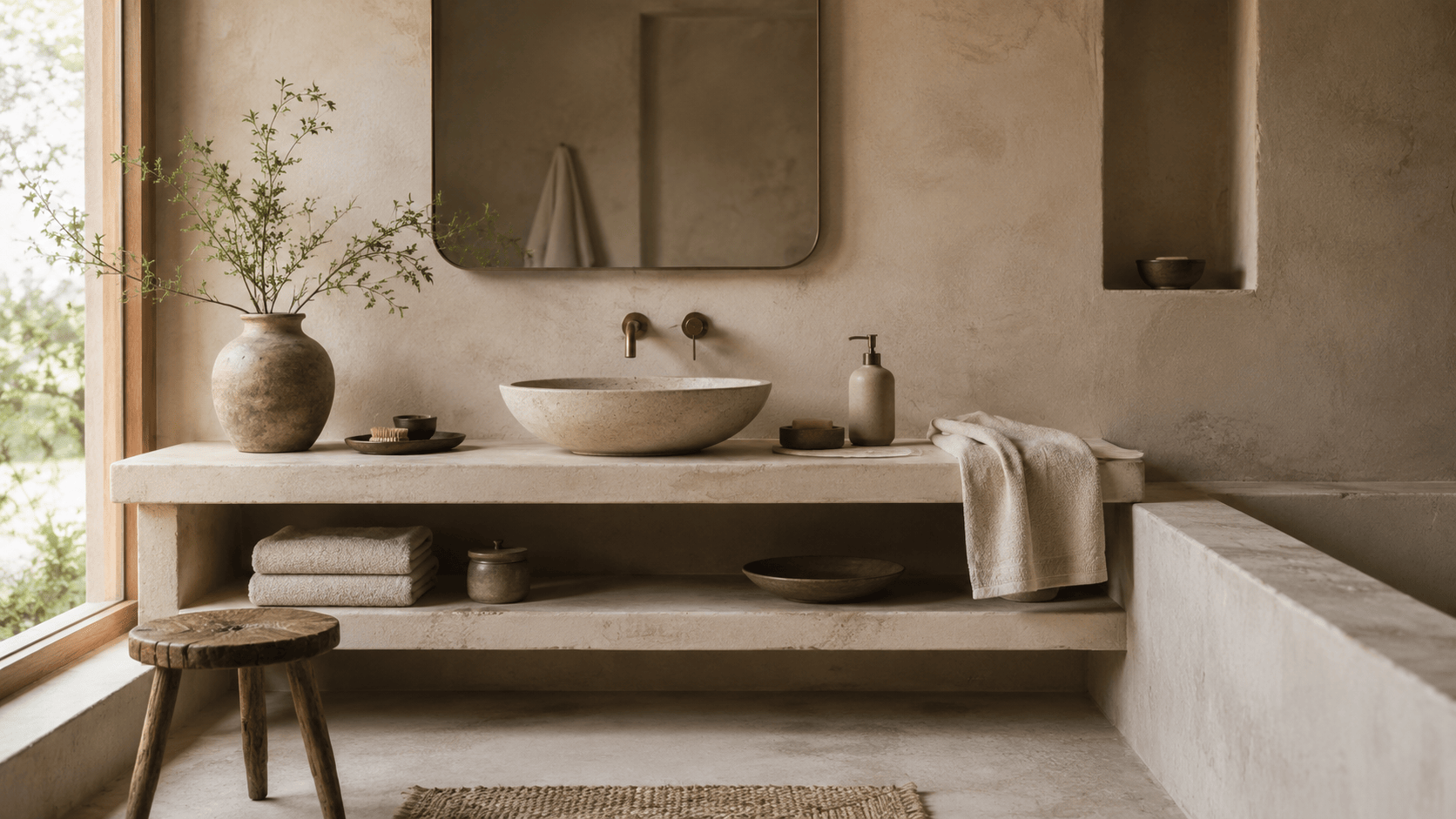
Water is the strongest carrier of pure energy and, in ZEN philosophy, represents constant change and cleansing. Turn an ordinary bathroom into a private spa. Replace plastic soap dispensers with stone or ceramic alternatives. Add wooden mats and soft linen towels to the space.
Just add one living green plant that loves humidity, light an incense stick with the scent of sandalwood or sage, dim the lights, and your everyday shower will instantly turn into a ritual during which you wash away all the stress of the day.
4.5 Creating a meditation or creative corner
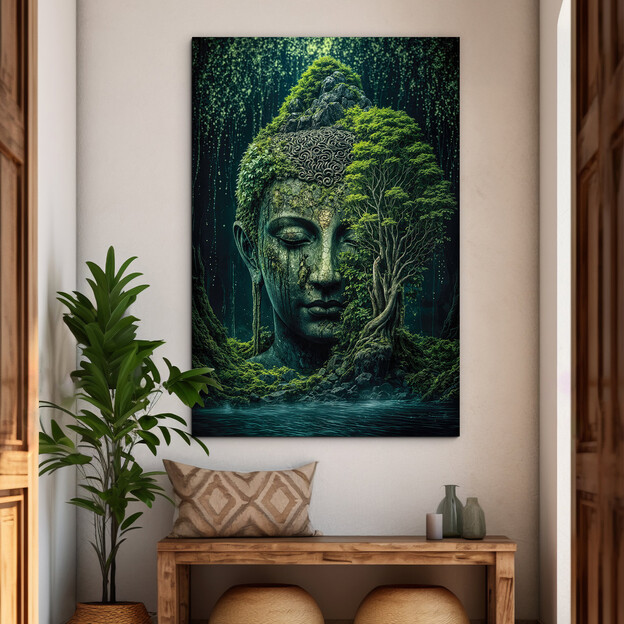
You do not need an entire spare room to find balance. All you need is a small, peaceful corner in the bedroom or living room. Place a comfortable meditation cushion (zafu), a low table with one candle, perhaps a Buddha statue or wall art, or your favorite mineral stone here.
Let this small piece of space be your untouchable zone. A place where you quietly drink a cup of tea in the morning, read a few pages of a book, or simply sit in silence without any external stimuli or expectations.
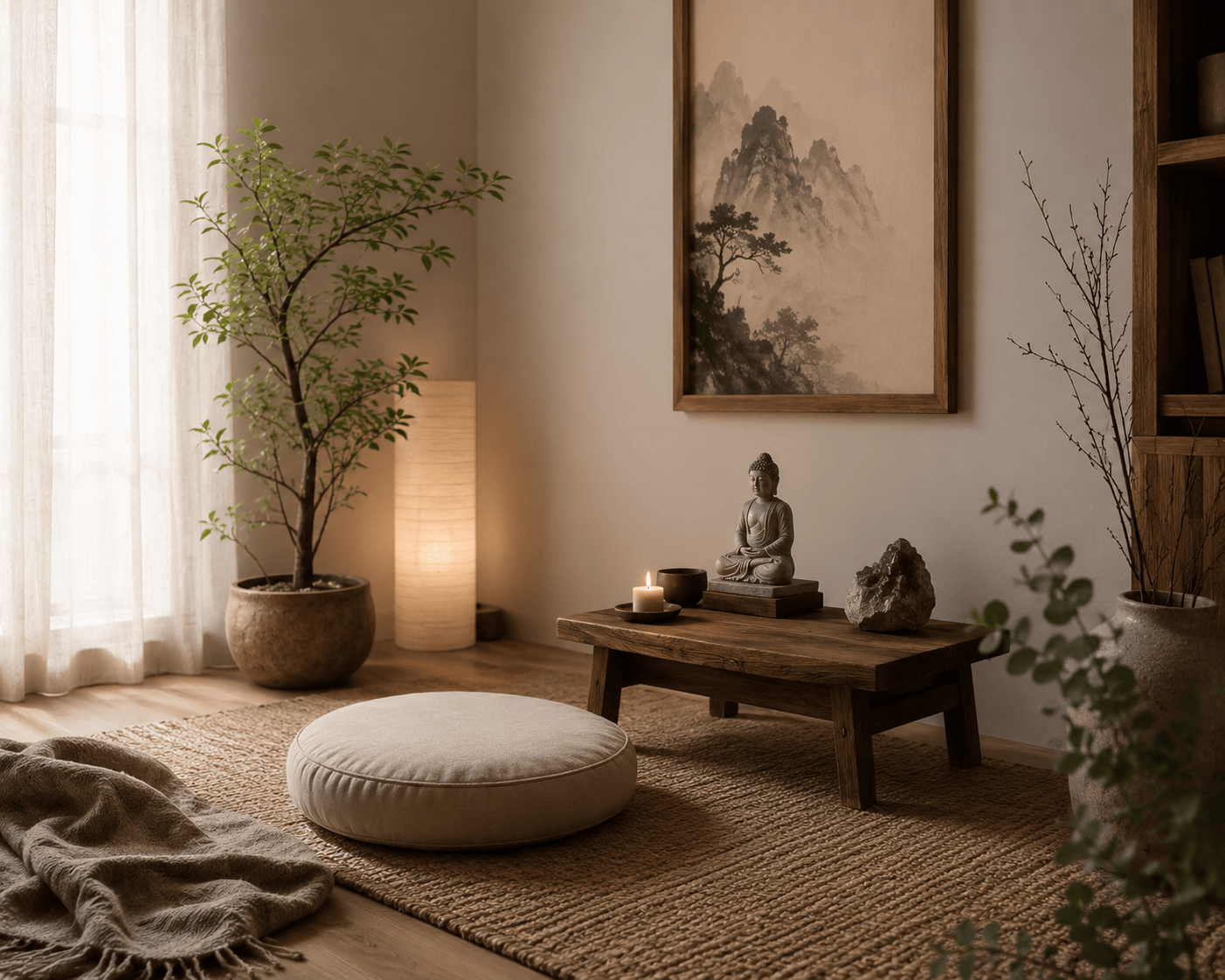
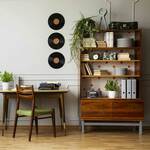
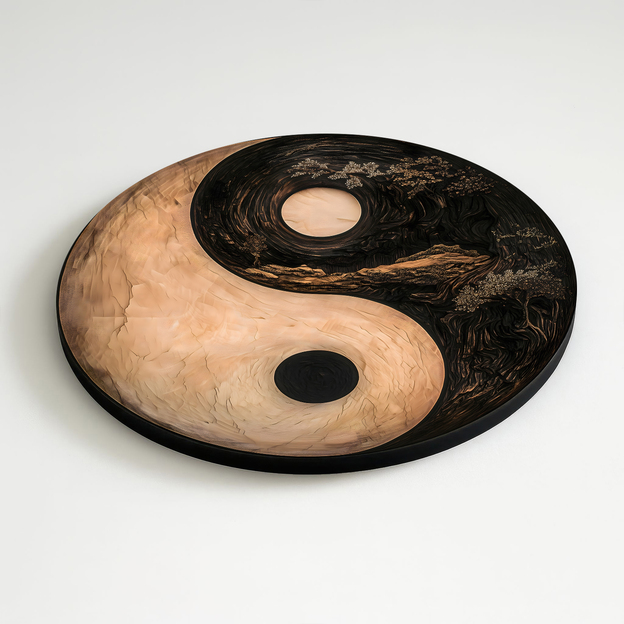
A simple still life designed to calm the mind and relax.



Conclusion: Imperfection as an honest invitation to peace
Forget perfectly retouched Instagram photos and the relentless pressure of interior catalogs striving for uniformity. Wabi-sabi and ZEN invite you to an authentic life that does not have to look like anyone else’s – only yours.
Release yourself from the grip of rules. Do not smooth and polish everything into a perfectly sterile shine. Allow things to age, allow walls to carry texture, and allow your interior to live together with you. You will see that as soon as you reduce the number of things and add more empty space, your home will suddenly begin to breathe deeply and freely – and you with it. This is where a place is created in which fewer things mean more space for life.