





















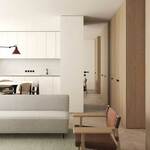


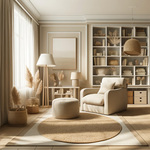
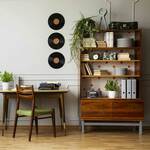
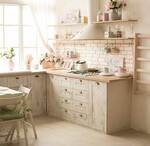



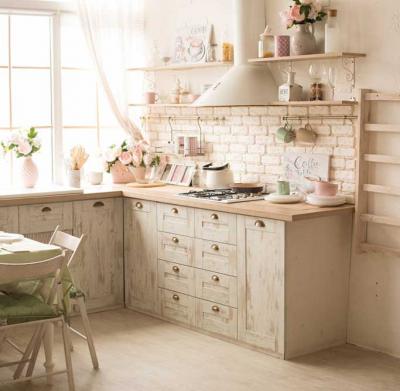
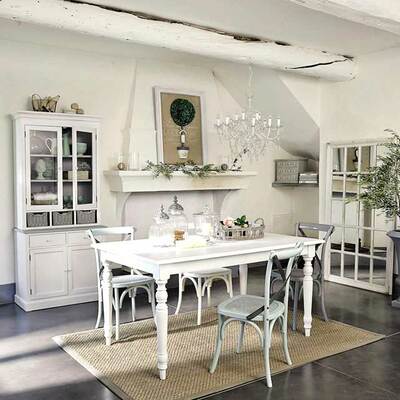

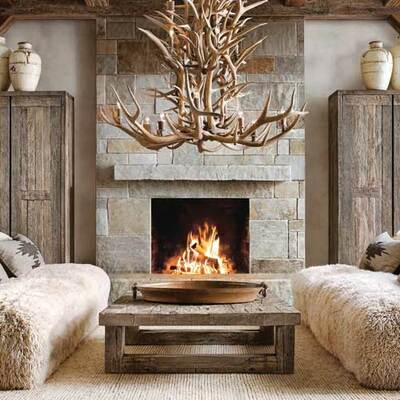
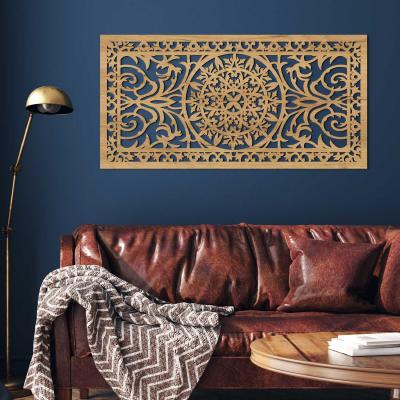
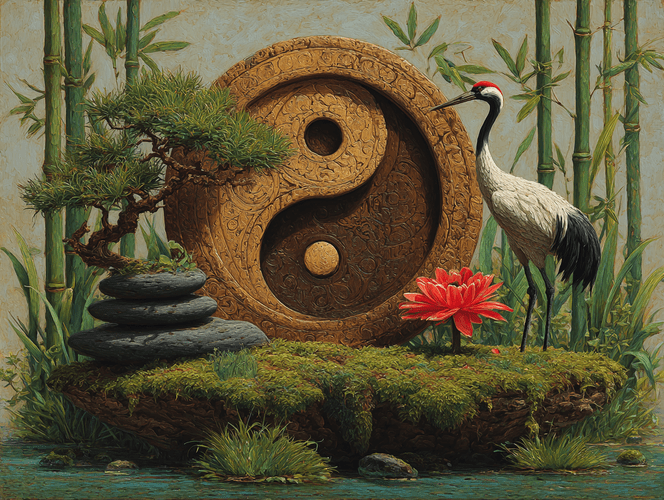
How to Furnish Your Home According to Feng Shui and Attract Peace and Prosperity
Home can be more than just a place to live—it can become a source of balance and joy. Feng Shui shows us how to create an environment that supports us and brings harmony into our lives. It teaches us to sense the energy of a space and consciously guide it in a way that benefits our health, relationships, and life path. Every change we make in our surroundings becomes a step toward inner peace and greater well-being.
“When energy flows freely, life flows more easily too.”
- Introduction to the World of Feng Shui
- What Is Qi?
- The Five Elements of Feng Shui and Their Meaning
- How to Start Using Feng Shui at Home
- Heavenly Guardians of Feng Shui
- Feng Shui Talismans and Symbols
- Bagua and Trigrams – The Heart of Feng Shui
1. Introduction to the World of Feng Shui
Feng Shui is an ancient Chinese art of harmonizing spaces, with roots dating back over 3,000 years. Its goal is to create an environment where energy—known as qi—can flow freely and naturally. This energy flow directly affects our health, relationships, prosperity, and overall happiness.
The core principles of feng shui focus on keeping things tidy and clean, and on creating a space where energy can circulate freely. Key elements include proper furniture arrangement, sufficient lighting, suitable colors, natural materials, and decorations that enhance positive energy while reducing the impact of negative energy.
Although feng shui originated in ancient China, its principles are timeless. In today’s fast-paced world full of stress and clutter, feng shui helps us find balance, maintain a clear and airy space, and create a home that becomes a source of harmony, stability, and inner peace.
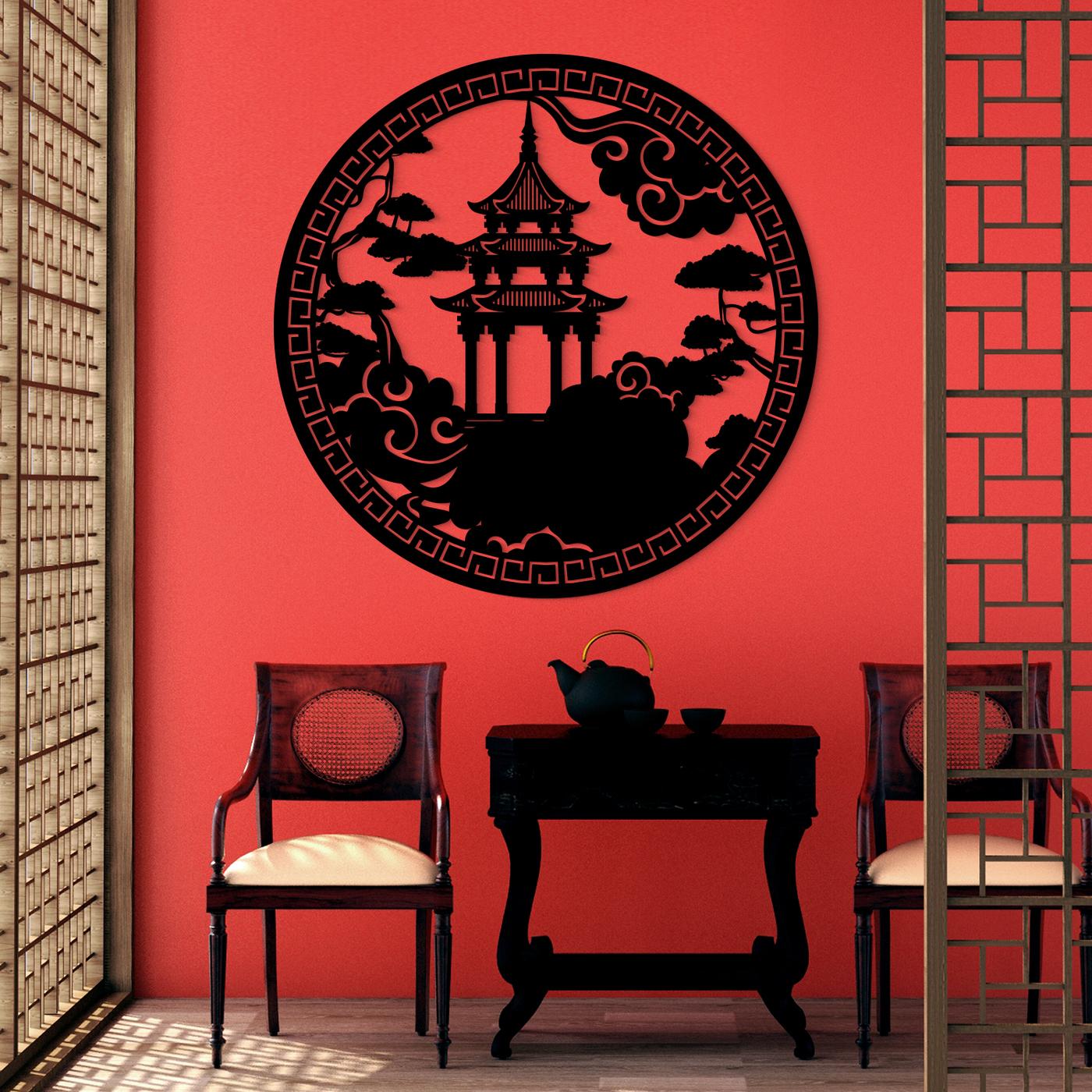 Source: DUBLEZ, Chinese Wall Art – Pagoda Temple
2. What Is Qi?
Qi (or chi) is a fundamental concept in feng shui and traditional Chinese philosophy. It represents the life force or energy that flows through everything—nature, environments, and ourselves. It’s an invisible yet powerful current that influences our mood, health, relationships, and overall sense of well-being in the space we live in.
When qi flows freely and harmoniously, we feel balanced, safe, and comfortable. On the other hand, blocked or rapidly escaping qi can create tension, fatigue, or inner restlessness. Feng Shui focuses on arranging spaces so that qi can move calmly and smoothly—even through small details like light, shapes, scents, materials, or keeping bathroom doors closed. Every element plays a role in shaping the energy of our daily lives.
3. The Five Elements of Feng Shui and Their Meaning
Feng Shui is based on the principle of the five natural elements—wood, fire, earth, metal, and water. Each one represents a specific type of energy that influences our lives. Balance among them is key to a harmonious home.
-
Wood – symbolizes growth, vitality, and new beginnings. It’s associated with nature, flexibility, and creativity. Think of green and brown tones, plants, wooden furniture, and natural materials.
-
Fire – represents passion, energy, joy, and activity. It brings warmth, dynamism, and strength. It’s linked to red, orange, and purple hues, candles, fireplaces, and light sources.
-
Earth – embodies stability, security, and balance. It grounds and brings a sense of safety. Think yellow, beige, or ochre tones, ceramics, stone, and clay decorations.
-
Metal – associated with precision, clarity of mind, and order. It enhances discipline and focus. Represented by white and gray colors, metallic objects, wind chimes, and smooth round shapes.
-
Water – symbolizes flow, fluidity, wisdom, and intuition. Its energy brings cleansing and relaxation. Think blue and black tones, mirrors, glass, fountains, or aquariums.
Properly balancing these five elements within a space creates harmony that supports health, well-being, and prosperity. If one element is missing or too dominant, energy flow is disrupted—so it’s essential to keep them in mind when designing your home.
4. How to Start Using Feng Shui at Home
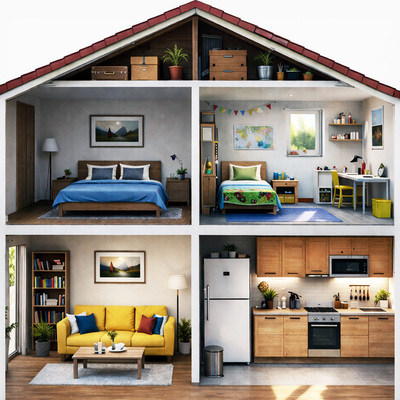
Starting with feng shui doesn’t mean you need a full renovation or major changes. The first and most important step is to declutter and let go of items that no longer serve you. Clutter blocks energy flow and creates a feeling of heaviness. Once you free up the space, you allow qi to move freely and your home begins to “breathe.” Only after this cleansing can you focus on harmonizing individual rooms. Each one plays a different role—bedrooms bring rest, living rooms support communication, and kitchens are places of nourishment and abundance. Feng Shui helps strengthen these functions and transforms ordinary spaces into sources of energy and peace.
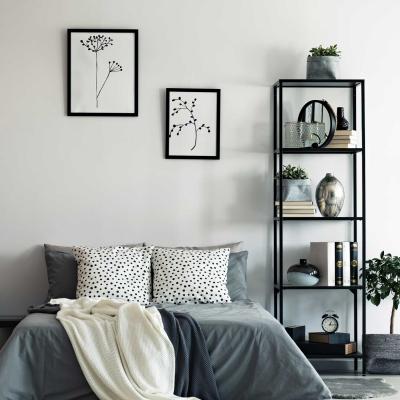
4.1 Feng Shui Bedroom – A Space of Peace and Renewal
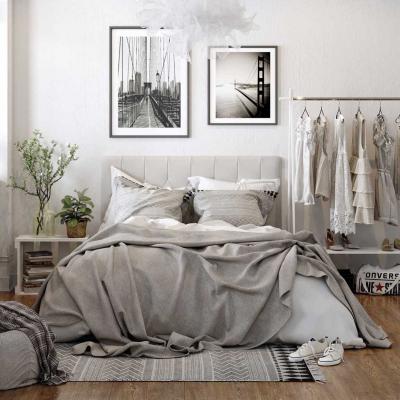
The bedroom is one of the most important rooms in your home because it’s where we rest and recharge. Its atmosphere directly affects the quality of our sleep—and therefore our health and vitality.
-
Bed placement – Place your bed against a solid wall and ensure you have a clear view of the door. This layout symbolizes safety and control over your space. Avoid positioning the bed directly under a window or in line with the door, as energy flowing through may disturb your rest.
-
Colors and materials – Soft, natural tones (beige, blue, green) promote harmony and calm. Natural-fiber bedding adds comfort and helps you feel more connected to nature.
-
Electronics – Keep them to a minimum. TVs, computers, and phones disrupt the energy flow and can negatively impact sleep quality.
-
Mirrors – Use them sparingly. Never place a mirror directly opposite the bed, as it reflects energy and can disturb your peace.
-
Accessories – Candles, natural scents, or soft-leaved plants add a sense of softness and serenity to your bedroom.
A well-arranged bedroom following feng shui principles helps you feel safe, relaxed, and fully recharged after a long day.
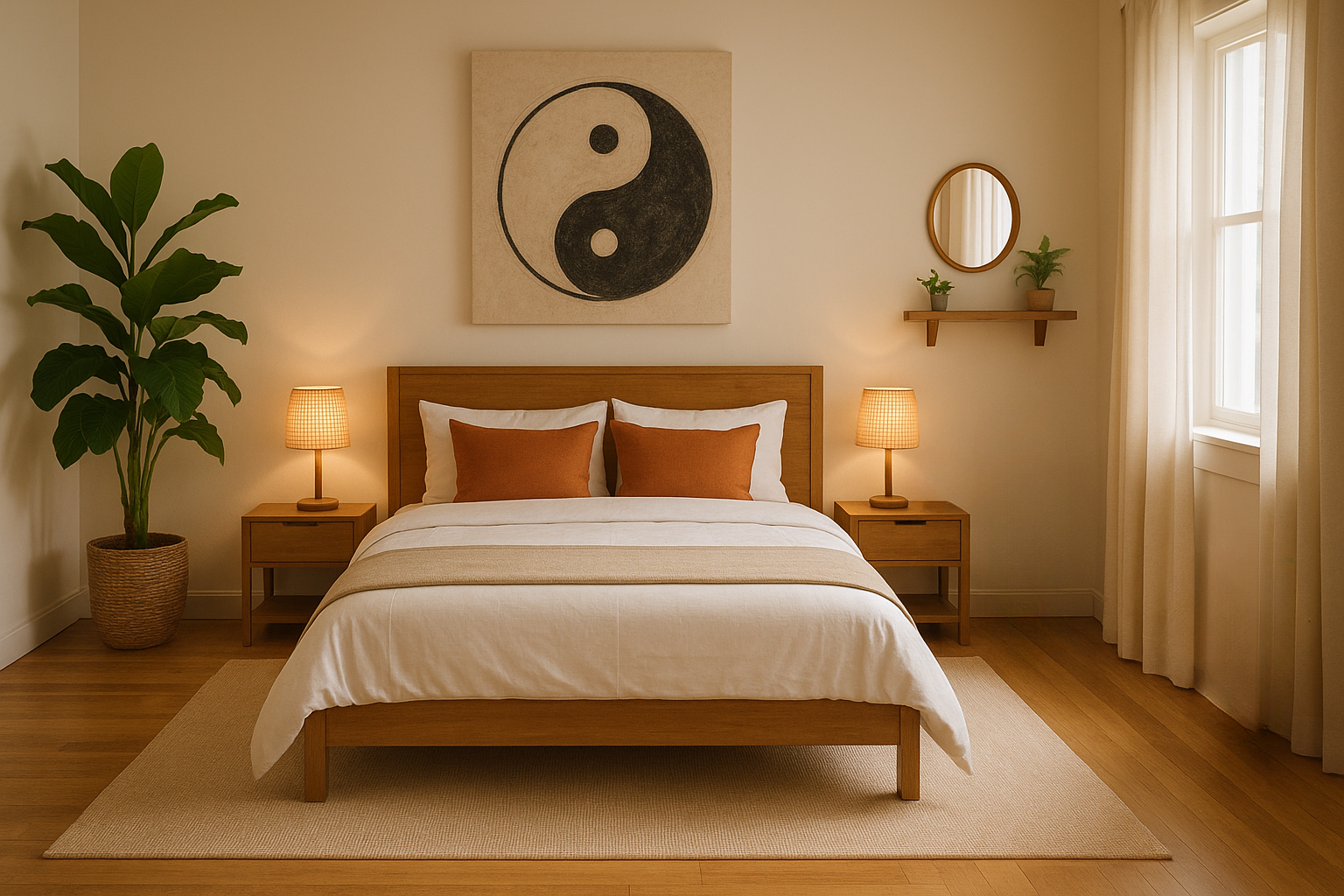 Source: DUBLEZ
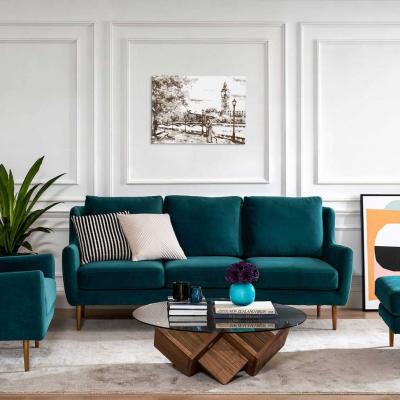
4.2 Feng Shui Living Room – A Space for Connection and Communication
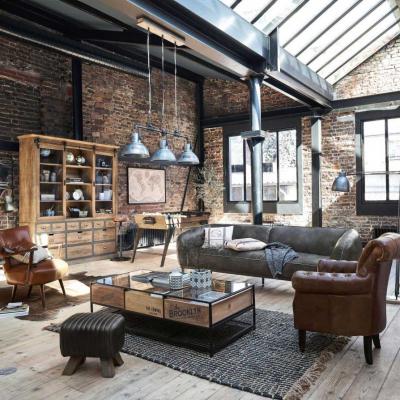
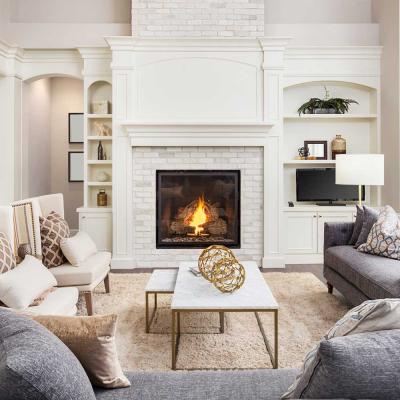
The living room is the heart of the home—a place where families gather, guests are welcomed, and daily life happens. It should feel open, friendly, and balanced to support both communication and relaxation.
-
Furniture layout – Arrange sofas and chairs in a circle or semicircle to support smooth energy flow and natural conversation. Avoid blocking walkways or overcrowding the room. Keep the space airy and open.
-
Natural elements – Wooden, stone, or plant-based accessories bring vitality and freshness. Plants also purify the air and enhance positive energy.
-
Wall art and décor – Choose pieces that evoke positive emotions. Ideal options include family photos, natural landscapes, or artwork symbolizing joy and harmony. Avoid dark or depressing imagery that could lower the room’s energy.
-
Colors – In living rooms, you can opt for brighter tones. Orange, yellow, and red encourage joy, activity, and conversation, while earthy accents help maintain balance and stability.
-
Lighting – Prioritize natural light. Large windows or well-placed lamps can turn a living room into a bright and inviting space. Warm lighting in the evening creates a cozy and welcoming atmosphere.
A feng shui-inspired living room becomes a space where energy flows freely—and where cherished memories, joy, and quality time with loved ones thrive.
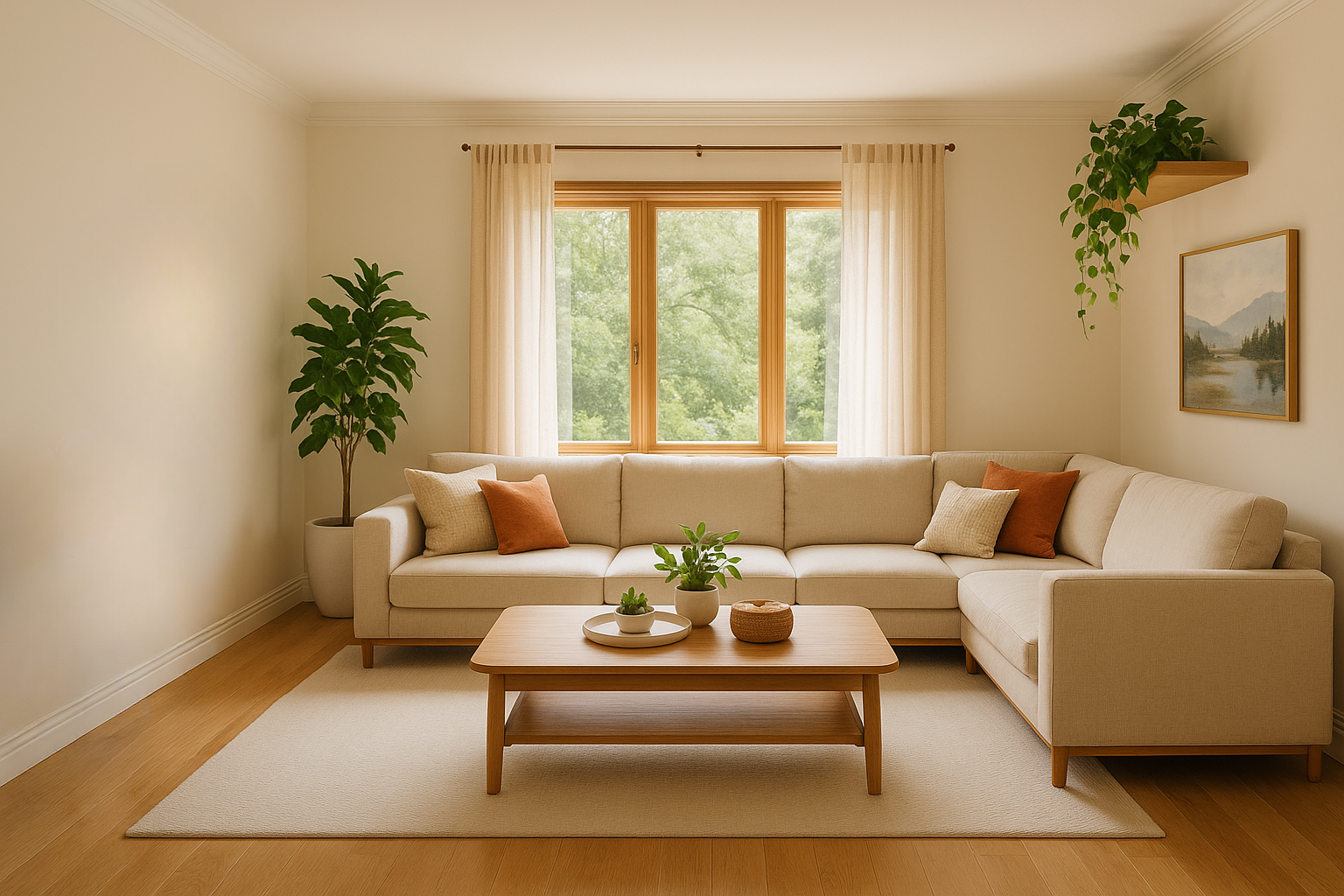 Source: DUBLEZ
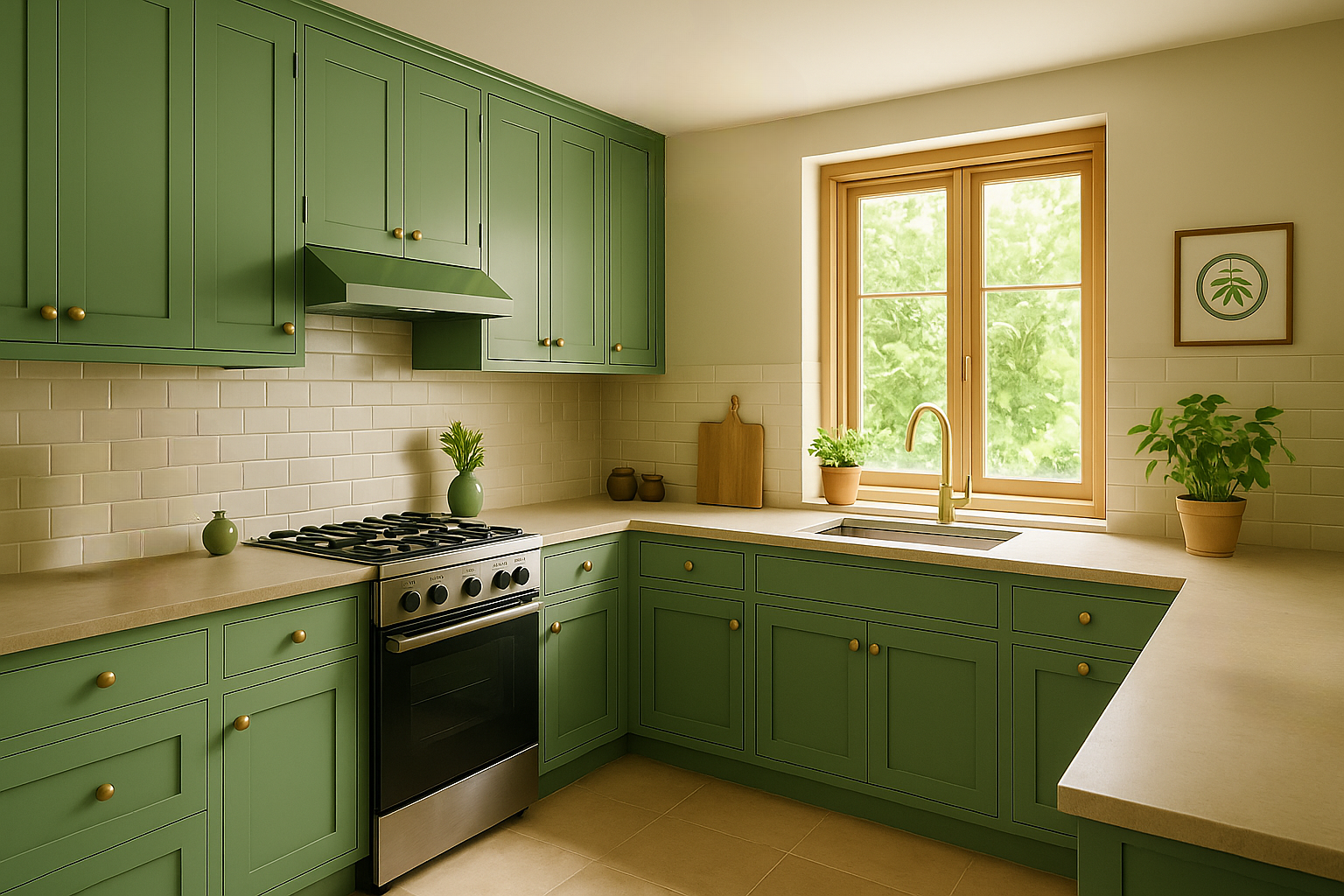
4.3 Feng Shui Kitchen – The Heart of the Home
The kitchen is considered a place of abundance, nourishment, and prosperity. It’s the heart of the home—not just where meals are prepared, but also where energy is generated that fuels and connects us. The kitchen should feel clean, cozy, and balanced.
-
Cleanliness and order – Always keep the kitchen clean and tidy. A well-organized space supports the flow of positive energy and contributes to overall well-being. Cluttered countertops or overfilled cabinets can block qi.
-
Stove as a symbol of abundance – The stove is one of the kitchen’s most important features. It should be clean, fully functional, and regularly used, as it symbolizes the prosperity and vitality of the household.
-
Sharp objects – Store knives and sharp tools out of sight. Visible sharp edges can create tension and disrupt the room’s energy.
-
Dining table as a center of comfort – The table should be clear, tidy, and inviting. It’s a place for connection and joy during meals, so it should feel open and welcoming.
-
Living energy of plants – Plants and fresh flowers promote health and bring freshness to the kitchen. Potted herbs are ideal as they combine beauty with functionality.
-
Colors and lighting – The kitchen works best with a mix of light and warm tones. Green promotes energy and harmony, while yellow adds optimism and freshness. Natural daylight is essential; in the evening, supplement with soft, warm lighting for a cozy, family-friendly feel.
A feng shui kitchen becomes a place that nourishes not just the body, but the soul—a space where the essence of home and abundance is felt every day.
 Source: DUBLEZ
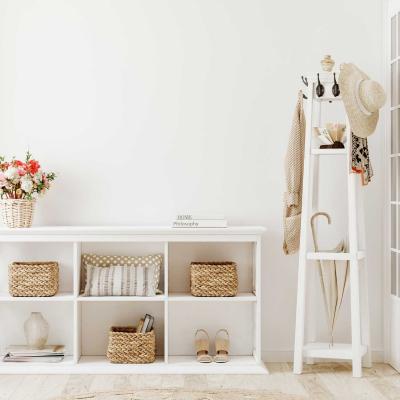
4.4 Feng Shui Entryway – The Gateway of Energy
The hallway is the first place you and your guests see when entering your home. According to feng shui, it’s considered the gateway of energy—
this is where qi enters the entire space. That’s why it’s essential for it to feel welcoming, bright, and clean.
-
Clean and clutter-free – The entryway should be tidy and airy. Messy piles of shoes or overcrowded cabinets block the flow of energy and make the space feel heavy.
-
Light and openness – A well-lit entrance symbolizes openness and welcoming new energy. Natural daylight is best, but if that’s not possible, use warm artificial lighting.
-
Mirrors – Mirrors can visually expand and brighten the entryway, but never place them directly opposite the front door. That would cause the energy to bounce right back out before entering your home. Ideally, place mirrors on a side wall.
-
Decor and plants – Soft wall art, natural decorations, or a potted plant create a pleasant first impression and welcome both energy and guests. Avoid sharp objects or dark, gloomy symbols.
-
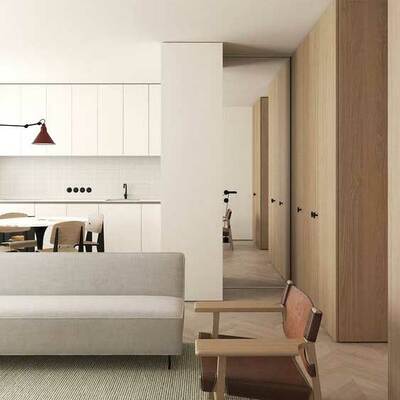
Colors – Light and neutral tones (white, beige, soft gray) make the space feel open and clean. You can add a pop of color through accessories or decorations.
A feng shui entryway works as a welcoming space for good energy—when it’s well-kept, pleasant, and open, it brings a sense of harmony and ease into the entire home.
4.5 Feng Shui Bathroom – Cleansing and Renewal
The bathroom is where we wash away fatigue, stress, and negative energy. It symbolizes cleansing of both body and mind, so it should feel fresh and soothing—not heavy or stagnant.
-
Clean and airy – The bathroom should always be clean, dry, and well-ventilated. Moisture and grime block energy flow and contribute to a sense of stagnation.
-
Preserve energy – Keep the bathroom door closed and the toilet lid down. This prevents energy from "draining" out and helps maintain a calm and balanced atmosphere.
-
Peaceful atmosphere – Candles, soft scents, essential oils, and natural décor (such as wood or pebbles) create a relaxing spa-like experience.
-
Colors – Ideal shades are blue, turquoise, or white to promote cleanliness, calm, and clarity. Add soft pastel tones or natural textures for a warmer feel.
-
Natural elements – Plants that tolerate humidity (like ferns or bamboo) add freshness and help renew the space's energy.
A bathroom arranged according to feng shui becomes more than just a functional space—it becomes a sanctuary for rejuvenation and inner calm.
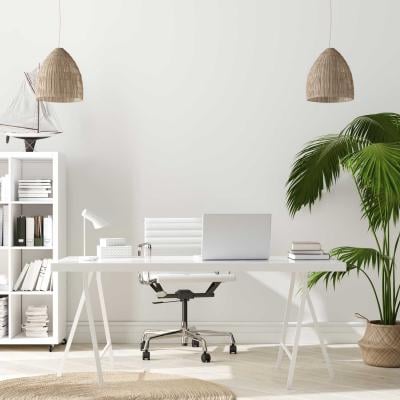
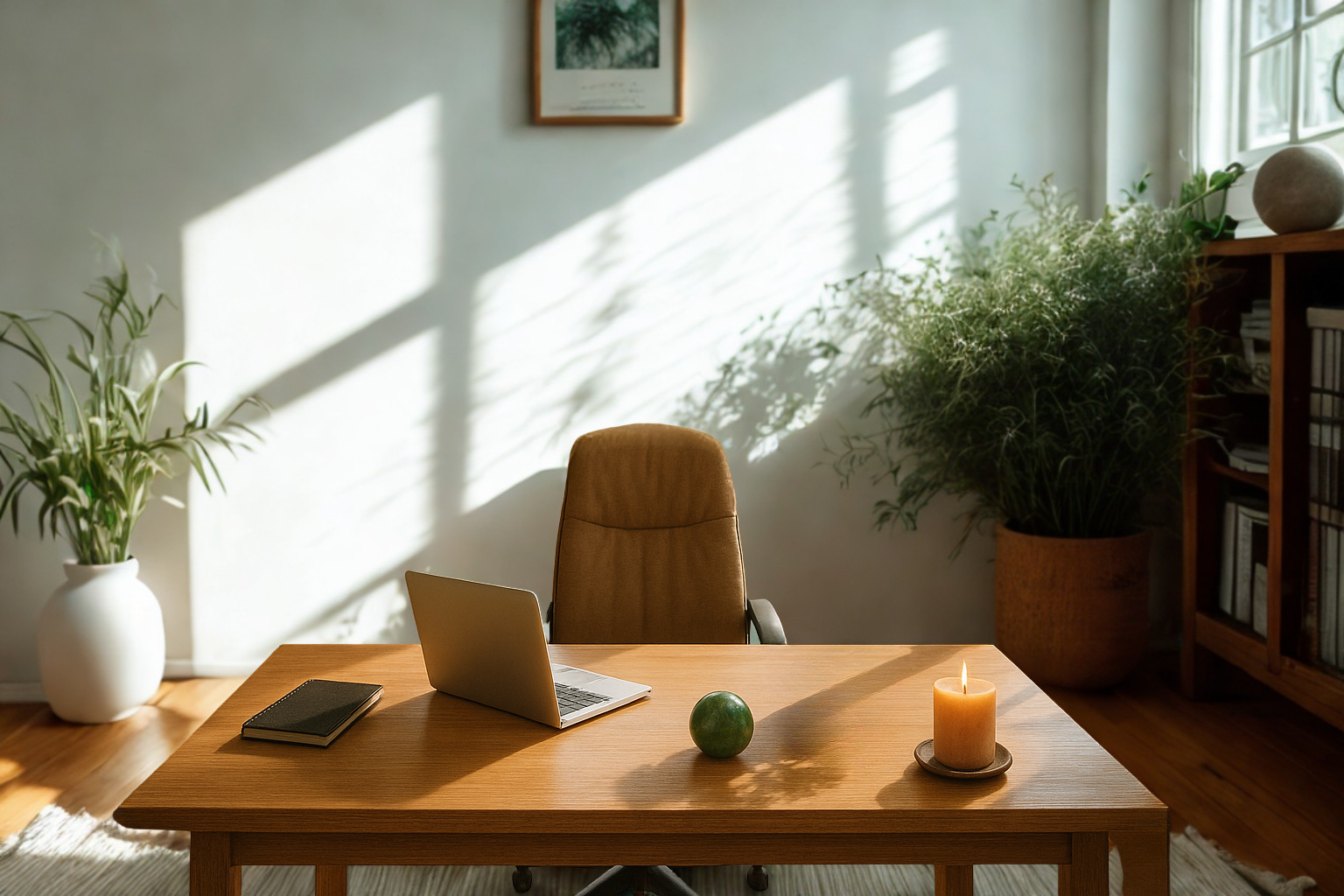
4.6 Feng Shui Home Office Setup
If you work from home, it’s important to carve out a designated area or home office that channels energy toward productivity and creativity. Even a small workspace can have a big impact on your focus and success when arranged with feng shui in mind.
-
Desk placement – Position your desk so you’re facing the door or at least can see it. This gives you a sense of control and confidence, which supports concentration. Avoid sitting with your back to the door.
-
Tidy and organized – A clean desk helps clear your mind. Clutter and excess objects can block creativity and drain your energy. Keep only what you really need on your desk.
-
Live energy of plants – Plants are a great addition to any workspace. They bring vitality, purify the air, and support natural energy flow. Try small bamboo, aloe vera, or other leafy houseplants.
-
Colors for performance and creativity – Green and blue support focus and calm, while orange and yellow stimulate creativity and energy. Together, they create a space that’s productive and inspiring.
-
Accessories and atmosphere – Choose items that inspire and motivate you—art, quotes, or objects symbolizing success. Avoid sharp or gloomy decorations that could disrupt positive energy.
 Source: DUBLEZ
5. Heavenly Guardians of Feng Shui
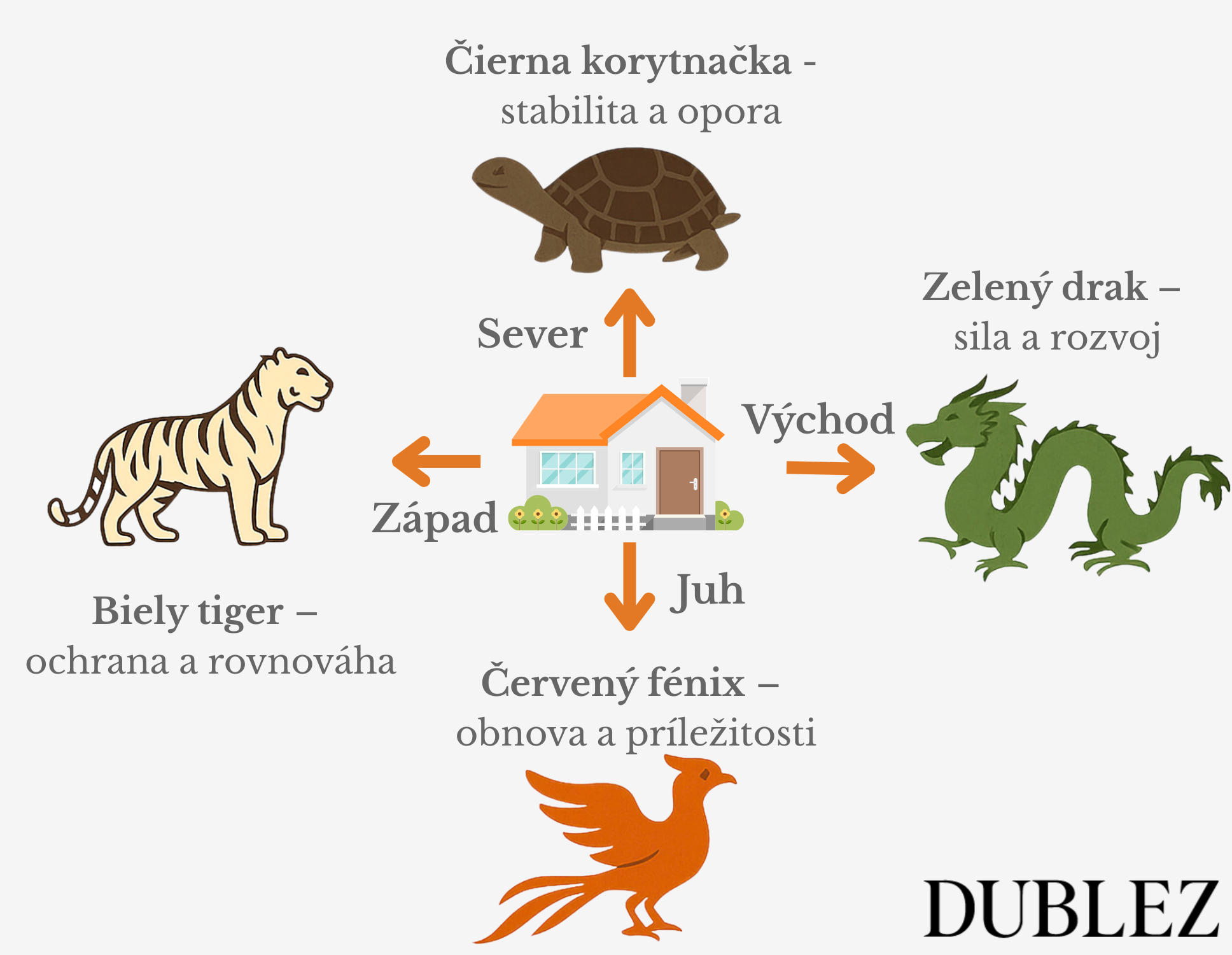
In feng shui, there is an ancient concept known as the Four Heavenly Guardians, or “Four Celestial Animals.” This symbolic system stems from Chinese cosmology and astronomy and has been used for centuries to harmonize spaces. The guardians represent protection, stability, and energy balance, and each one is associated with a specific direction and unique meaning.
Together, they form a kind of energetic shield—a balance between stability (turtle), openness (phoenix), strength and growth (dragon), and courage (tiger). In traditional feng shui, their meanings were reflected in the placement of homes: a hill or mountain behind the house symbolized the turtle’s protection; open space in front belonged to the phoenix; elevation on the left side represented the dragon, and a slightly lower right side symbolized the tiger.
Even today, whether you live in a city apartment or a house, this concept can be understood symbolically—as a reminder to find balance between protection and openness, stability and movement. The Four Guardians remind us that home is more than just a place we live—it’s a living organism that supports and protects us.
 Source: DUBLEZ
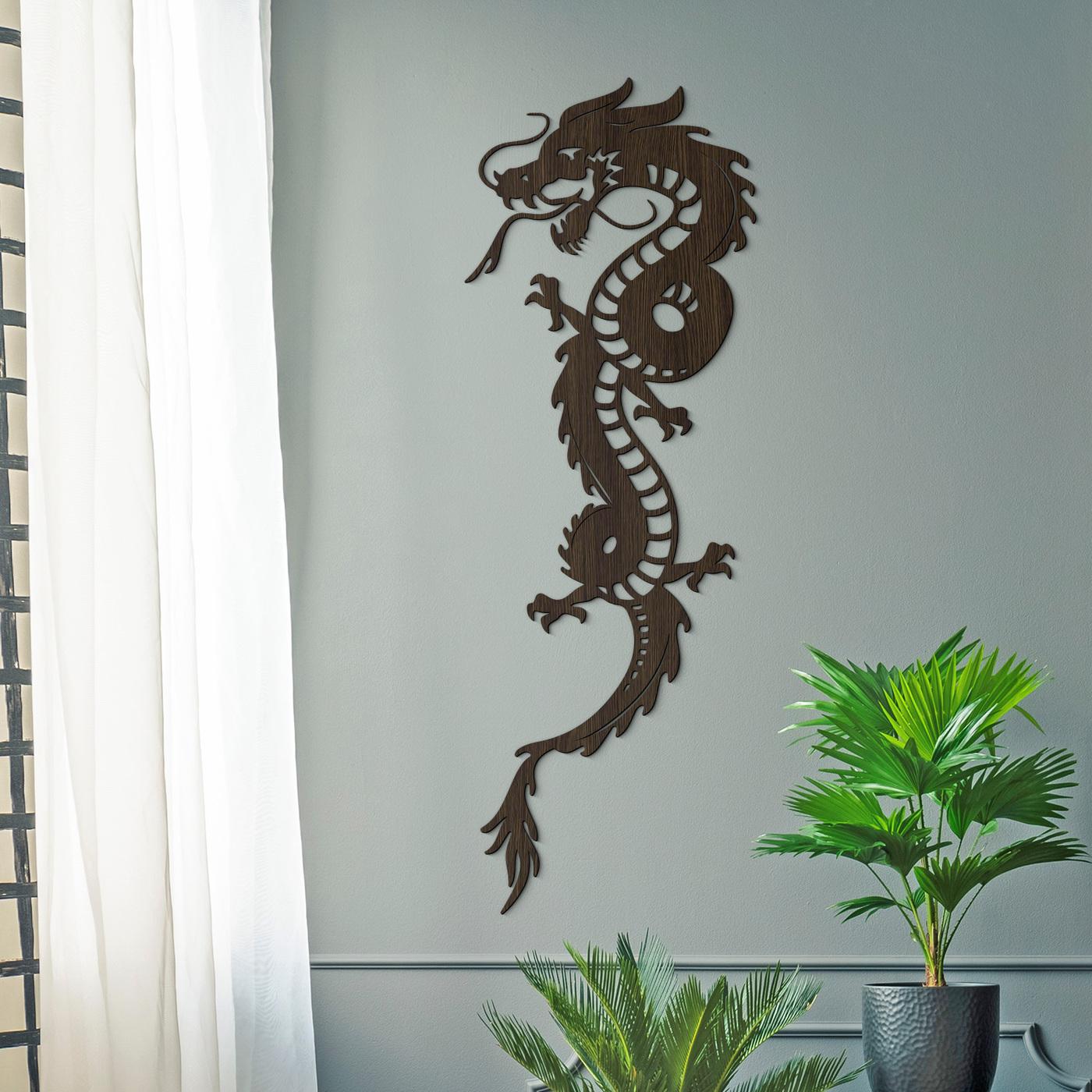
Green Dragon – Strength and Growth (East)
The dragon is a sacred and highly respected symbol in Chinese culture. In feng shui, it represents growth, vitality, courage, and new opportunities. Positioned on the left side of a space, it brings dynamic energy and drives development. It’s a yang element that encourages bold beginnings and forward-looking confidence.
 Source: DUBLEZ, Wooden Wall Art – Chinese Dragon
White Tiger – Protection and Balance (West)
On the right side stands the white tiger, representing protection, decisiveness, and discipline. It balances the powerful energy of the dragon, ensuring it doesn’t become too dominant. The tiger brings strength and caution to a space—it’s the guardian that protects and brings a sense of security.
Red Phoenix – Renewal and Opportunity (South)
In front of the house, facing south, is the red phoenix—a mythical bird of fire and rebirth. It symbolizes luck, optimism, future opportunities, and new beginnings. Traditionally, this energy is supported by open space in front of the home, allowing energy and opportunities to flow in. The phoenix brings lightness, joy, and inspiration for moving forward. To learn more about the symbolism of the phoenix, see our detailed article HERE.
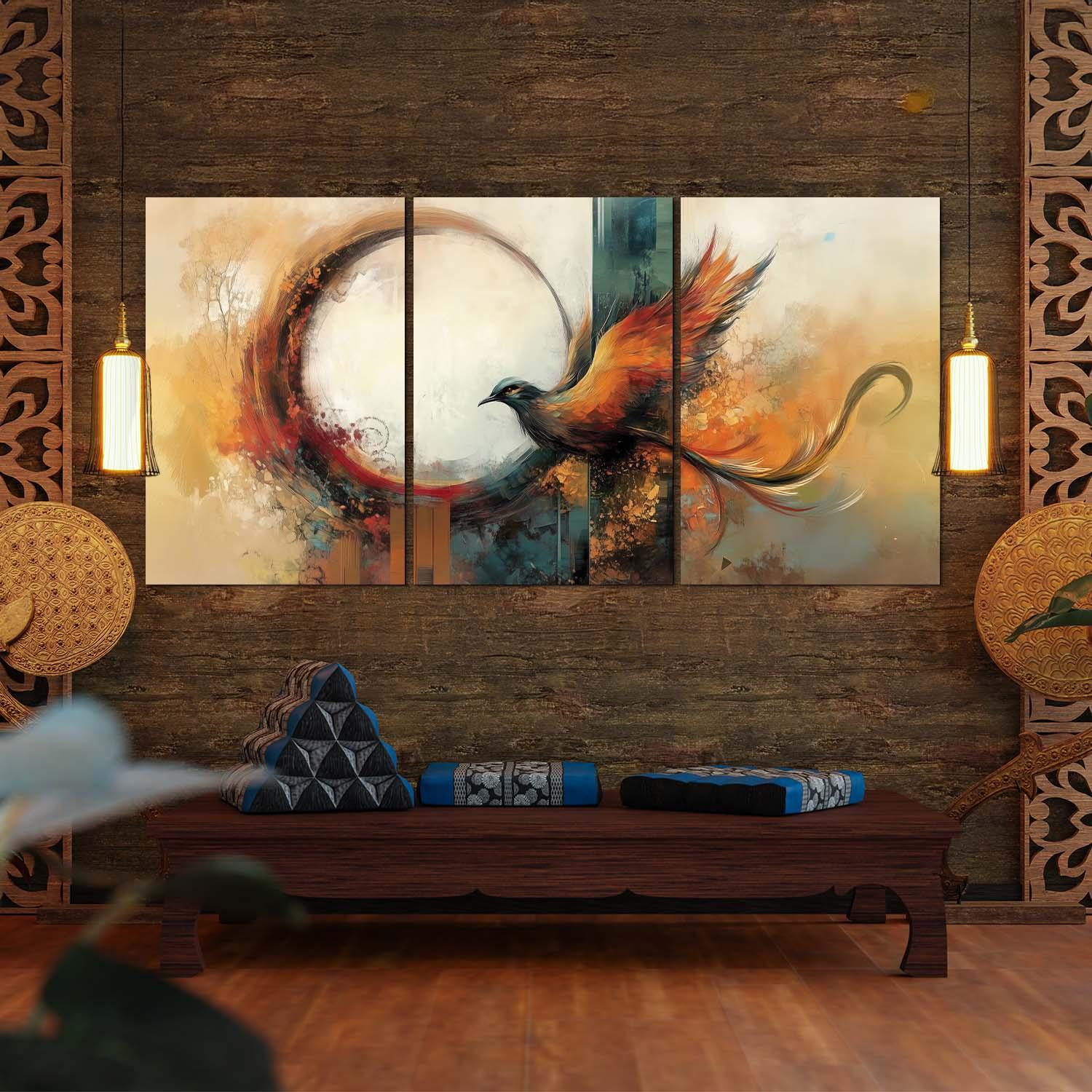 Source: DUBLEZ, Original wall art idea: Three-Piece Phoenix Wall Art
Black Turtle – Stability and Support (North)
Behind the home—or symbolically behind the person—stands the black turtle, representing stability, protection, and longevity. It’s the foundation and support that provides security. Traditionally, this was a hill or mountain behind a home, shielding it from wind or danger. Today, the turtle reminds us that everyone and every space needs solid grounding to rely on.
6 Feng Shui Talismans and Symbols
Beyond the grand celestial guardians, feng shui also works with various smaller symbols and talismans that can be placed in your home. These serve to attract luck, prosperity, health, or love—and also act as visual reminders of the intentions you want to bring into your life. These items are not just décor—they carry specific energy and meaning, helping you align your space with your inner goals. The most popular talismans include:
-
Fish (especially koi or goldfish) – Symbol of prosperity, abundance, and smooth energy flow. An aquarium with nine fish is considered especially lucky.
-
Money frog (Chan Chu) – Also known as the “wealth frog.” It has three legs and holds a coin in its mouth. Placed near the entrance or cash register, it attracts prosperity.
-
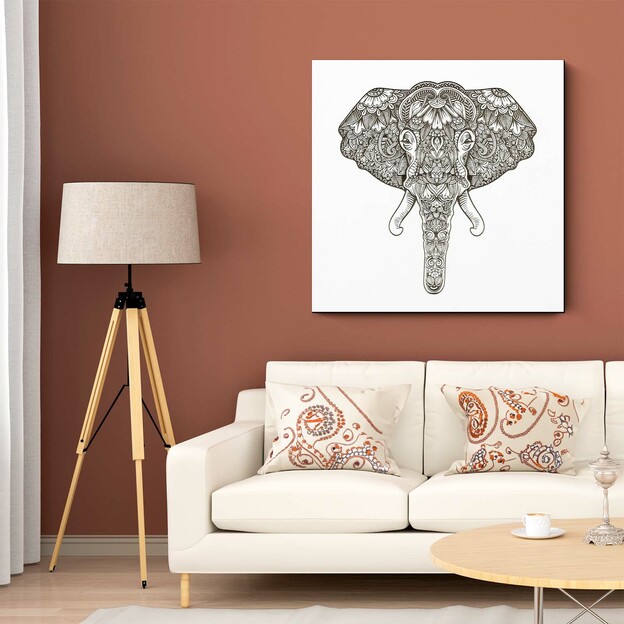
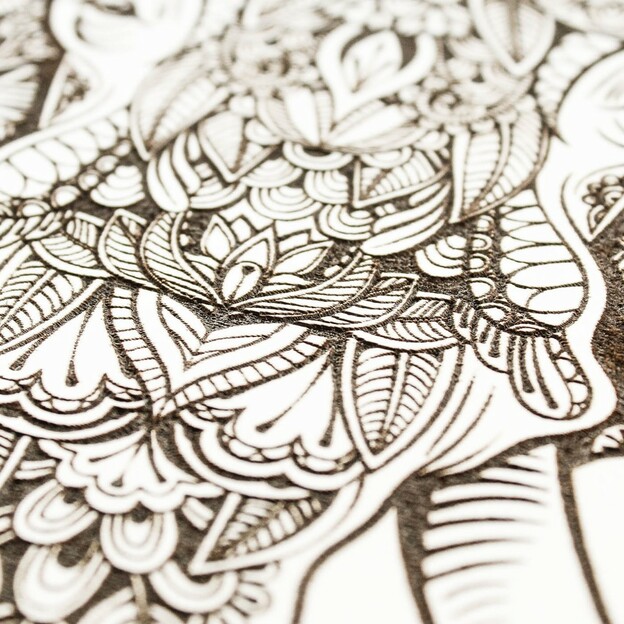
Elephant – Represents wisdom, strength, and loyalty. With its trunk up, it symbolizes luck and success; with trunk down, peace and stability.
-
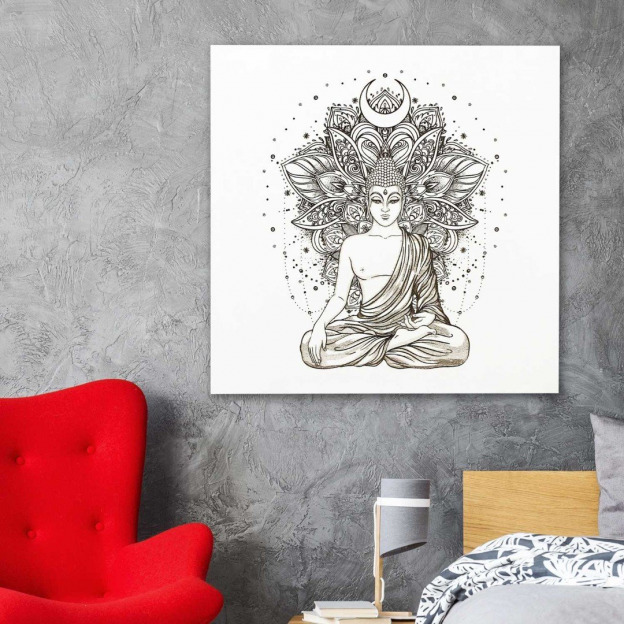
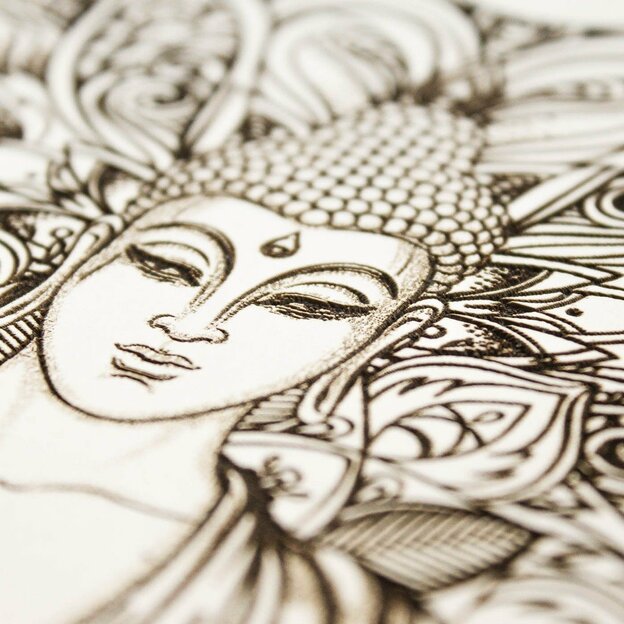
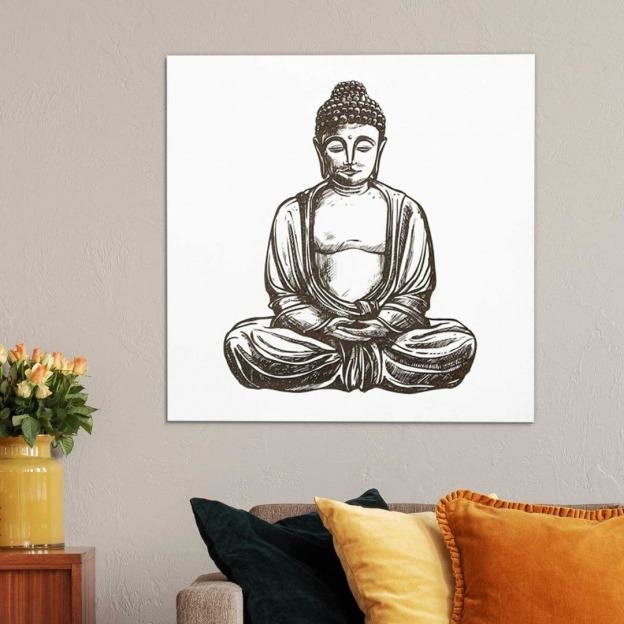
Laughing Buddha (Hotei) – A talisman of joy and abundance. Placing it in the living room or near the entryway brings happiness, lightness, and good vibes to the household.
Tip for your living room from DUBLEZ – Wooden Wall Art – Buddha
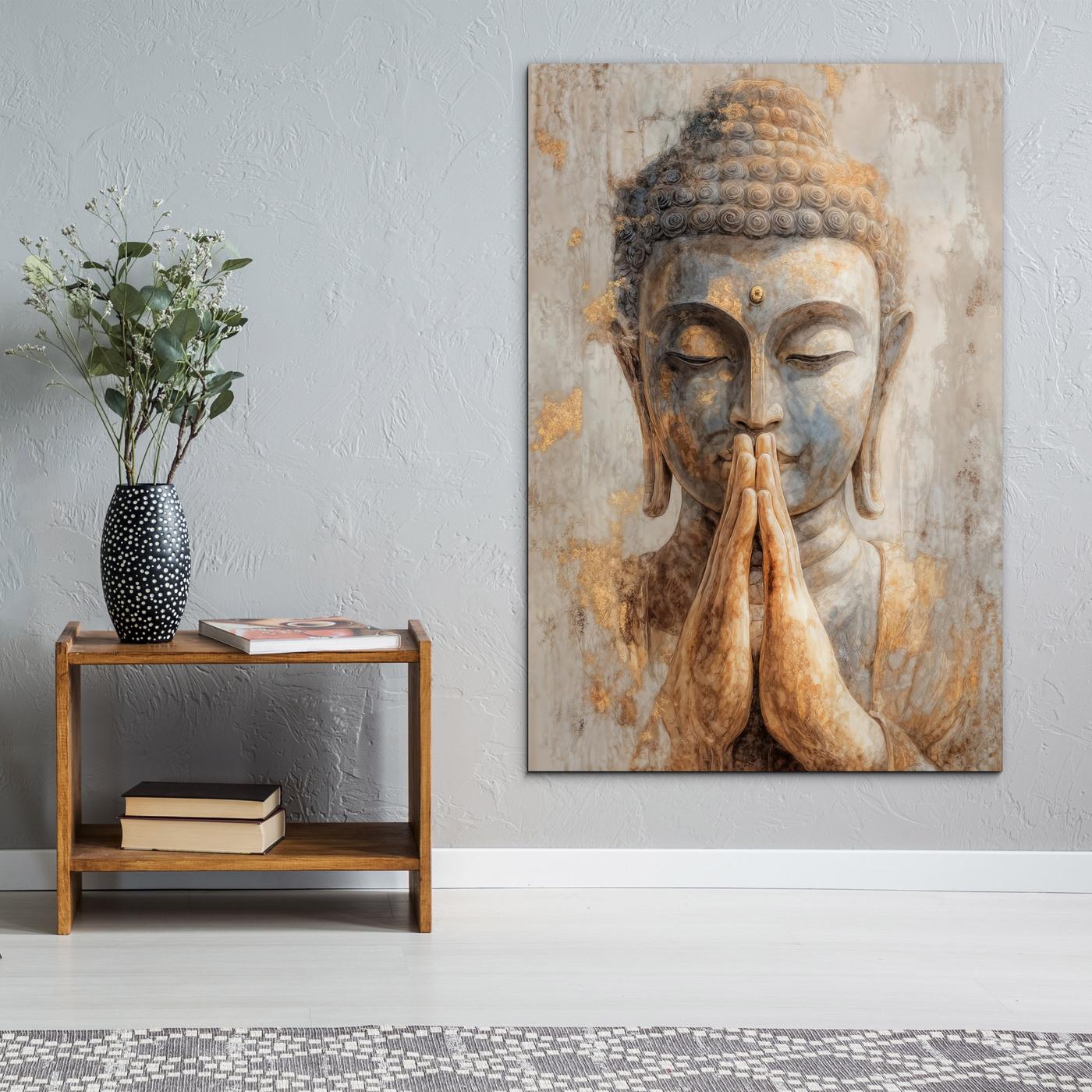 Source: DUBLEZ, Buddha Wall Art for the Living Room
-
Crystals and gemstones – Purify energy and reflect light. Hanging crystals near a window help circulate qi harmoniously.
-
Chimes and bells – Their gentle sound disperses stagnant energy and brings freshness and flow.
-
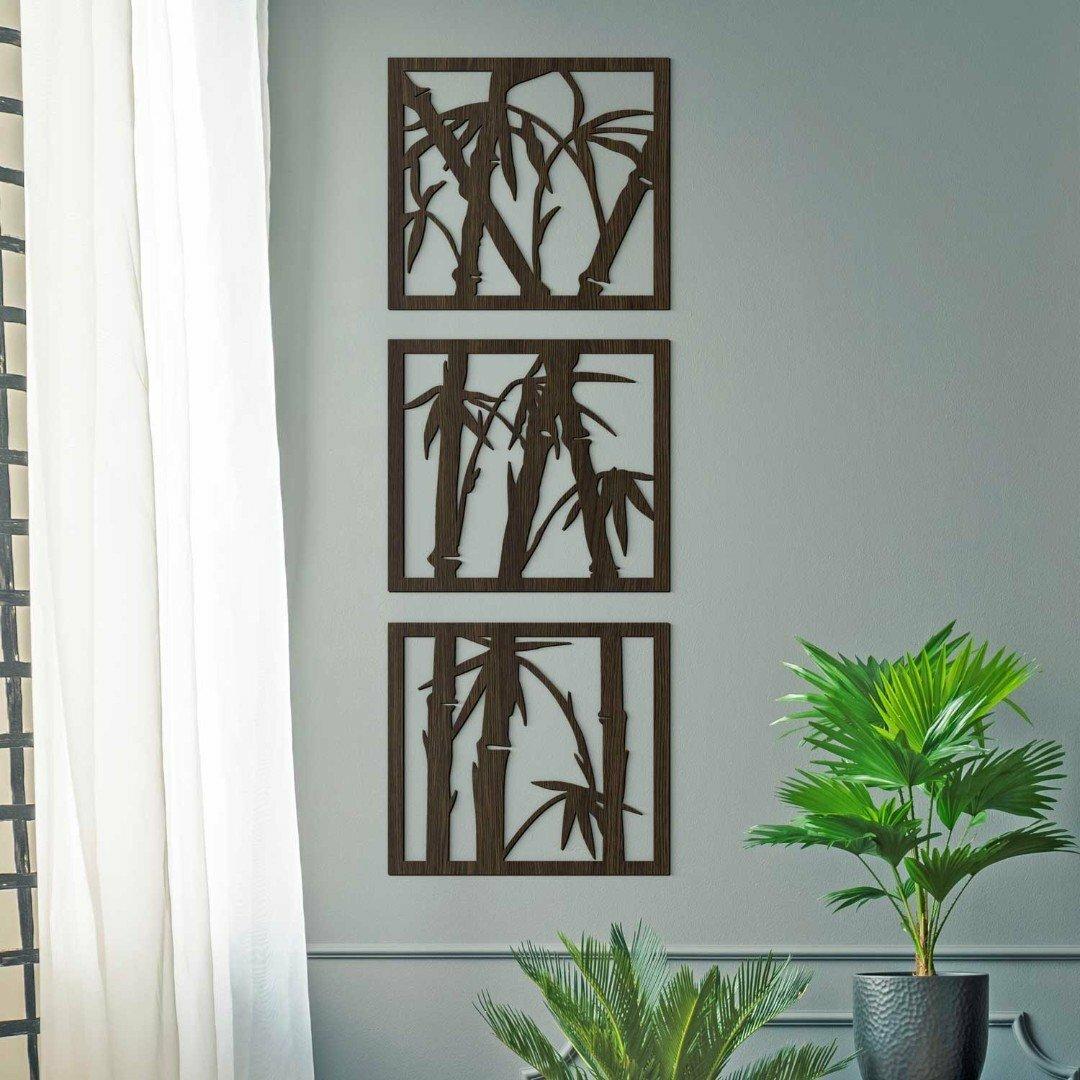
Bamboo – Symbolizes vitality, growth, and resilience. Often gifted as a talisman for luck and longevity.
Bring freshness and balance into your interior with the Three-Piece Bamboo Wall Art by DUBLEZ
How to Use Them?
When using talismans, the most important thing is intention and awareness. It’s not just about the object itself—but about the energy and message you associate with it. Choose a symbol that resonates with what you want to invite into your life—health, peace, prosperity, or love.
Its placement is also important. Position the talisman where its energy will work best—near the front door for protection, in the living room for joy, or in your office for success and focus.
But remember—less is more. Too many symbols can overwhelm a space and dilute their individual effects. It’s better to choose a few talismans that truly resonate with you and your intentions.
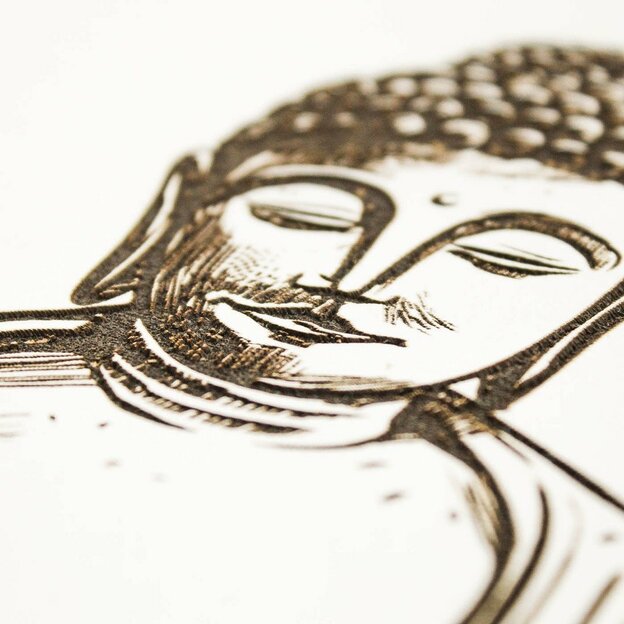
Talismans as Wall Art by DUBLEZ




7. Bagua and Trigrams – The Heart of Feng Shui
Bagua plays a key role in feng shui. It’s a symbolic map of a space that helps us understand how energy (qi) flows through it—and how different areas of the home relate to various aspects of life: relationships, health, career, abundance, and personal growth. The map is divided into eight zones arranged around a center, and each is linked to one trigram (known as pa-kua), ancient Chinese symbols based on observing nature and life. Each trigram is made of three lines—solid (yang) or broken (yin)—and represents a natural force or principle. Together, they express the world’s cycles: light and dark, motion and stillness, heaven and earth, beginnings and endings. These symbols are the language of feng shui and the foundation of its work with balance.
- A simple comparison: Think of the bagua as a life compass. Each section represents one area—just like the body has organs, each with a function that contributes to the whole. By using this map, we can bring balance into our space—and into our lives.
Source: Pixabay
The Meaning of Trigrams in Our Space and Ourselves
Each of the eight trigrams has a symbolic meaning that shows up not only in the arrangement of space, but also within us. Trigrams connect with a direction, a family member, an element, a season, or a time of day—and together, they form a complete image of harmony. Here’s a clear, practical explanation for each, so you can easily apply them:
☰ Qian – Heaven
Creative force, decisiveness, protection
Qian carries strong yang energy—a force that leads, opens new paths, and brings stability. It symbolizes the father, authority, and the ability to take responsibility.
-
In your home: The northwest area should feel structured and solid—it supports inner strength and mental clarity.
-
In yourself: Encourages leadership, drive, and the courage to create.
☳ Zhen – Thunder
Beginnings, impulse, movement
Zhen represents the energy that awakens us—like spring thunder. It’s powerful but cleansing and opens the way for new starts. It symbolizes the eldest son.
-
In your home: The east should be bright and uncluttered to encourage new growth.
-
In yourself: Helps overcome fear and take confident steps into new phases of life.
☵ Kan – Water
Depth, challenges, life path
Water is mysterious and powerful. Kan points to the middle son, quiet endurance, and the strength to navigate difficult times.
-
In your home: The north supports career and life direction. If energy is blocked, it can lead to fear or confusion.
-
In yourself: Teaches resilience and the ability to reflect and seek truth.
☶ Gen – Mountain
Stability, silence, inner peace
Gen symbolizes the youngest son, who knows when to pause and gather strength in stillness.
-
In your home: The northeast is ideal for reading, meditation, or quiet reflection.
-
In yourself: Reminds us of the need for rest, personal boundaries, and introspection.
☷ Kun – Earth
Support, kindness, mother energy
Kun represents the mother—nurturing, accepting, and grounding. Its energy is gentle yet powerful.
-
In your home: The southwest represents partnership—gentle colors and order here encourage love and harmony.
-
In yourself: Embodies strength in gentleness, the ability to give and receive.
☴ Xun – Wind / Wood
Growth, movement, perseverance
Wind is soft yet transformative. Xun represents the eldest daughter, creativity, and abundance.
-
In your home: The southeast supports financial growth and prosperity—add plants or wood accents to enhance it.
-
In yourself: Encourages flexibility and the ability to grow even in tough conditions.
☲ Li – Fire
Light, awareness, wisdom
Li is the middle daughter, associated with fire, summer, the sun, and spiritual insight. It brings clarity and illumination.
-
In your home: The south is tied to success, visibility, and recognition. Add light, warm tones, or candles to activate this area.
-
In yourself: Awakens intuition and clarity, helping you see the bigger picture.
☱ Dui – Lake
Joy, playfulness, communication
Dui is the symbol of the youngest daughter, light-heartedness, and enjoying life. The lake represents rest and inspiration.
-
In your home: The west connects to children and creativity—use playful colors and artistic elements to support it.
-
In yourself: Brings joy, openness in communication, and the ability to live in the moment.
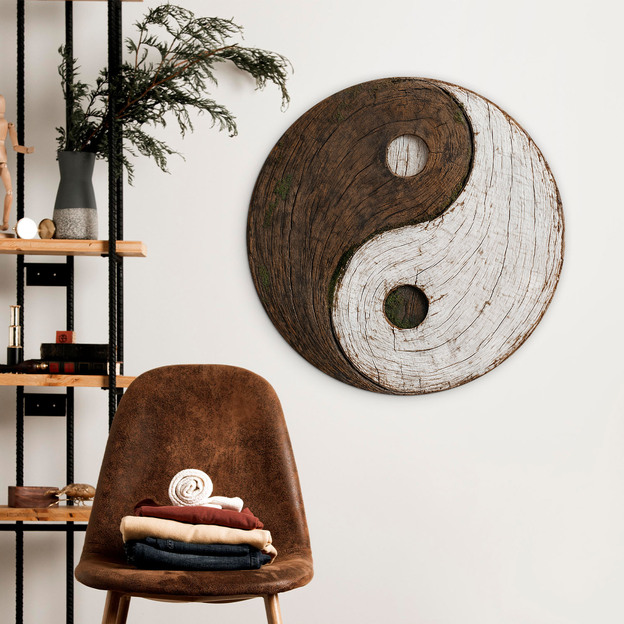
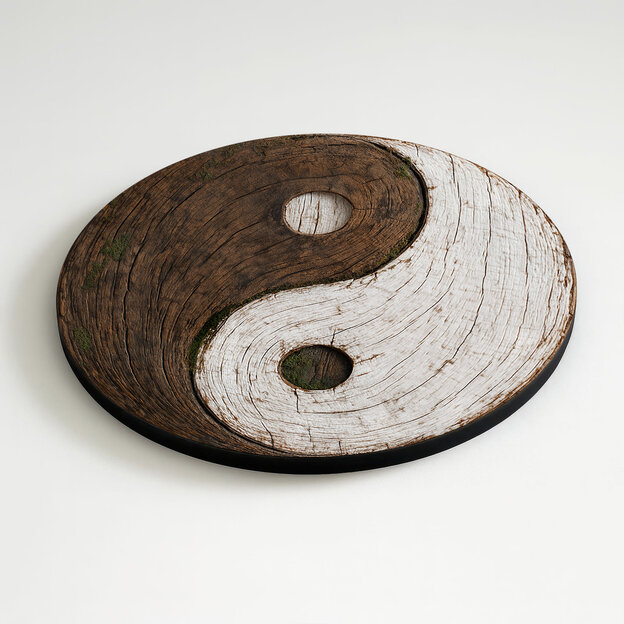
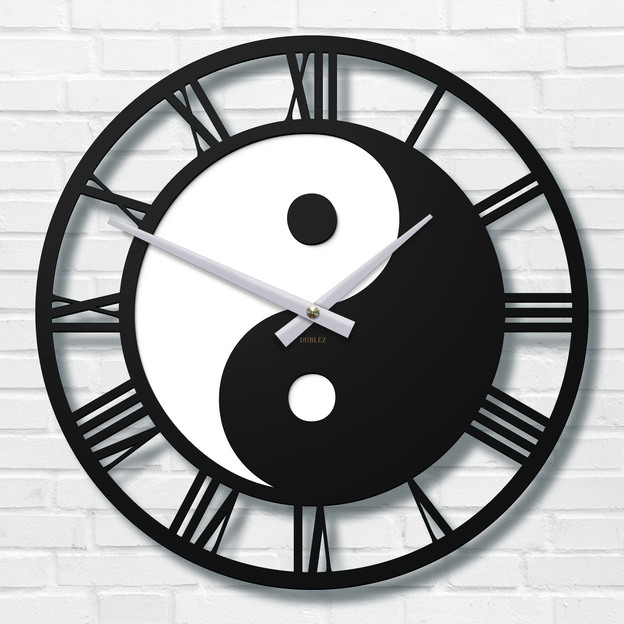
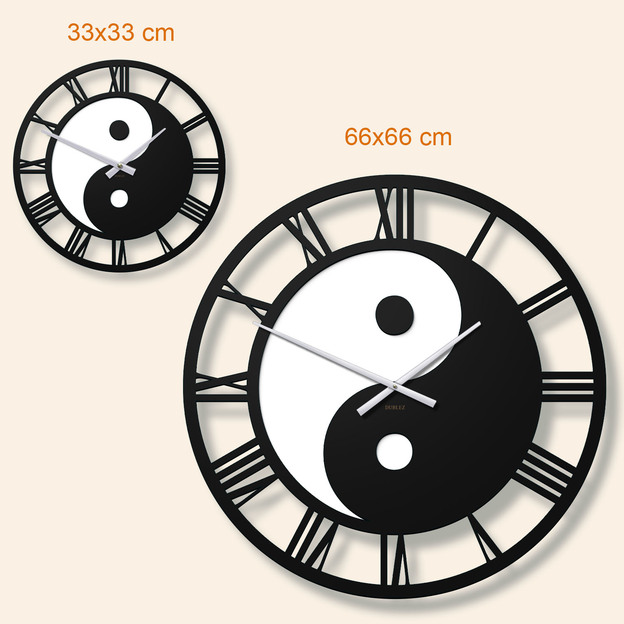
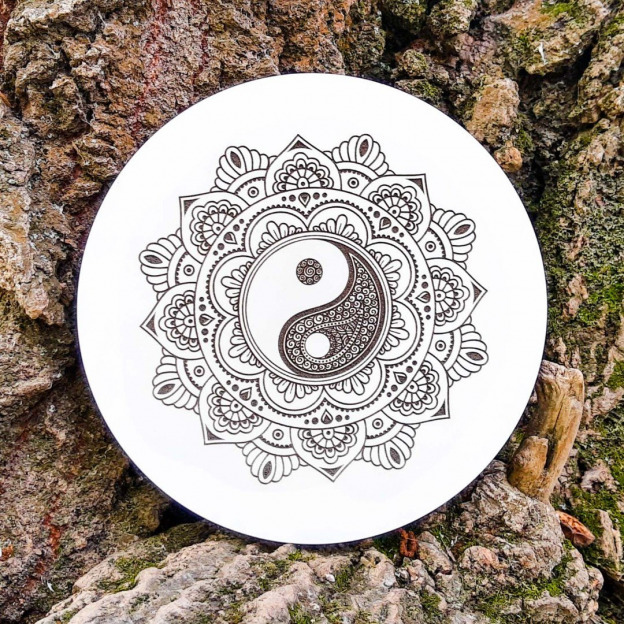
Decor tip from DUBLEZ:

Conclusion
Feng shui reminds us that our home is not just a collection of furniture and decorations, but a living organism that reflects our inner world. When it’s arranged in alignment with the flow of qi, it can support us in health, relationships, work, and personal growth.
You don’t need to change everything at once—start with small steps: declutter corners, add a plant, choose softer colors, or move a mirror. Even a simple shift can positively impact your energy and well-being.
When you become mindful of your space and welcome light, freshness, and harmony into it, your home becomes a source of stability, joy, and calm. And that’s the true goal of feng shui—to help you create a home that supports and uplifts you every day.
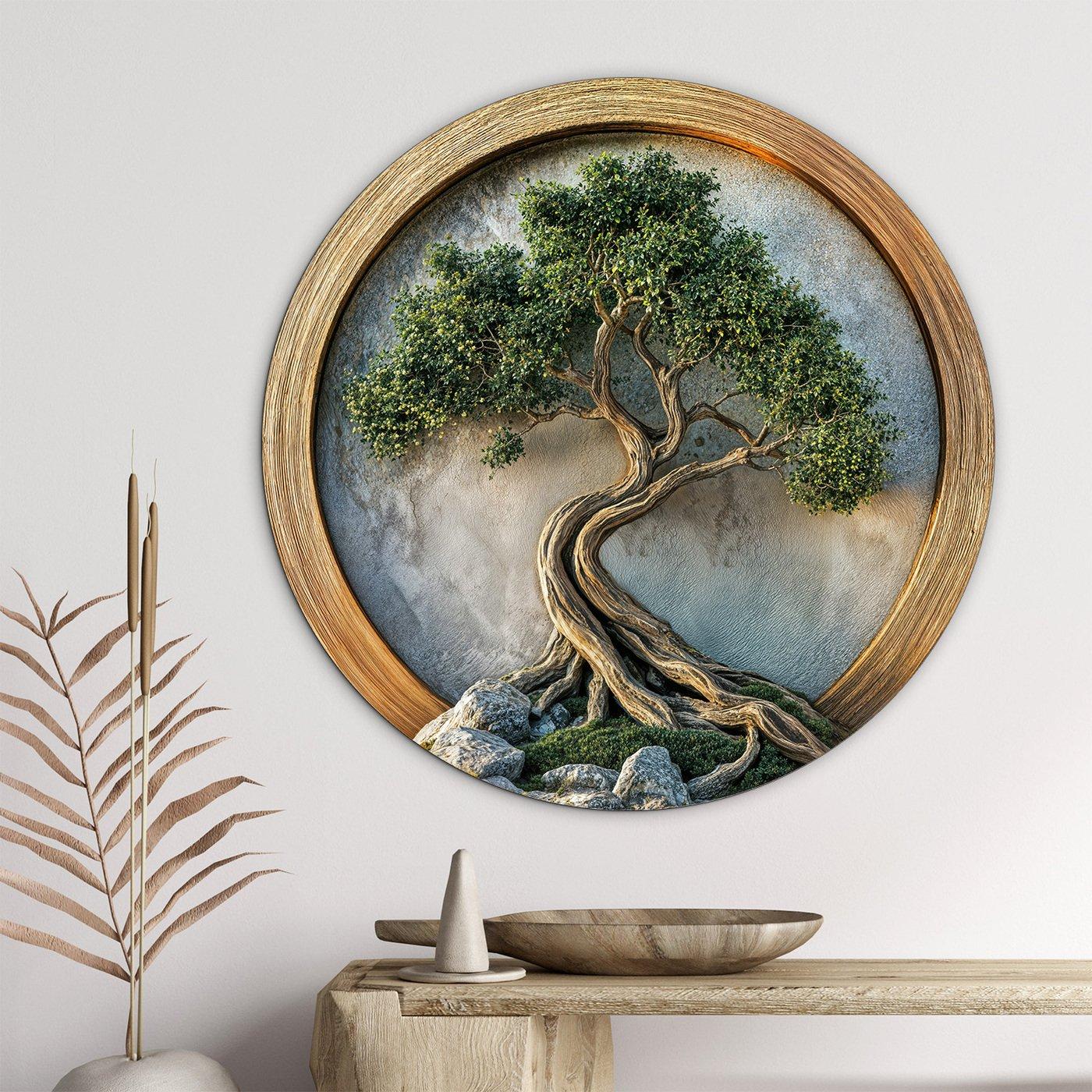
Your daily Stability can live with you, too – from DUBLEZ
 Source: DUBLEZ