




































































St. Valentine – The Holiday of All Lovers ♥
Valentine’s Day has long been a symbol of love, courage, and romance. On this beautiful day, we all take a moment to remember and celebrate the love we share.
But how did this globally celebrated holiday, held each year on February 14, actually begin? What are the most beautiful expressions of love, and what Valentine’s Day gifts are truly meaningful? And what about the less romantic side of this holiday? You'll find answers, fun facts, creative gift ideas, and much more in our in-depth article :) Let’s dive in!
What can you look forward to in our Valentine’s article? You’ll find everything you want to know:
- Who was Saint Valentine? From history to today
- The beginnings of Valentine’s Day – The first love letter
- Valentine’s Day as an officially recognized holiday
- The spread of Valentine’s Day around the world
- Criticism and the darker side of Valentine’s Day
- Ideas for original Valentine’s gifts for her
- Ideas for original Valentine’s gifts for him
- How to celebrate Valentine’s Day in a way you’ll never forget
- The name Valentine – Meaning, origin, and name day
- Fun facts about Valentine’s Day
1. Who Was Saint Valentine? From History to Today
At the heart of this holiday for lovers lies the mysterious story of Saint Valentine, captivating in its mystique—just like love itself. This celebration has deep historical roots and is connected to various legends and figures.
Stories about Saint Valentine are as diverse as the forms of love celebrated on this day. One of the most well-known legends is about a Roman priest named Valentine. During the third century under the reign of Emperor Claudius II, this priest was known for secretly marrying couples in love, defying the emperor's direct ban. The emperor believed that single men made better soldiers, being free of attachments. This act of love and courage led to his imprisonment and ultimately his martyrdom. It was this sacrifice that made him a symbol of love and bravery in the face of injustice and oppression. Valentine was later declared a saint by the Catholic Church, mainly due to his acts of love, courage, and his death as a martyr. His feast day, February 14, was designated as Saint Valentine’s Day. Over time, it evolved into a celebration of love and romance, though it may have originally held religious or cultural meaning.

Illustration of a priest serving in a Roman church. Source: DUBLEZ
However, the history of Saint Valentine’s Day is much more complex.
Besides the legend of Priest Valentine, there are also other historical customs tied to this day. Some records speak of pagan rituals that were later transformed into Christian holidays. These pagan traditions—such as fertility festivals—may have influenced the creation of the modern-day celebration of love as we know it.
Interesting facts about Saint Valentine also include various traditions and customs that have developed in cultures around the world. From traditional Valentine’s cards to special rituals and festivities, this holiday showcases the richness and diversity of human expressions of love and romance.
For many, Valentine’s Day is a chance to express deep emotions and reflect on the importance of love in our lives. Though its origins may be shrouded in mystery, one thing is clear: Saint Valentine serves as a reminder to show affection and respect—whether through small gestures or meaningful gifts. Both the legend and the holiday itself remind us that love can overcome obstacles, and the courage to love is timeless.
Whether the legends about Saint Valentine are historically accurate or not, their message continues to inspire and enrich our modern world. The history of Saint Valentine’s Day is a mosaic of stories and traditions that together form a rich history of love, celebrated all around the globe.
2. The Beginnings of Valentine’s Day – The First Love Letter
The story of the first Valentine’s letter unfolds like a romantic legend. It is said that Valentine, a Christian priest, wrote this letter while imprisoned. He fell in love with the daughter of his jailer and expressed his feelings through a heartfelt letter. This act of courage and sincere emotion laid the foundation for today’s Valentine’s traditions.
Valentine, as a symbol of love and romance, has lived in people’s hearts for centuries. His first Valentine’s letter represents not only unwavering love but also the bravery to express emotions in the face of adversity. This act had a significant impact on the rise of the tradition of sending Valentine’s cards, which today serve as a token of love and affection shared between loved ones around the world.
Valentine’s cards, whether traditional paper versions or modern digital ones, are now an inseparable part of the holiday. Sending Valentine’s cards is a gesture that has been passed down through generations, preserving its original purpose—expressing love and devotion. These cards often feature personal messages, poems, or love quotes that amplify their meaning and emotional impact.

Illustration of Valentine writing the first card to the jailer’s daughter while imprisoned. Source: DUBLEZ
Today, when digital communication often dominates, traditional Valentine’s cards offer a unique and personal way to express feelings. They’re considered more valuable because of their permanence and tangible nature—something often missing in the digital age.
Despite changes in how we express ourselves, the message of the first Valentine’s letter remains relevant. It reminds us that true love transcends all barriers and that expressing our feelings is essential to maintaining closeness and understanding in relationships. The Valentine tradition continues to preserve and celebrate this timeless moment—regardless of how it’s delivered.
3. Valentine’s Day as an Officially Recognized Holiday
Valentine, once simply a saint associated with love, gradually evolved into a holiday celebrated and remembered by people each year. It first gained popularity during the Middle Ages, especially in England and France, where Valentine’s Day began to be linked with romantic love. This was influenced by a combination of local traditions, literary works, and cultural habits. Let’s dive deeper into why that happened:
Literary influences: Geoffrey Chaucer, the famous medieval poet, is often credited with associating Valentine’s Day with romantic love. His poem "The Parliament of Fowls" from 1382 is considered one of the earliest references to February 14 as the day when birds choose their mates. This idea became popular and contributed to the romantic image of Valentine’s Day. The text, describing birds seeking partners on this day, strongly influenced the holiday’s romantic theme. Chaucer’s work helped establish the medieval concept of romantic love.
Besides Chaucer, other medieval writers like Charles d'Orléans and William Shakespeare also contributed to the romantic portrayal of Valentine’s Day in their works. These literary pieces reflected—and shaped—how society viewed love and romance.
Customs and traditions: During this period, customs like exchanging "valentines" or love notes emerged. These greetings often included poems, proverbs, romantic verses, and were adorned with hand-drawn illustrations and lace. They were seen as a creative, heartfelt way to express love to someone special. It was also common for men to wear their lover’s name on their sleeve for Valentine’s Day, which is where the expression “wearing your heart on your sleeve” comes from.

Illustration of giving a Valentine card in historical England. Source: DUBLEZ
Social and cultural aspects: In medieval times, romantic relationships were often complicated by social and economic factors, making Valentine’s Day an ideal opportunity to express feelings that otherwise might go unsaid.
During this era, marriages were frequently arranged. Valentine’s Day offered a chance to express a more personal and romantic form of love, often outside those arranged relationships.
Valentine’s Day also provided a safe space for expressing feelings that might have otherwise been socially unacceptable or taboo. This gave people an outlet for emotions that might have been suppressed in everyday life.
Thus, in the Middle Ages, Valentine’s Day became not only a day of love but also a symbol of the desire for emotional expression in a society that was often conservative and restrictive.
4. The Spread of Valentine’s Day Around the World
Over the centuries, Valentine’s Day has evolved from a religious feast dedicated to Saint Valentine into a universal celebration of love and romance. Its global spread was made possible by its early popularity in English-speaking countries, and later, by advances in technology.
4.1 Spread Thanks to the Printing Press
The first major boom of Valentine’s Day came with the arrival of the printing press in the 19th century. Valentine’s cards became more affordable, making them accessible to a wider range of people. This technological advancement enabled mass production of cards, which played a crucial role in popularizing the holiday. Handmade decorations, such as lace and illustrations, were eventually transferred into printed designs.
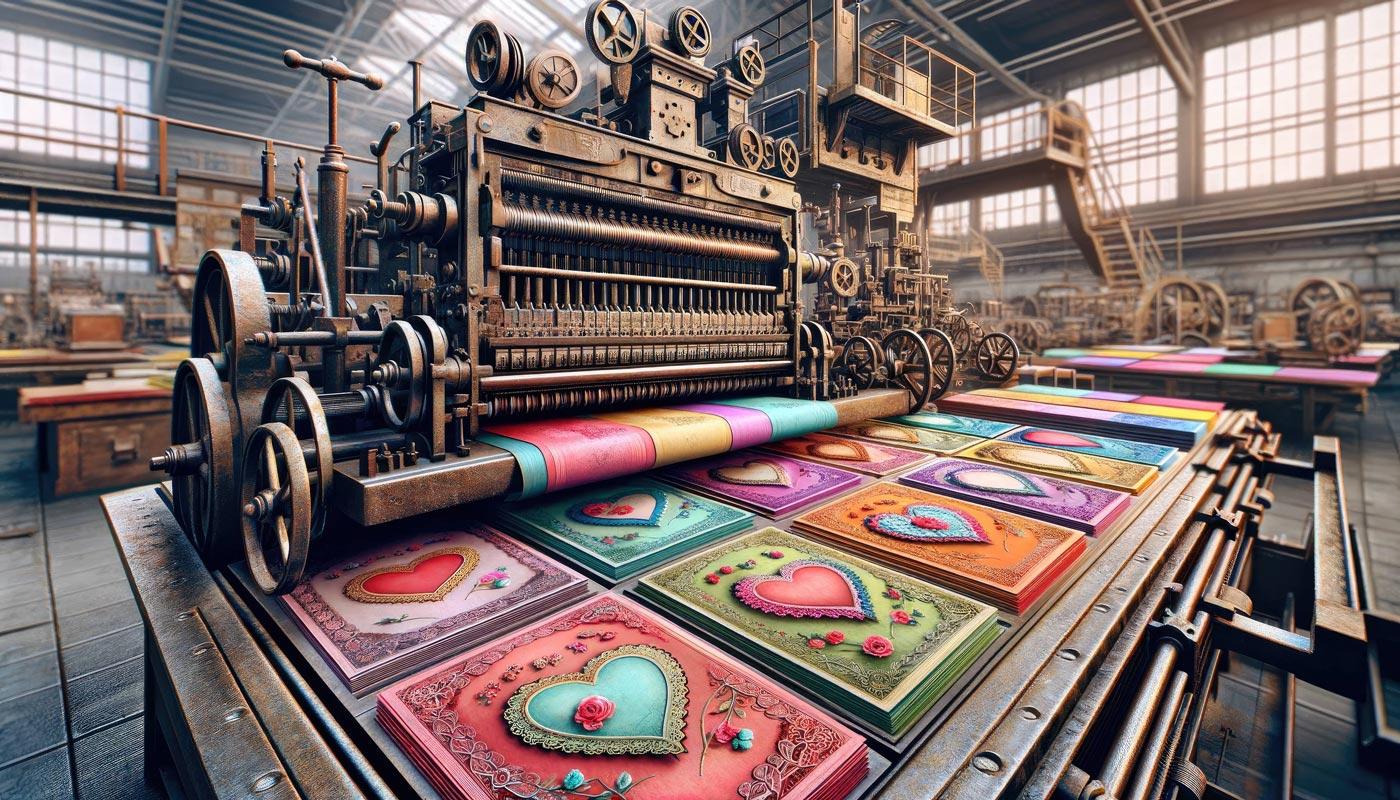
Illustration of printing the first Valentine’s cards using a printing press. Source: DUBLEZ
4.2 Commercialization of Valentine’s Day and the First Marketing Efforts
Changing societal attitudes: The gradual commercialization of Valentine’s Day influenced how people viewed the celebration. Originally focused on personal expressions of love, it slowly became a marketing opportunity for exchanging gifts—something gift manufacturers quickly capitalized on.
Retail and advertising boom: Stores and sellers soon began using the holiday as a business opportunity, creating a wide range of themed products and promoting items suited for Valentine’s—such as jewelry, chocolates, flowers, or plush toys. Valentine’s advertising and marketing became an essential part of the holiday’s growth, with more and more money invested into campaigns each year.
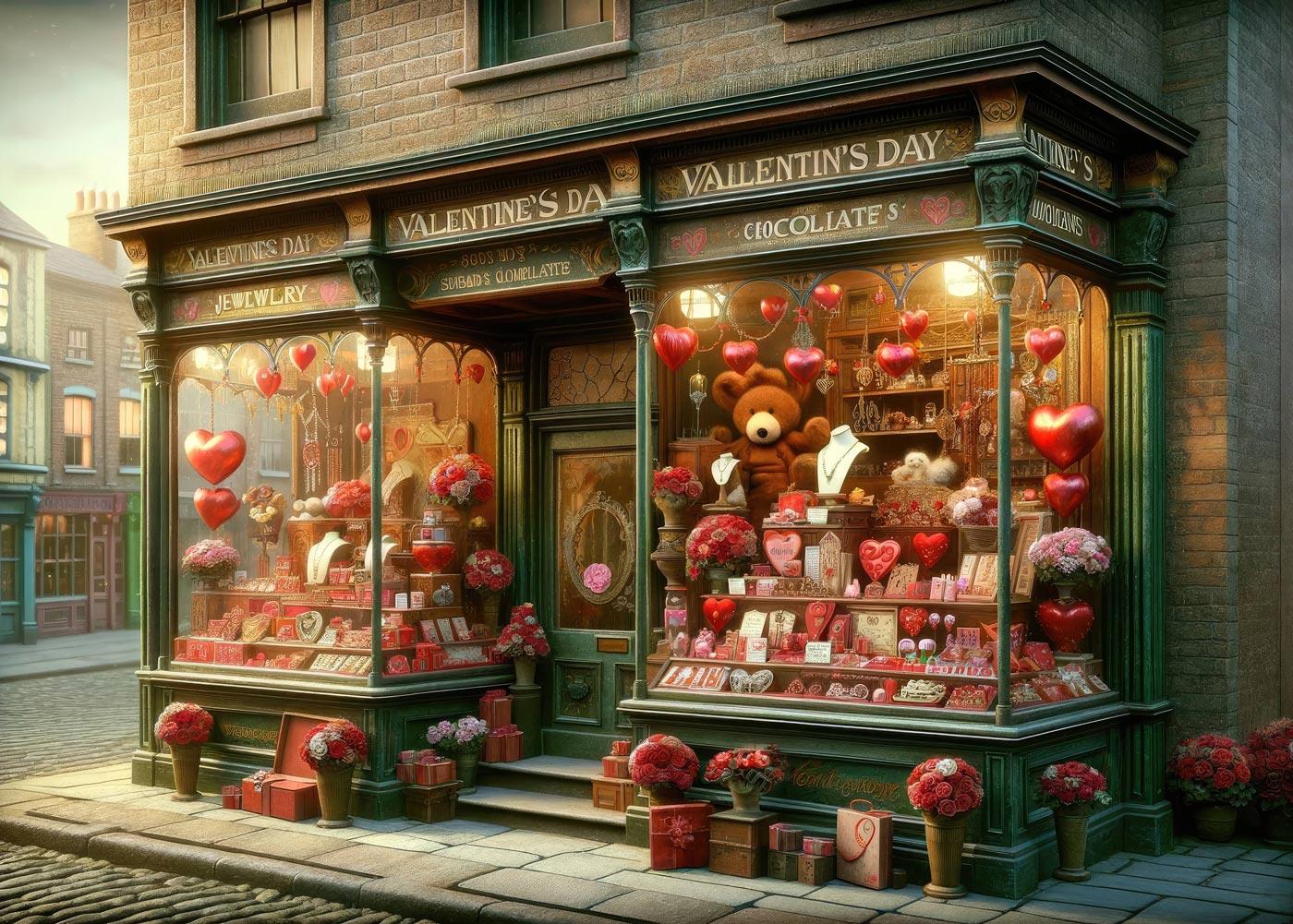
Illustration of a Valentine-themed gift shop in the past. Source: DUBLEZ
4.3 Spread Through War, Media, and Globalization
World wars and the significance of Valentine’s cards: During and after the world wars, Valentine’s cards were often used to express love and affection to those serving abroad. These emotional connections strengthened the importance of love, and Valentine’s cards became a powerful way to share heartfelt messages.
The rise of globalization: With globalization came increased travel and cultural exchange. Valentine’s Day began to spread to more countries around the world, with each culture adapting the holiday to its own traditions and preferences.
Mass media and pop culture: In the 20th and 21st centuries, Valentine’s Day became a popular topic in all types of media and pop culture, further embedding it into our everyday lives and solidifying its status as a day centered around romantic love.
Valentine’s Day has transformed from a traditional holiday into a complex global phenomenon influenced by both cultural traditions and modern commercial trends. Though it still celebrates love and romance, its observance has now spread worldwide.
5. Criticism and the Darker Side of Valentine’s Day
Every coin has two sides. Valentine’s Day is a beautiful celebration full of love, romance, and emotional connection—there’s no doubt about that. But to remain objective, let’s also look at the negative aspects of this holiday. Surely you know someone who relates to at least one of these points. See for yourself...
- Feeling of loneliness: For people without a partner, Valentine’s Day can serve as a painful reminder of loneliness or failed relationships. And today’s digital world can intensify this feeling. Solution? If you’re single and know someone else who doesn’t have plans for the day, plan something together—just as friends—to avoid feeling left out and to protect yourself from the overwhelming emotional pressure of this holiday :)
- Financial burden: Valentine’s Day often comes with pressure to buy expensive gifts, which can be a financial strain—especially for those on a limited budget, or who go into debt trying not to disappoint their partner’s expectations. We often want to express deep love with a valuable gift, seeking validation. While expensive gifts can bring joy, they can also lead to financial stress. Solution? There’s always a middle ground—use your creativity and time to make a personal gift. It may cost less, but it will mean much more. A piece of jewelry is nice, but if you’re not aiming for something valuable, go for a surprise—it never fails :)
- Commercialization: Many people criticize Valentine’s Day for becoming overly commercialized. Companies exploit it for marketing purposes, and its consumerist nature can take away from its original meaning.
- Forced celebration: Sometimes, people feel obligated to celebrate Valentine’s Day—even if they’re not interested in it or see it as unnecessary.
- Increased suicide rates: Some claim there’s a rise in suicides around Valentine’s Day, caused by feelings of loneliness or relationship dissatisfaction. Public pressure can become overwhelming, and in some cases, lead to tragic outcomes. Solution? If you know someone who is lonely or emotionally vulnerable, reach out to them on this day—ask how they’re doing. You never know—your message might just save a life.
- Unrealistic expectations: Valentine’s Day can create expectations of romantic perfection, leading to disappointment. Many people compare themselves to romantic movies or social media posts and feel they’re missing out. Solution? Everyone loves differently. Respect your partner’s “love language.” Love is perceived in many ways—let’s learn to understand each other :)
- Romantic gestures only on Valentine’s Day: We must remember that love is a lifelong process that needs constant care and attention. Many couples stop showing affection over time, taking each other for granted. But then comes Valentine’s Day, and we feel pressured to do something—because it's expected. Solution? Show love, appreciation, and mutual respect throughout the year. That way, you’ll enjoy Valentine’s Day even more.
6. Ideas for Original Valentine’s Gifts for Her
When choosing the perfect Valentine’s gift for her, it’s important to think about gifts that are not only beautiful but also personal. The following ideas can serve as inspiration when searching for just the right present.
We’ve prepared a list of original Valentine’s gifts that are guaranteed to delight your special someone. If you prefer shared experiences over material things, you’ll find exclusive ideas further down in the article.
Roses or a bouquet of her favorite flowers
You can’t go wrong with this one. A bouquet can be bought at any shop or florist, but we recommend reserving in advance or buying early in the morning—selection tends to shrink later in the day. Every woman loves flowers (unless she’s allergic). For those with allergies, you can gift a wooden rose as a beautiful wall decoration from our wall art collection.











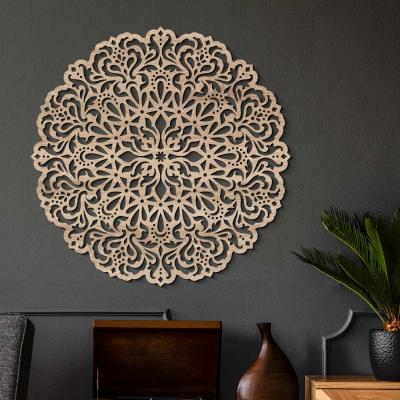
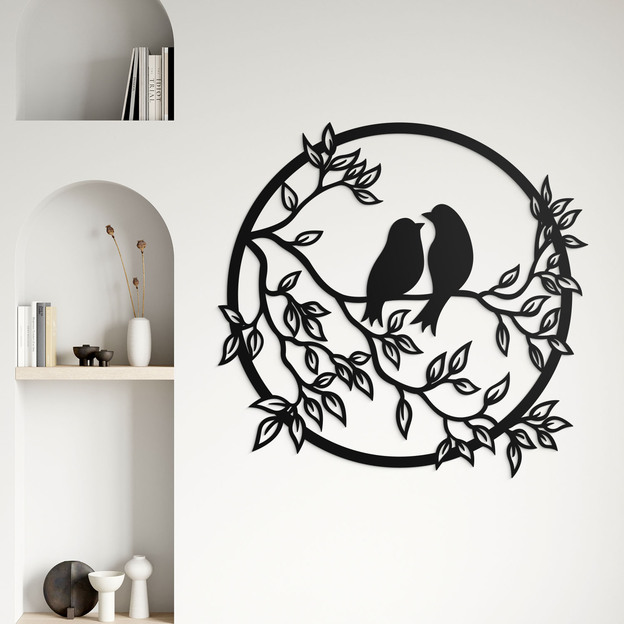
Wooden decorations and wall art with a love theme
DUBLEZ wooden decorations are a wonderful way to express love and preserve memories. Our romantic wooden wall art adds a cozy, loving atmosphere to any bedroom or living room. Here are our most popular motifs for Valentine’s Day gifts for her:









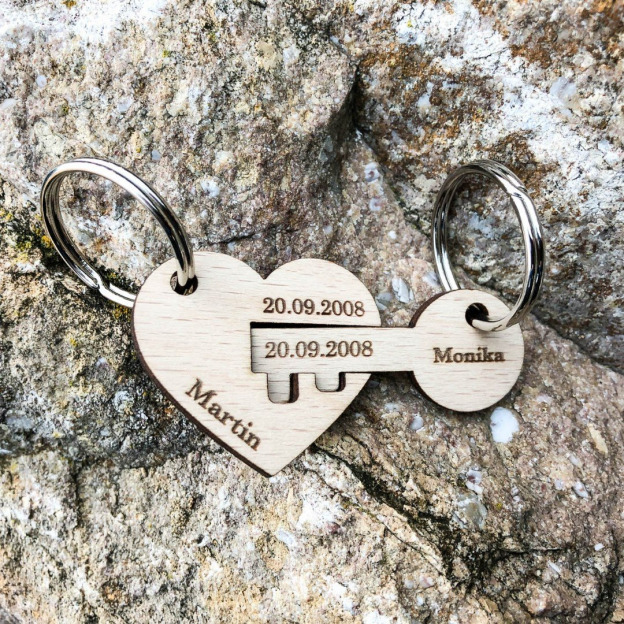
Personalized wooden keychains for couples
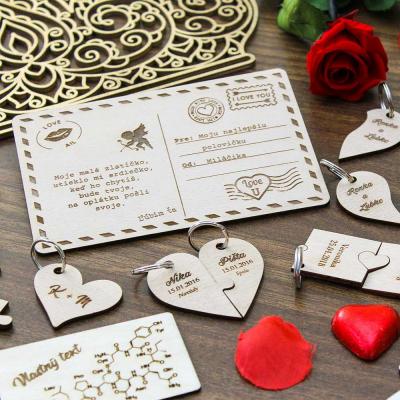
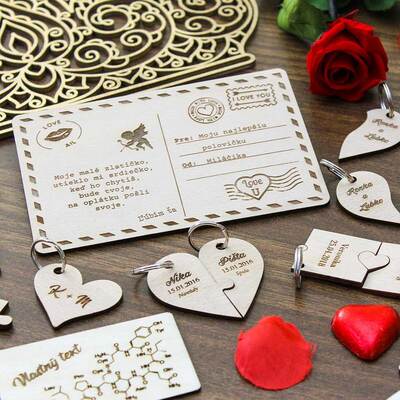
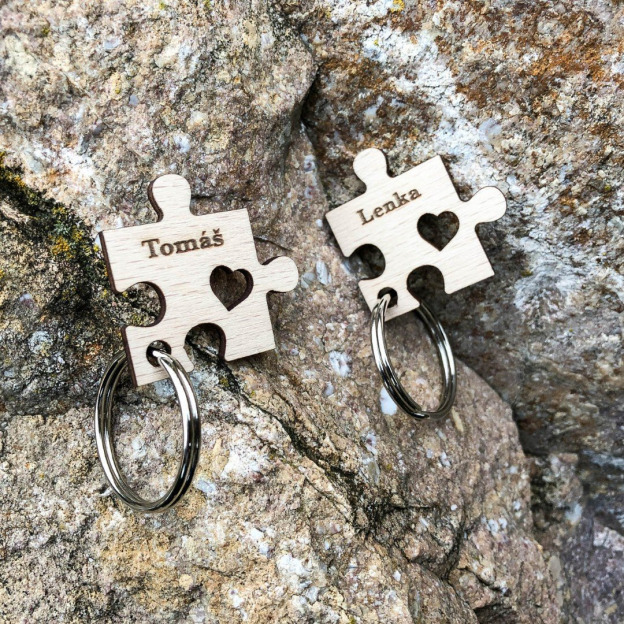
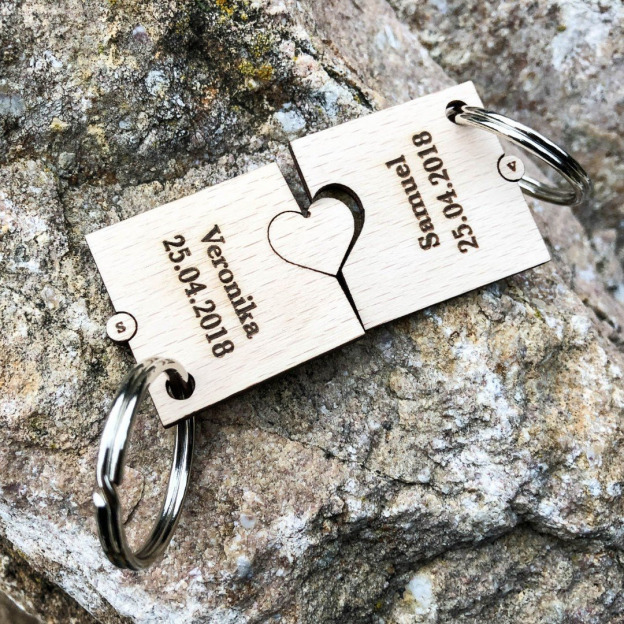
Did you know you can gift your partner one half of a keychain that fits together with your half to make a whole? It’s a simple, sweet, and romantic gesture—and the keychains are eco-friendly and made from wood :) Every time she reaches for her keys, she’ll think of you.





Her favorite box of chocolates with a sweet note
Women and sweets go hand in hand—they’re inseparable! When feeling emotional, many women reach for the “joker card” of comfort: chocolate. If you choose her favorite chocolates or box of sweets, be sure to include a lovely message or at least a “I love you” note with a smiley and a heart :)
Romantic jewelry
A timeless classic: jewelry. Choose from simple pieces like necklaces with pendants or earrings, or go for more elegant rings or bracelets. Adding a personal touch, like engraving initials or a meaningful date, can turn any piece into a memorable keepsake. And with options ranging from zircon to diamond, or from stainless steel to gold, you can find something that fits every budget.
Personalized gifts
What’s better than a gift that holds a piece of you? Personalized gifts are perfect for this occasion! They reflect your shared moments and serve as a unique expression of love and attention. These gifts reveal the depth of your connection and memories—often featuring your custom text, names, dates... anything that bonds the two of you. Here are our top personalized wooden and eco-friendly decorations from DUBLEZ:
Love quotes engraved on the wall
For women who love year-round romance, we recommend getting a love quote decoration that she can hang on the wall as a lasting reminder of your endless love.




If you're looking for even more inspiration for your special lady, check out the full selection of DUBLEZ Valentine-themed gifts, which are incredibly popular.
Wooden love-themed keychains
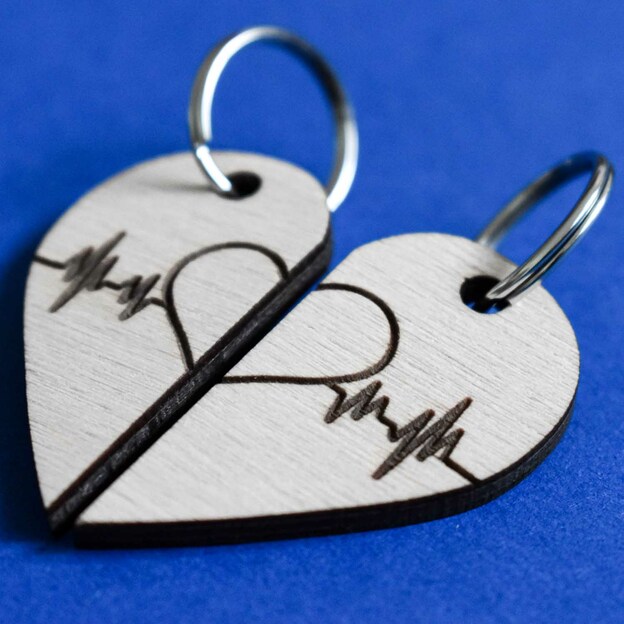
Sometimes all it takes is a small gesture to show your love. Our DUBLEZ wooden keychains come engraved with romantic motifs. She’ll carry it on her keys—and think of you every time she sees it. Visit our full keychain collection. Here are the TOP wooden keychains for her:



If you’re still undecided, here’s an extra list of Valentine’s gift ideas for inspiration:
- A perfume with her favorite scent
- A teddy bear or other plush animal
- A Valentine’s card
- A heart-shaped pendant or other romantic jewelry
- A couple’s coffee mug
- A book by her favorite author
- A stylish handbag in her favorite color
7. Ideas for Original Valentine’s Gifts for Him
When choosing the perfect Valentine’s gift for him, it’s important to think about original options that will not only pleasantly surprise him but also express deep emotions. Men tend to be more practical, so ladies—focus on the usefulness of the gift, which your man will definitely appreciate in the end.
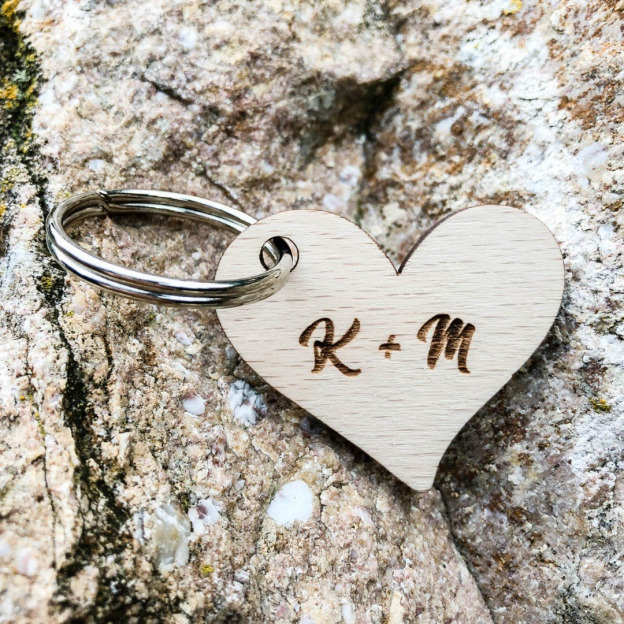
Wooden keychain with a love motif
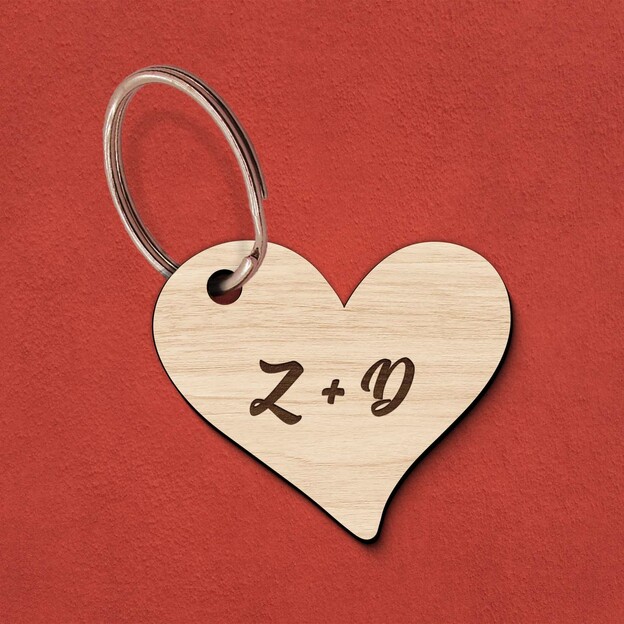
Sometimes love can be expressed with a simple gesture—you don’t need to spend a fortune. Our DUBLEZ wooden keychains are engraved with romantic motifs. Your man will carry it on his keys, and every time he sees it, he’ll think of you. Explore our full keychain collection. Here are the TOP wooden keychains for him:


Personalized gifts
What’s better than a gift that holds a piece of you? Personalized gifts from DUBLEZ are perfect for the occasion! They reflect shared memories and serve as a unique sign of love and attention for your partner. These gifts show the depth of your connection and meaningful moments. They often include your custom text, names, dates… anything that connects the two of you. Here are our top personalized wooden and eco-friendly decorations for him:
A quality bottle of his favorite alcohol
Whisky, rum, or wine—every man has his own taste. If he has a favorite brand but you’d rather not give alcohol on this romantic day, go for a wooden wall decoration with a drink-themed design. He’ll love hanging it in his room, office, or workshop, and every time he sees it, he’ll remember the person who gave it to him—**you** :)










If you're looking for even more inspiration for your man, check out the full range of DUBLEZ Valentine-themed products, which are extremely popular.
Romantic photo frames with your favorite couple photos
Surely you already have lots of cute couple photos together. Why not print them out and put them into a beautiful romantic frame to highlight your love even more? At DUBLEZ, we offer affordable wooden frames in various designs—there’s something for everyone :)





If you’re still unsure, here’s an extra Valentine’s gift list for inspiration:
- An elegant leather belt or wallet
- A watch or other stylish accessory
- A perfume with his favorite masculine scent
- A book by his favorite author or on a topic he loves
- A gift voucher for an experience, like a race car drive or flight simulator
- A handmade gift like a personalized keychain or photo book
- Luxury chocolate or a gourmet gift basket
8. How to Celebrate Valentine’s Day in a Way You’ll Never Forget
Valentine’s Day isn’t just about material gifts—it’s mainly about creating unforgettable moments and shared experiences. Here are some ideas to help you spend this special day in a truly unique and personal way:
A romantic dinner
Surprise your loved one with a homemade candlelit dinner or make a reservation at their favorite restaurant. Choose their favorite dishes, play soft music, and create an atmosphere that encourages deep conversation and connection. A cozy dinner at home can be just as magical as a luxury meal at a fancy restaurant.
 Illustration of a couple in love enjoying a romantic dinner on Valentine’s Day. Source: DUBLEZ
A shared activity
Plan something you can enjoy together—hiking, a spa day, cooking a new recipe, or watching a favorite movie. Shared moments strengthen the relationship and create lasting memories. Think outside the box: take a dance class together or go for a couple’s massage.
A surprise weekend getaway
There’s nothing more exciting than discovering a new place together. Book a short trip for the weekend and enjoy time away from everyday stress. Whether it’s a romantic cabin in the woods, a charming hotel, or a city break—you’ll create memories to last a lifetime.
A love letter or message
Sometimes the simplest things are the most powerful. Write a heartfelt letter, describe your feelings, and remind your partner why they mean so much to you. A personal message can be more touching than any expensive gift. If writing isn’t your strength, check out our selection of engraved love quotes.
Plan a digital surprise
If you and your loved one are in a long-distance relationship, don’t let distance get in the way of celebrating. Plan a video call with a virtual dinner, send an e-card, or have a Valentine’s gift delivered straight to their door. Even from afar, you can express your love in a meaningful way.
Create a memory box
Gather small items that remind you of shared experiences—movie tickets, photos, notes—and put them into a decorated box. This sentimental gift will remind your partner of all the wonderful moments you’ve shared together.
Celebrate all day
Who says Valentine’s should only last an evening? Plan little surprises throughout the day: a romantic note in their lunch, a spontaneous compliment, a surprise coffee date, or breakfast in bed. It’s the little things that make the biggest impact.
However you choose to celebrate, the most important thing is the love and effort you put into it. Valentine’s Day is the perfect opportunity to remind your partner how much they mean to you—not through expensive gifts, but through sincere gestures from the heart.
9. The Name Valentine – Meaning, Origin, and Name Day
The name Valentine (in Slovak: Valentín or Valentína) carries a rich historical and symbolic significance. It originates from the Latin name Valentinus, which comes from the word valens – meaning strong, healthy, or powerful. This name reflects strength and resilience, which beautifully aligns with the themes of love and devotion celebrated on Valentine’s Day.
People named Valentín or Valentína often have a natural sense of empathy and emotional intelligence, which makes them great partners and friends. Whether you know someone with this name or just want to learn more about it, it’s fascinating how names can carry such deep symbolic meaning—especially when connected to one of the most romantic days of the year.
Name day in Slovakia: Valentín celebrates his name day on February 14, so besides love, be sure to wish a happy name day to all Valentins you know :)
10. Fun Facts About Saint Valentine
To wrap things up, we’re sharing some fascinating facts surrounding the figure of Saint Valentine and the holiday that bears his name. There are countless interesting facts and folklore traditions that highlight his influence in various cultures around the world.
One lesser-known fact is that the history of Saint Valentine is shrouded in many legends. For example, there are several figures named Valentine who were canonized as saints, and it’s not entirely clear which one is the “real” Saint Valentine associated with love. This uncertainty adds a mysterious and enchanting quality to the holiday.
In some European countries like Czechia and Slovakia, Valentine’s Day only started being celebrated relatively recently, which shows how modern influences are shaping traditional cultural celebrations. In contrast, Wales celebrates a similar holiday called Dydd Santes Dwynwen on January 25, dedicated to their own patron saint of love.
In France—often considered the country of love—Valentine’s Day was traditionally marked by a game in which single men and women would call out to each other through windows to find a match. This practice, known as the “love lottery,” was eventually banned for being too controversial, but it remains a curious part of the holiday’s history.
In Taiwan, Valentine’s Day is celebrated twice a year—on February 14 and again on August 7 according to the lunar calendar. Flower giving is taken very seriously there: the number and type of flowers given carry specific meanings. For example, a single red rose means “one true love,” eleven roses mean “beloved wife,” and ninety-nine roses symbolize “eternal love.”
In some cultures, Valentine’s Day isn’t only about romantic love. For instance, in Estonia and Finland, it focuses more on celebrating friendship. People give gifts and cards to friends, not just romantic partners.
These folk traditions and fun facts show how Valentine’s Day is celebrated across different cultures, each adding its own unique twist. Saint Valentine has thus become not only a symbol of romantic love, but also a figure representing cultural diversity and the many forms of human connection that span the globe.
In today’s modern world, Valentine’s Day is a widely celebrated occasion not only for couples, but also for friends and family. It’s a day to express love and gratitude through gifts, cards, and meaningful gestures. While the commercial aspect of the holiday is often criticized, there’s no denying that Valentine’s Day evokes feelings of joy, love, and togetherness.
The modern meaning of Valentine’s Day is not limited to romantic expressions. It’s also a day when many charities and organizations raise awareness about social and emotional issues like loneliness and mental health. These efforts expand the traditional meaning of the holiday and create opportunities for showing love in the form of care and support for others.
Valentine’s Day also sparks conversations about inclusivity and diversity in love. Today, the day is celebrated by people of all sexual orientations, gender identities, and cultural backgrounds, reflecting a broader societal acceptance of different forms of love and relationships.
To conclude, Valentine’s Day today is much more than a holiday of love. It reflects evolving social values and offers an opportunity to celebrate love in all its forms—from romantic connections to friendships and family bonds. In this way, Valentine’s Day continues to inspire and unite people across the world.


